How to proof and check your funeral order of service before printing
When you’re planning a funeral, small details can feel overwhelming. A calm, methodical proofing process will help you avoid last-minute stress and typos that can’t be corrected after printing. This guide walks you through a thorough, step-by-step check of names, dates, hymns, readings, photos, page order and layout—so the final booklet is accurate, respectful and ready in time. If you’re still choosing a template, you can browse and personalise our full range of funeral order of service templates first, then return to this checklist when you’re ready to proof.
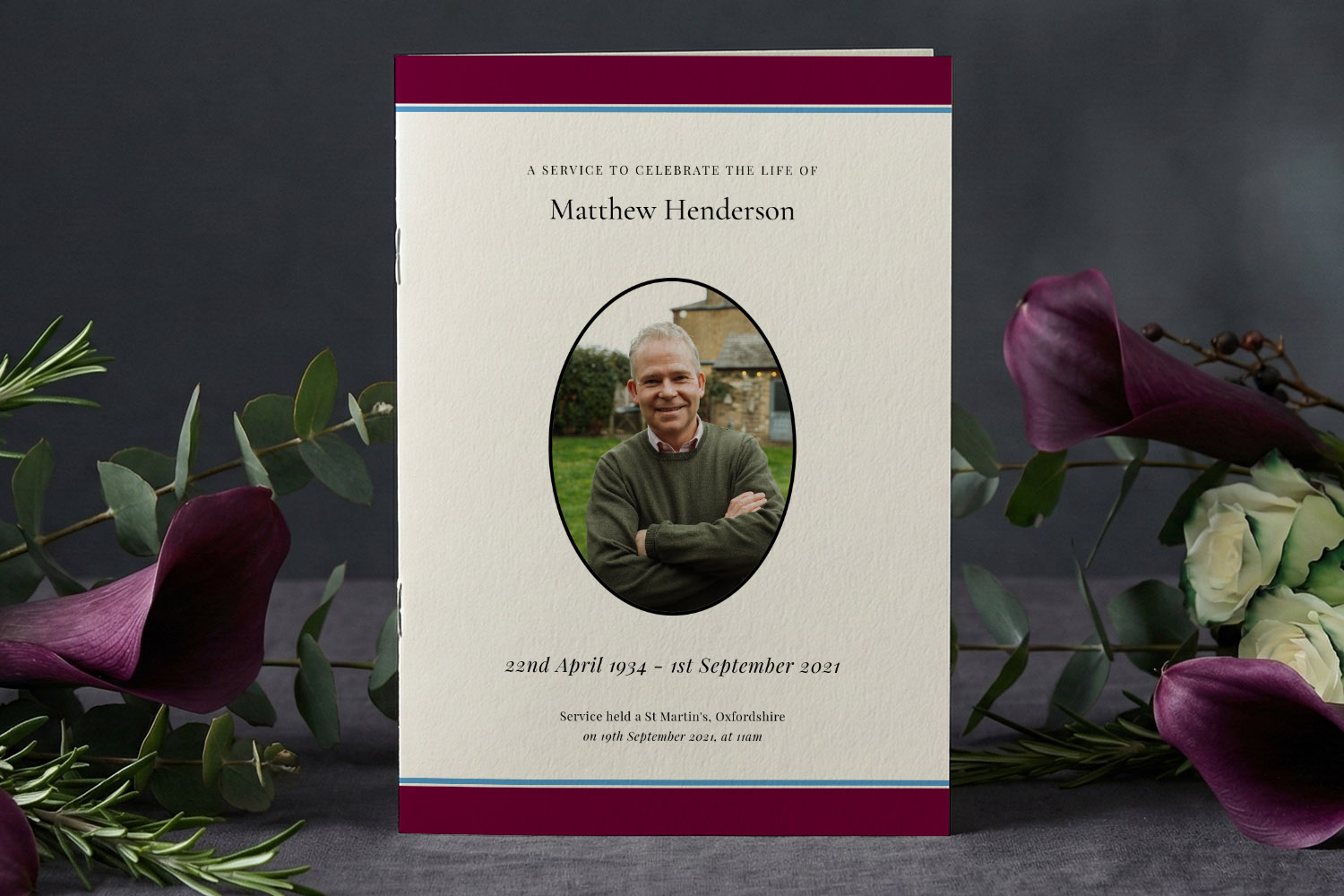
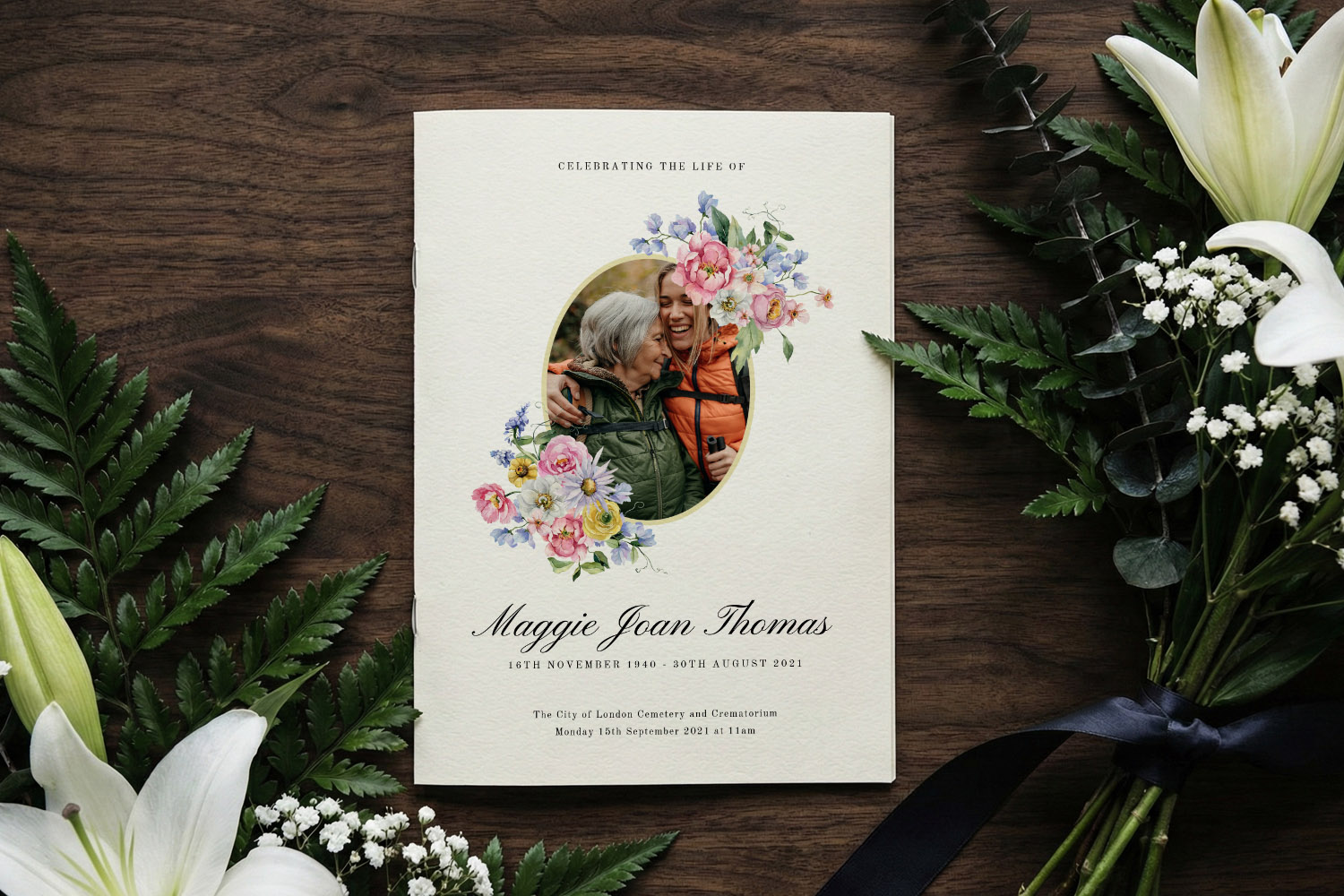
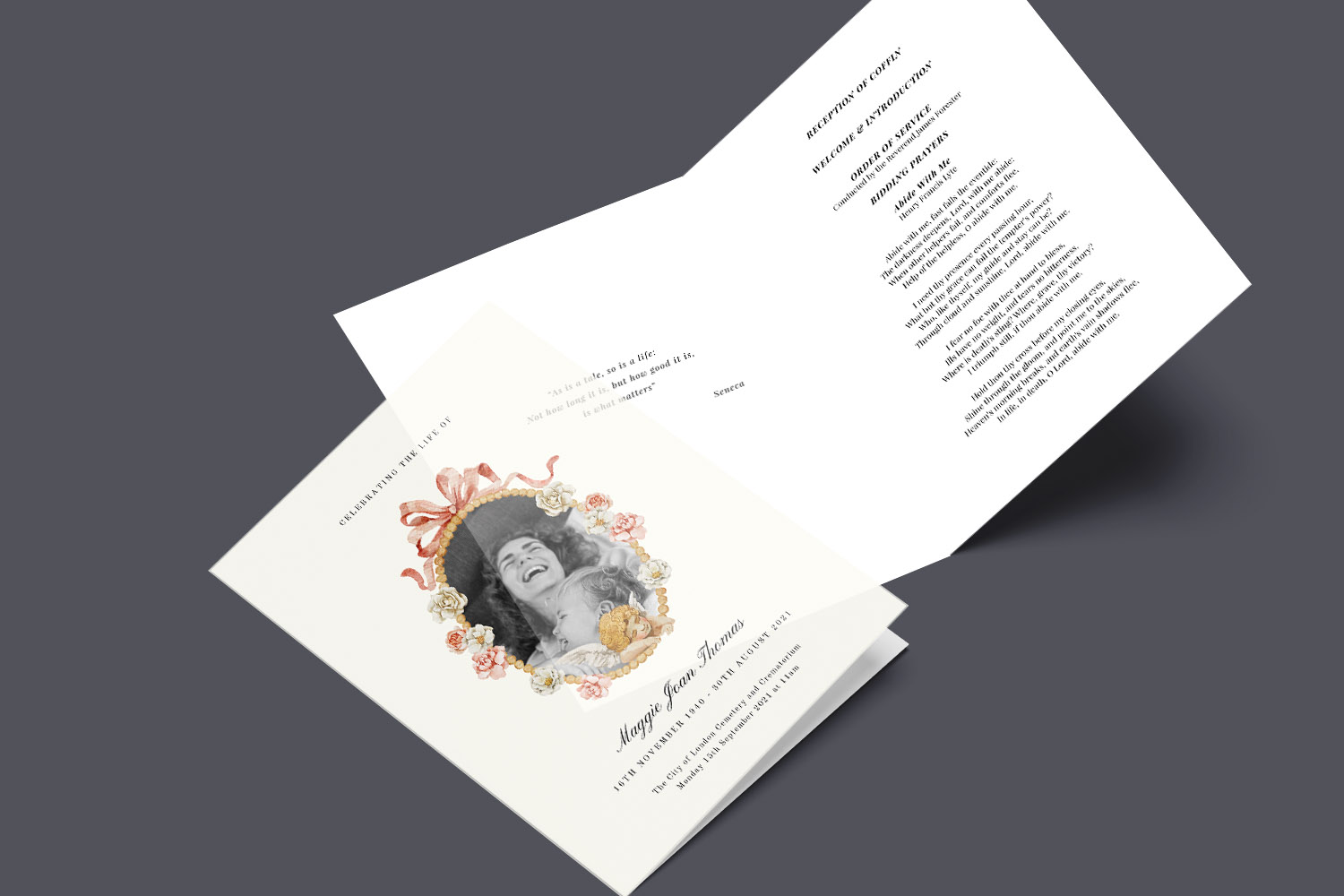
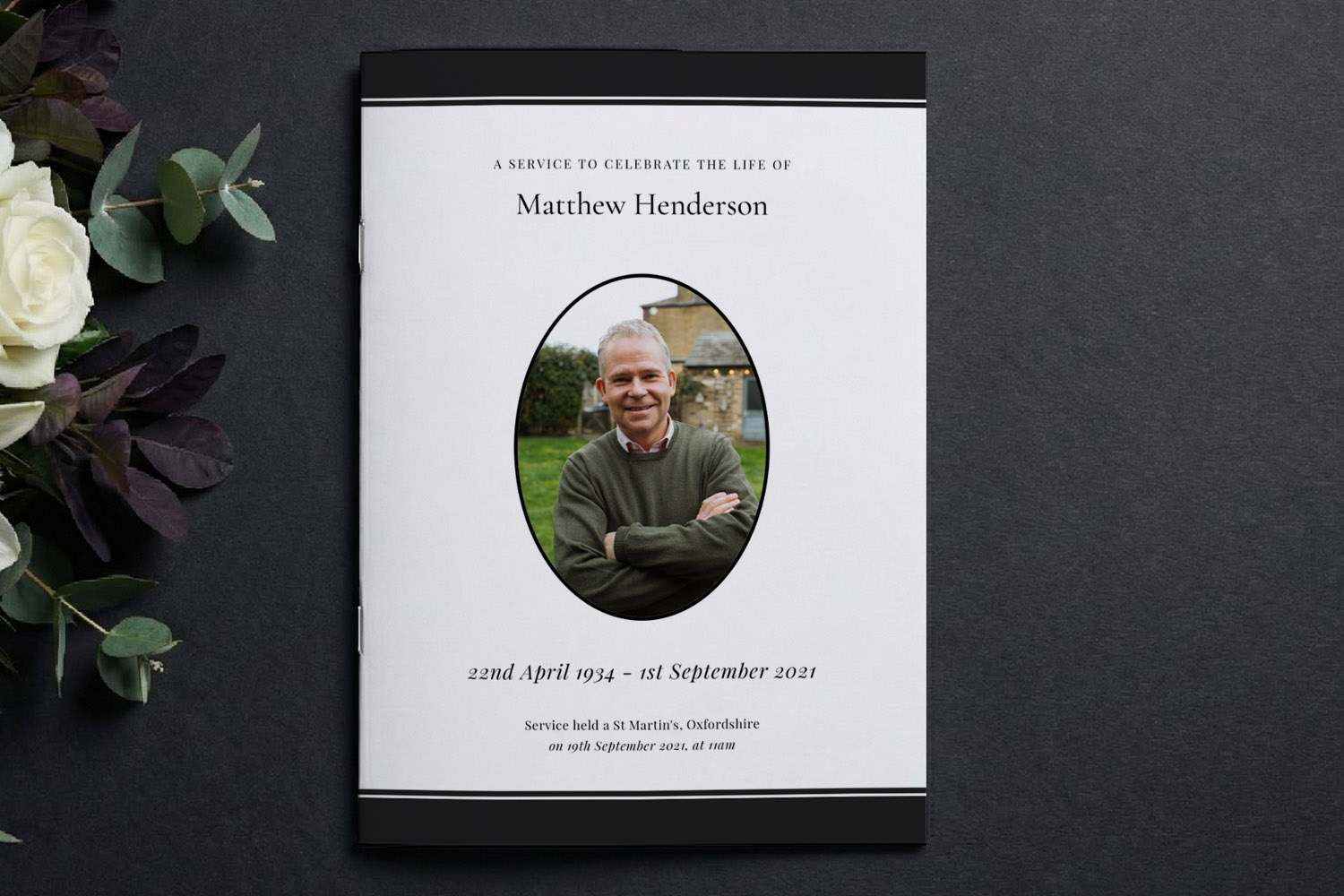
Elegant funeral order of service booklet featuring a personalised cover and floral accents, ideal for commemorating a loved one’s life.
1) Start with the essentials: people, places and timings
Work from the front cover inward. Read every line out loud, then scan again silently—one slow pass for spelling and punctuation, another for factual details.
Front cover checks
- Name of the deceased
- Confirm spelling of first name(s), middle name(s) and surname.
- Check preferred name versus legal name if both appear.
- Ensure accents, hyphens and apostrophes are correct (e.g., O’Connor, AnneMarie).
- Life dates
- Use a consistent style, e.g., “12 March 1942 – 9 October 2025.”
- Prefer an en-dash (–) rather than a hyphen (-) between dates.
- If including age, double-check the calculation.
- Service details
- Date and day of week (they must match): e.g., “Tuesday, 2 December 2025.”
- Time (include am/pm consistently).
- Venue name, full address, and postcode.
- Officiant’s name and title (e.g., The Revd Sarah Jones; Civil Celebrant Daniel Cole).
- Cover photo (if used)
- Is the image high-resolution and in focus?
- Is any part of the face near the trim edge?
- If colour, does it print naturally (no heavy filters)?
Inside pages: running order
- Order matches the officiant’s script
- Gather the current script from your minister or celebrant and place it beside your proof.
- Step through item by item: entry music, welcome, opening words, hymns/poems/readings, eulogy/tributes, prayers or quiet reflection, commendation/committal, blessing/closing, exit music.
- Mark any variations and update the booklet to match the actual service flow.
- Names and roles
- Spelling for people giving readings or tributes.
- Correct titles or relationships (e.g., “granddaughter”, “best friend”).
- Choirs, organists, pallbearers—check each name carefully.
- Music, hymns and readings
- Verify exact titles and correct verse order.
- Keep line breaks where congregation will breathe; don’t split verses across pages.
- For Bible readings, check book, chapter, and verse (e.g., John 14:1–6).
- Thanks, donations and reception
- Donation information: charity name, web URL or QR code, and any Gift Aid note.
- Reception/wake details: time, venue, directions or a short sentence like “All are warmly invited.”
- Short thank-you message to attendees, carers or the venue (optional).
Language and consistency
- Consistency sweep
- Programme vs. program: use programme (British English).
- Capitalisation (e.g., Hymn titles in Title Case, readings in Sentence case).
- Quotation marks, apostrophes (curly vs. straight), bullet styles and spacing.
- Sensitive phrasing
- Prefer calm, clear language; avoid euphemisms that might confuse.
- Keep tone consistent across contributors.
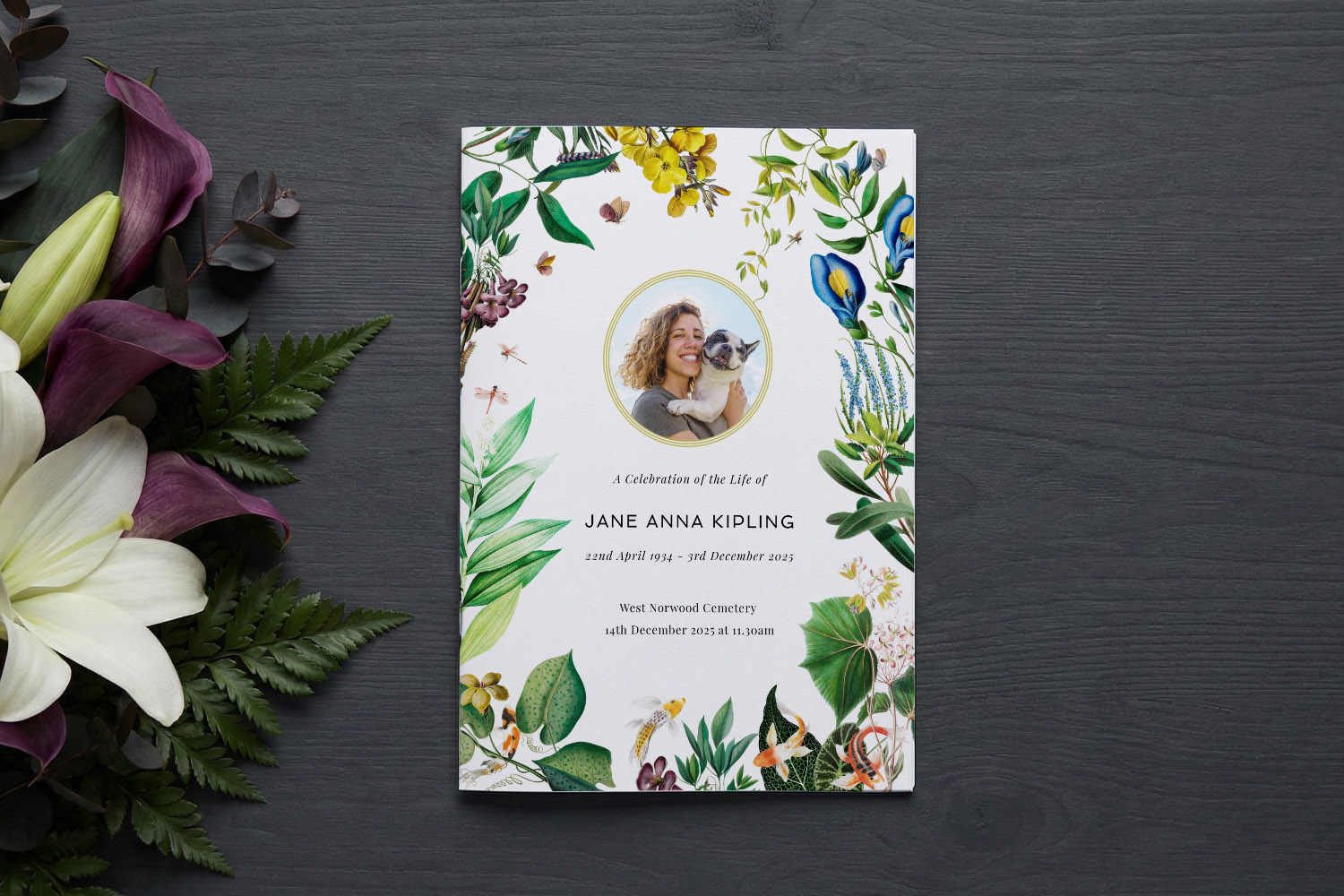
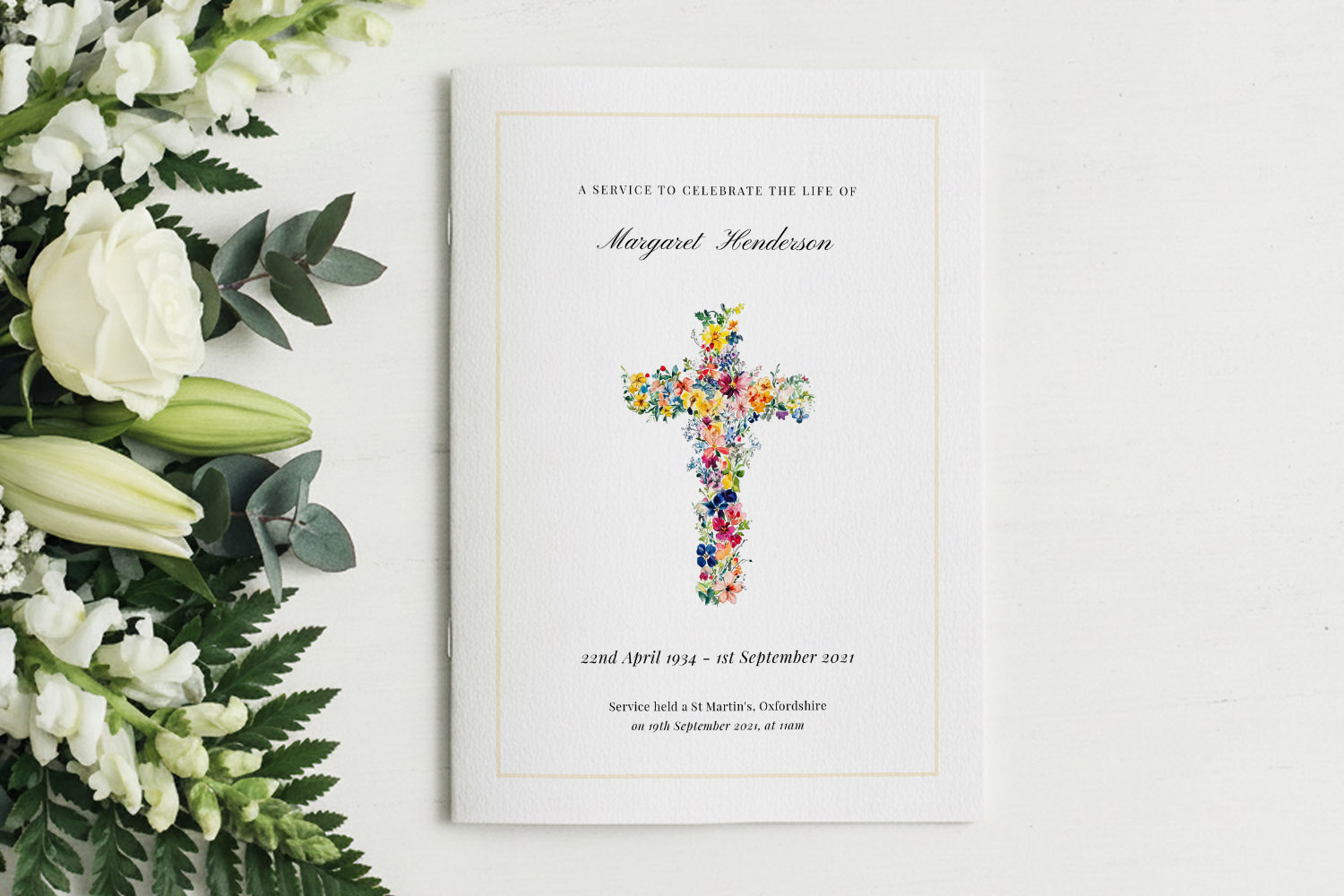
Elegant funeral order of service booklet featuring a colourful floral design, perfect for a personalised and memorable tribute.
2) Page order, layout and images: a technical checklist
Whether you’ve chosen a folded 4-page card or a stapled booklet with 8, 12 or 16 pages (A5 portrait), the layout must be tidy and readable. Use this sequence to spot issues before print:
Pagination and imposition
- Multiples of four
- Booklets print in 4-page increments; confirm your total is 4, 8, 12 or 16.
- If you add or remove content, recheck page count and the front/back pairing.
- Logical flow and page transitions
- No orphan headings at the bottom of a page.
- Ensure a hymn or reading does not start on one page and finish two pages later—keep sections together where possible.
- Front cover inside front inner pages inside back back cover.
Typography and readability
- Fonts and sizes
- Body text should be easily readable for older eyes (often 11–12 pt).
- Check alignment: centred headings, left-aligned verses and readings usually read best.
- Avoid long lines; generous line spacing prevents crowding.
- Widows, orphans and hyphenation
- Adjust line breaks to avoid single words left on a line by themselves.
- If hyphenation appears odd, insert a manual line break before a clean phrase.
Images and placement
- Image quality
- Use original, high-resolution photos (phone images usually suffice if not heavily cropped).
- Avoid placing faces close to edges, the booklet spine, or over busy backgrounds.
- Cropping and frames
- Ensure hands, shoulders or hats aren’t cropped awkwardly.
- Keep any frames or borders consistent across images and pages.
- Colour and black-and-white
- If mixing colour and black-and-white, do so intentionally and keep balance across pages.
- Watch for overly dark images; lift brightness if details are lost.
Graphics, QR codes and icons
- QR codes
- Test them from the on-screen proof: point a phone camera at the screen to ensure they resolve correctly.
- Keep at least 10–12 mm clear space around a code.
- Icons, lines and decorative motifs
- Use consistently (size, line weight).
- Check nothing overlaps text at smaller sizes.
.
Proofing the final PDF
- Zoom levels
- Check at 100% (actual size) for overall flow, then zoom to 200% for micro-typos.
- Print a home copy if possible; errors are easier to spot on paper.
- Cover and back cover
- Confirm any back-cover poem, photo, or dedication is complete and centred.
- If including a collage, keep spacing equal and edges aligned.
If you’re still choosing a look, explore our traditional order of service templates, our picture-led photo-collage designs, gentle floral styles, and clean, modern simple templates—then come back to this checklist to proof your chosen design.
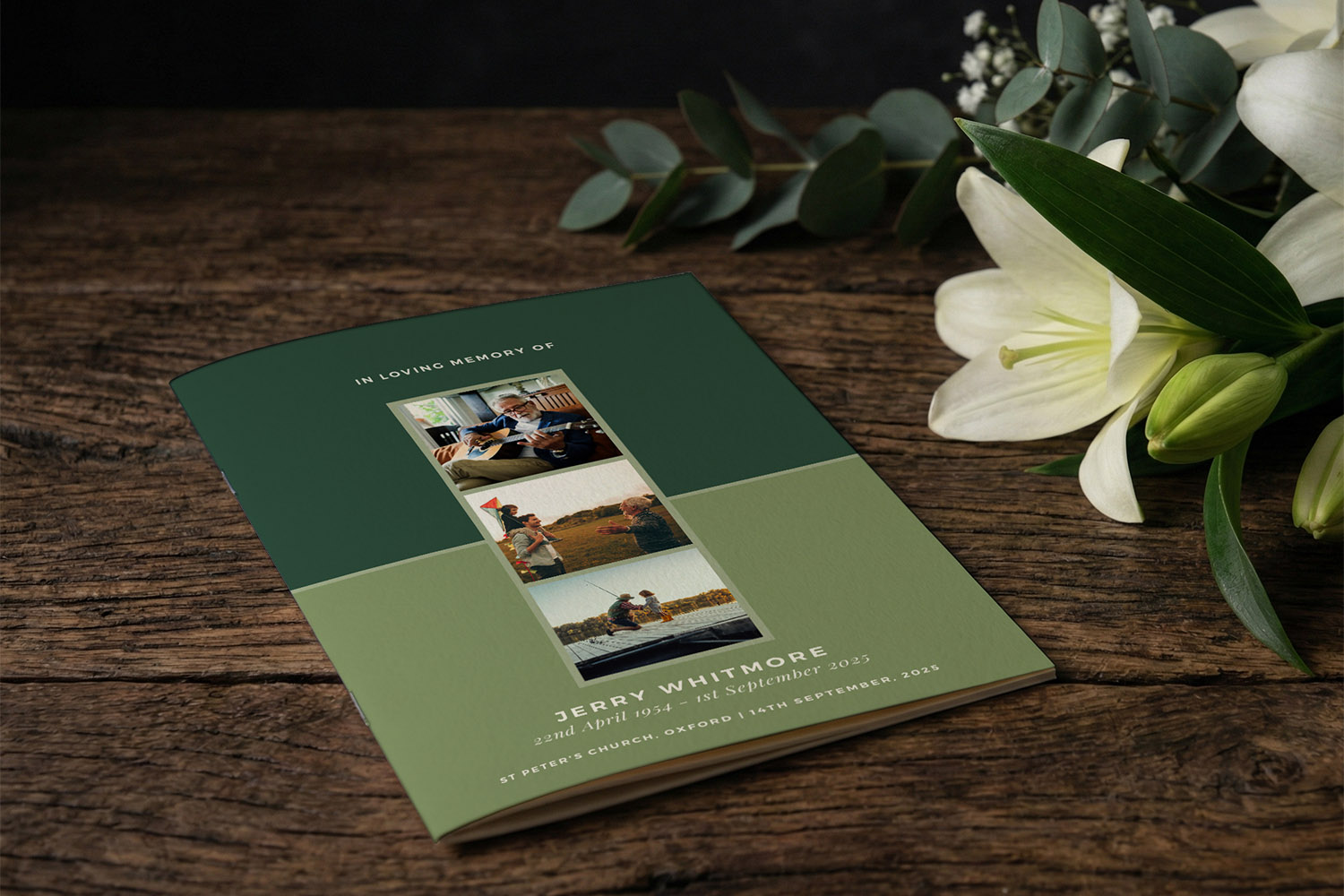
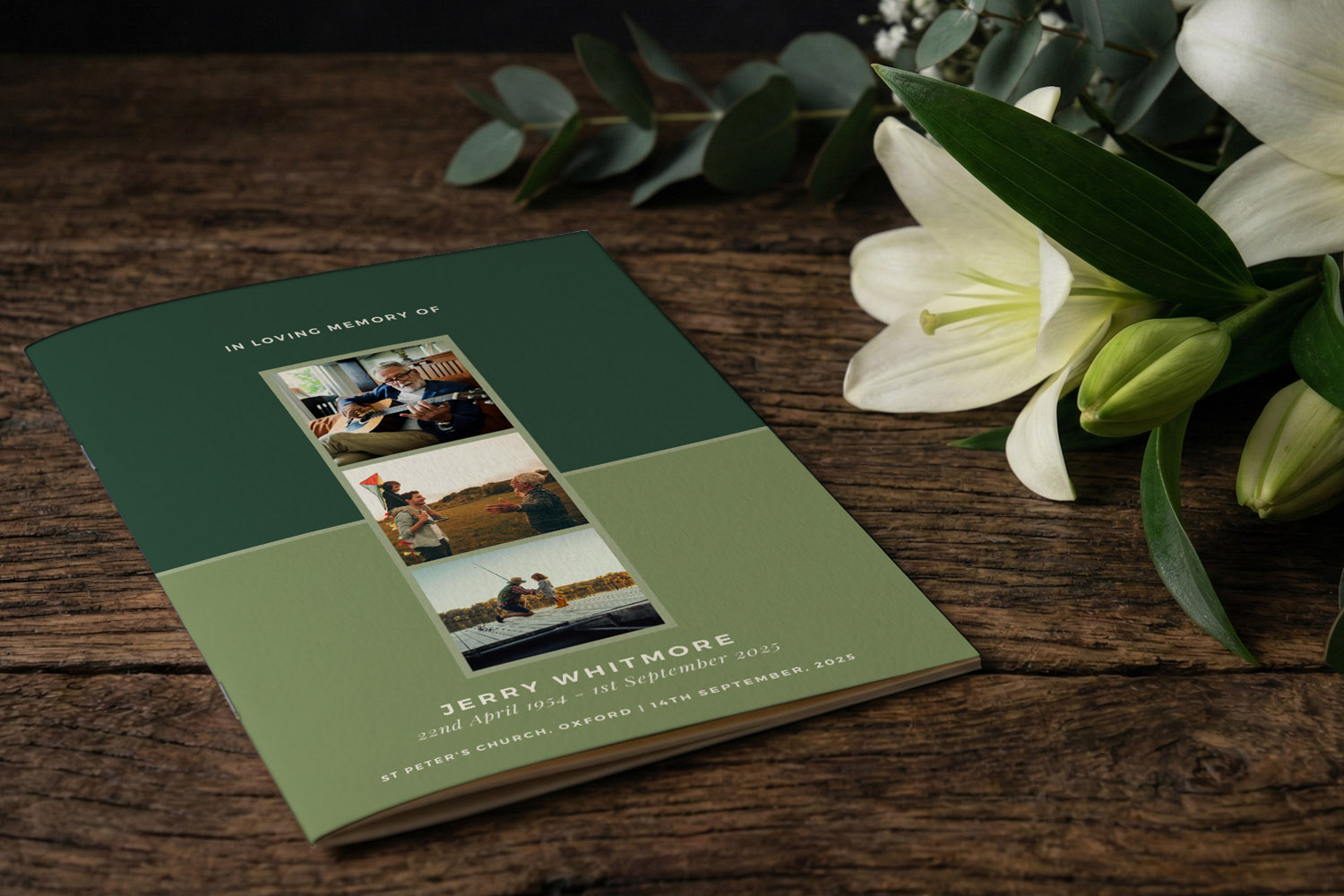
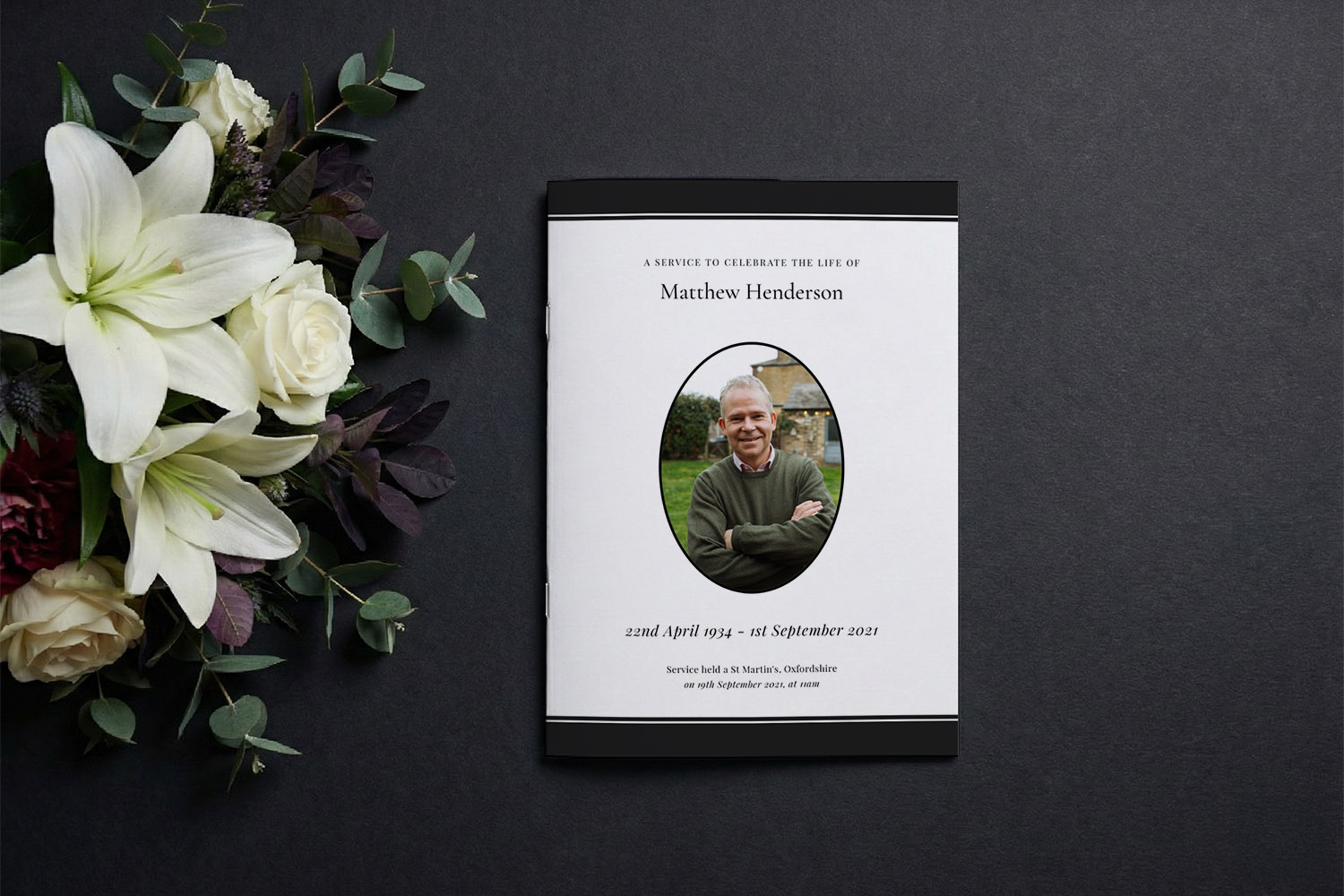
Elegant funeral order of service booklet featuring a green cover and photo collage, shown beside white lilies for a thoughtful presentation.
3) Best practice before you press “Print”
1. Read the downloadable proof slowly—twice
Your online editor will generate a downloadable proof PDF. Read it all the way through, then take a short break and read it again. The second pass almost always finds something small.
2. Share for a fresh set of eyes
Ask one or two close relatives or the officiant to review. Give them specific jobs: one person checks names and dates; another checks hymns, readings and page breaks; the officiant checks the running order.
3. Cross-check with the order of service on the day
If plans change (a verse added, a reading swapped), update the booklet immediately so it mirrors the service. The congregation will follow your booklet; accuracy matters more than embellishment.
4. Consider a printed sample
For extra peace of mind, order a printed sample (available from £3.49). It’s the most reliable way to check colour, photo clarity and paper feel before committing to the full print run.
5. Paper and format choices (sanity check)
- Formats: folded 4-page card, or stapled/saddle-stitched booklets of 8, 12 or 16 pages.
- Paper options: choose between smooth brilliant-white stocks and lightly textured off-white options.
Confirm you’ve selected the intended combination before checkout.
6. Timing and production
If time is tight, an express 1–2 working-day turnaround is available (subject to a weekday cutoff). Build in time for proofing and reviewer feedback before that cutoff.
7. Digital copies for remote guests
Alongside printed booklets, a high-resolution PDF is available to share by email or messaging—helpful for overseas relatives or anyone joining remotely.
8. Sustainability and recycling
All papers are FSC-certified and recyclable. If sustainability is important to you or the person you’re honouring, you can also opt for micro carbon-offsetting at checkout.
9. Final verification list
- Names, dates and titles match official records or family preference.
- Day/date/time/venue are all correct.
- Hymns and readings have correct titles, verses and line breaks.
- Page count is correct (4/8/12/16) and sections flow logically.
- Photos print clearly and are positioned away from trims and the fold.
- Thanks, donations and reception details are present and accurate.
- QR codes scan.
- You’ve saved/approved the latest proof file.
If you haven’t started designing yet, you can begin with our broad collection of funeral order of service designs, including classic styles, floral programmes, photo-collage layouts and minimalist options—all editable online in minutes.

Frequently asked questions about proofing a funeral order of service
Families often proof under time pressure. These concise answers cover the most common queries about checking text, photos and layout before sending to print.
Ask your celebrant or minister for the final running order, then check your proof line by line against it: entry music welcome readings/tributes prayers or quiet reflection commendation/committal exit music. Update your booklet so the flow is identical on the day.
Read the proof aloud slowly, then ask someone who hasn’t seen the text to read it once more. Print a home copy if you can; errors are easier to spot on paper. Zoom to 200% on screen for tiny punctuation mistakes.
Search for the exact title and confirm verse order with your officiant. Keep each verse intact (no splits across pages) and use clear line breaks where the congregation will pause.
Try a brighter original or gently increase exposure before uploading. Avoid heavy filters. Keep faces away from the page edge and booklet fold. If unsure, order a printed sample first to see how images reproduce.
They’re optional. If you include them, place them consistently (e.g., centred at the bottom) and avoid numbering the front cover. Ensure numbers don’t collide with hymn verses or footers.
Choosing the right paper for a funeral order of service
Selecting the ideal paper for a funeral order of service sets the ceremony’s tone and creates a lasting keepsake. This guide covers paper finishes, weights, and options to help you choose the best fit for your tribute.
Creating a Downloadable Funeral Order of Service PDF: a practical guide
Discover how to create a downloadable funeral order of service PDF with this practical guide, covering everything from choosing templates and sharing with remote guests to printing at home or locally, ensuring a respectful and accessible ceremony for all.
Express printing for funeral Orders of Service: how fast is it really?
Discover how express printing for funeral Orders of Service works, including realistic turnaround times, delivery options for UK regions, and practical tips for planning. Learn when to choose express or standard, and how downloadable PDFs offer peace of mind.
Funeral Order of Service Designs Explained: Classic, Floral, Photo & More
Discover how to choose a funeral order of service design that truly honours your loved one. This guide explains classic, floral, photo, and other styles, with practical tips to help you create a meaningful and personal keepsake for the ceremony.
Funeral Order of Service Templates with Photos: What to Consider
Choosing the right funeral order of service template with photos can help you create a heartfelt tribute. This article guides you through selecting meaningful images, layout options, and practical printing tips to design a beautiful, memorable keepsake.
What Should a Funeral Order of Service Include? (With Examples)
Discover what a funeral order of service should include with this gentle, practical guide. Learn about essential sections, layout options, and personal touches, plus see example running orders to help you create a meaningful and memorable ceremony booklet.
Products related to funeral order of service booklets:

From Our Blog
Funeral order of service booklets help guide attendees through the ceremony with grace and clarity. Discover blog posts on booklet structure, content ideas, and incorporating meaningful personal touches.