How to Format Hymns and Readings in a Christening Booklet
Planning a christening is joyful, but the booklet can feel daunting—especially if it’s your first time bringing hymns, readings, and prayers together. This guide focuses on the practical side of layout: how to break up long lyrics, where to place multiple readings, how to avoid cramped pages, and when to think about copyright. It’s written for parents, godparents, and church organisers who want a clear, elegant booklet that people can follow with ease. If you’re designing online, you’ll also find tips that translate directly into a polished, print-ready programme using our Christening Order of Service editor.

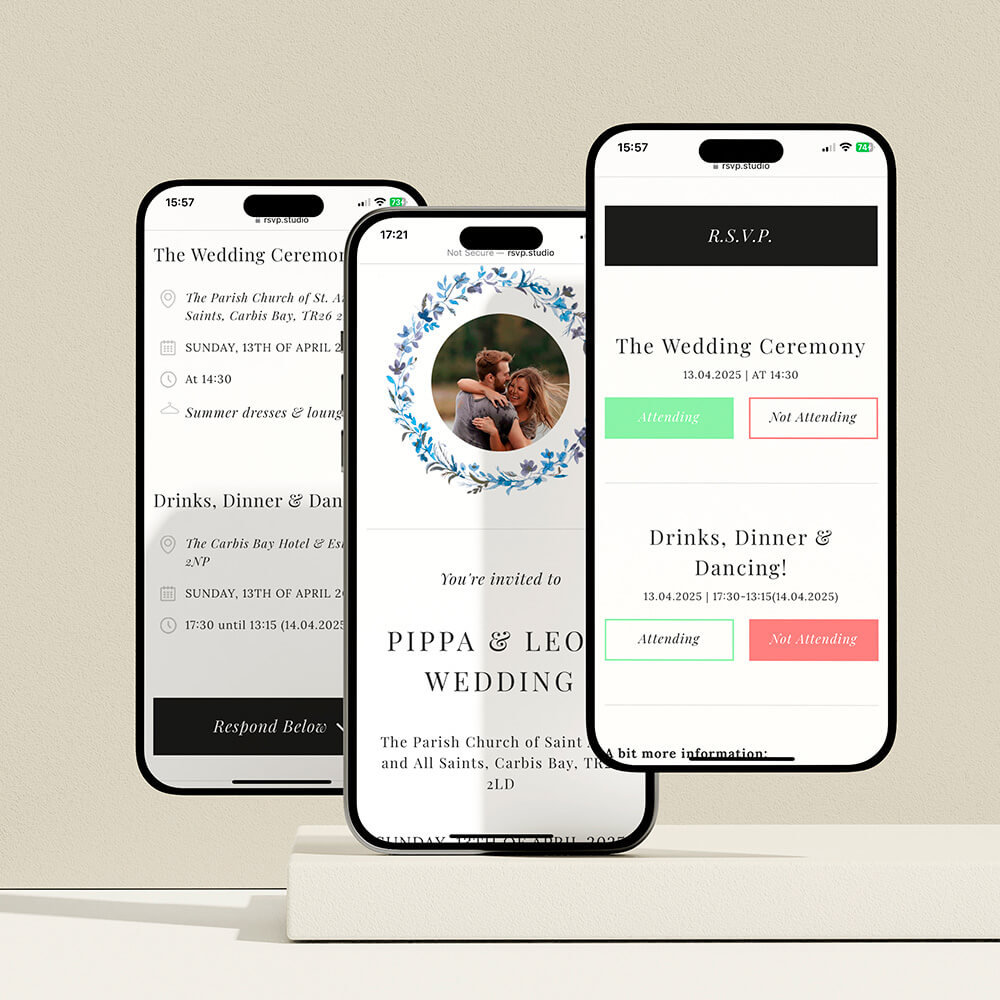
The screen shows a user adding content, adjusting layout, and editing text within an online design editor to personalise a print-ready design.
Choose the right booklet format (and why it matters for lyrics)
Before you think about page breaks, choose a format that fits your service length. A very short ceremony with no printed lyrics can sit comfortably on a simple 4-page folded card (cover, inside spread, back). The moment you add full hymn texts, responses, or multiple readings, an 8, 12 or 16-page booklet gives you the breathing room to keep lines readable and avoid awkward breaks.
At Utterly Printable you can design an A5 programme and pick from a 4-page folded card or an 8, 12 or 16-page saddle-stitched booklet with a sturdy cover and premium inner pages. Everything is printed on FSC-certified stocks with Canon iX quality, and you’re free to add unlimited photos and wording, reorder pages in the online editor, download a proof, or even pop in a QR code linking to a livestream or audio.
Keep the “multiple of four” rule in mind. Booklets are built from folded sheets, so page counts must be divisible by four (4/8/12/16). If your content is borderline, it’s usually better to step up one size and enjoy spacious typography than to squeeze.
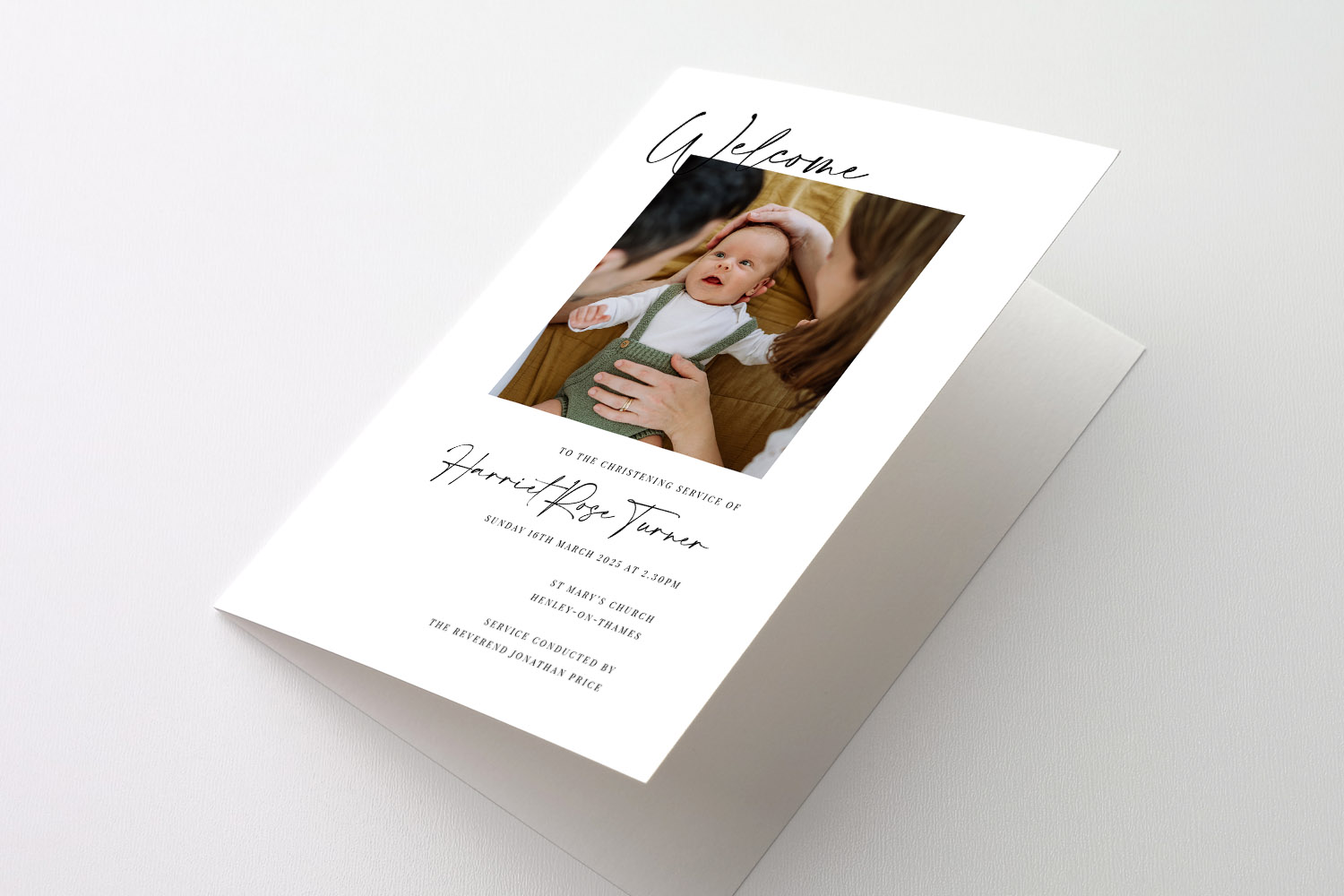
Where the cover design helps the inside. Choosing a calm, low-ink cover often pairs well with a clear, un-busy interior. If you want a keepsake feel, consider a cover photo—our photo order of service designs are popular for that. For a pared-back, classic look, the white order of service templates keep the focus on the words. Planning something more theme-led? Browse our girl christening order of service designs and boy christening order of service designs for co-ordinated styling.
A simple structure that works. A good baseline running order might be:
- Page 1 (cover): child’s name, date, church, a short line of welcome.
- Page 2: greeting/opening.
- Page 3–4: first hymn (keep it whole if you can).
- Page 5–6: reading(s) and responses.
- Page 7–8: second hymn; prayers.
- Page 9–10: baptismal promises; blessing.
- Page 11–12: final hymn; thanks/acknowledgements.
- Back cover: reception details or a thank-you note.
Use this as a guide—your service may be shorter or longer, but the principle remains: keep each major item together where possible.
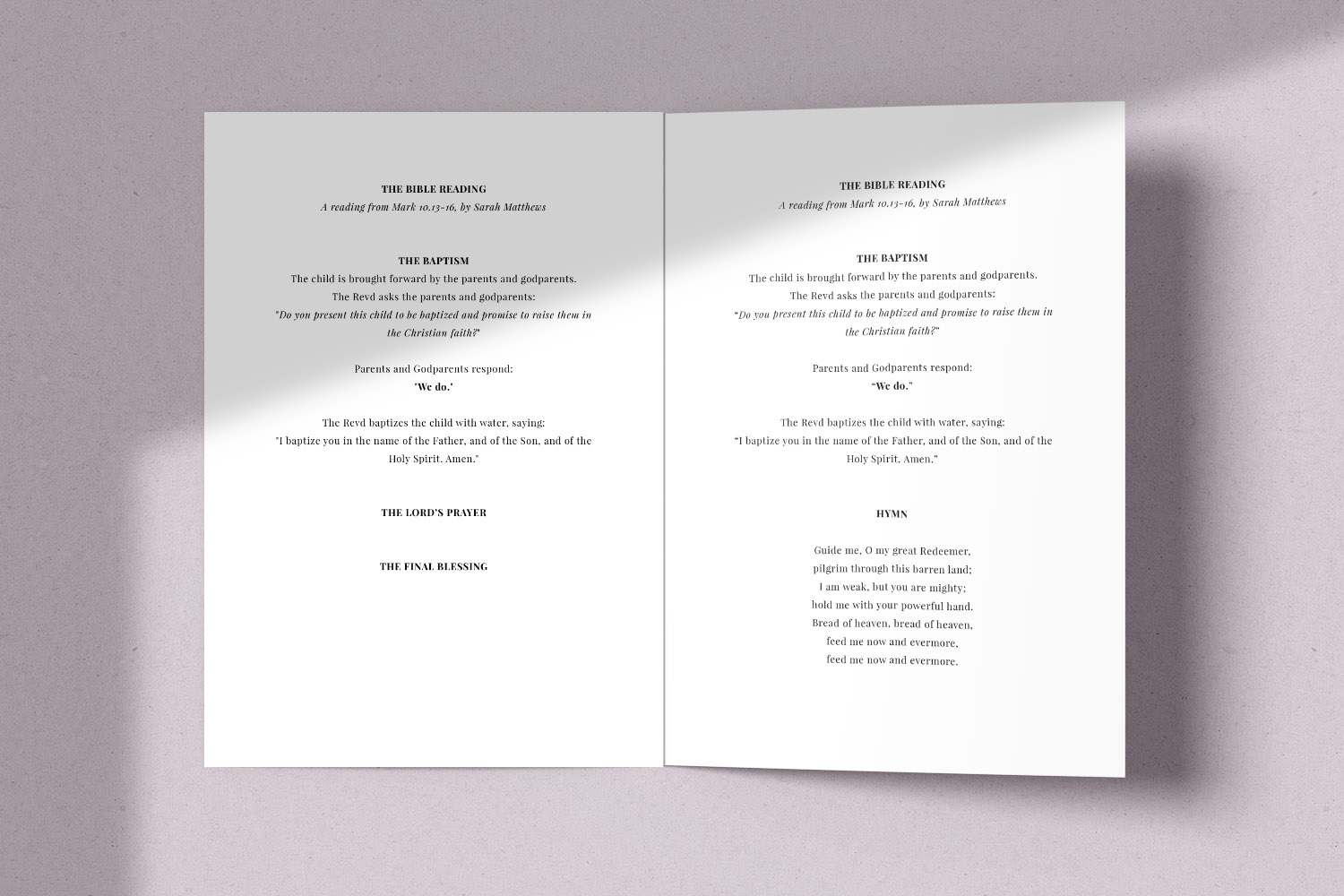
Elegant christening order of service booklet featuring clear hymns, readings, and prayers, ideal for guiding guests through the ceremony.
Formatting hymns so everyone can sing comfortably
1) Set comfortable line length and size
Aim for 10–12 words per line and a font size that older guests can read at arm’s length (often 11–12 pt in print). Short, evenly wrapped lines are easier to track than one long ribbon of text. If you need to shrink font size to make a hymn fit, it’s usually a sign to move to the next page count up.
2) Keep each verse intact
Avoid splitting a verse over a page break. If one verse can’t fit at the foot of a page, push it to the top of the next page rather than leaving a single “orphan” line behind. Use a consistent blank line between verses so people can see breaks at a glance.
3) Label the chorus clearly
If your hymn has a refrain, introduce it with Refrain: (or Chorus:) in bold, and repeat it in full the first few times. After that, you can abbreviate as Refrain if space is tight—provided the first instance is easy to find.
4) Handling long hymns (3 practical patterns)
- Whole-page block: Give each long hymn its own page (or double-page spread) to avoid jumps.
- Verse columns: For compact texts, two narrow columns can shorten eye-tracking distance. Keep column widths generous enough for legibility.
- Spillover with signposting: If you must continue, end with “(continues on next page)” and repeat the hymn title at the top of the new page.
5) Avoid mid-word hyphenation
Hyphen breaks slow readers during singing. If your designer tries to hyphenate, nudge the line by adjusting spacing or inserting a soft line break earlier in the verse.
6) Make leaders’ cues obvious
If the officiant or congregation has responses, style them consistently. For example:
- Leader: Blessed be God…
- All: Amen.
A small change in weight or small caps helps people see who speaks next.
7) White space is not wasted space
Resist the urge to fill every gap. White space around lyrics acts like a pause between breaths. Margins of 12–15 mm are typical on A5; a little extra inner margin helps with stitched booklets.
8) Page numbers and headers
If your service is longer than eight pages, consider small page numbers at the foot, and optionally a short running header (e.g., “Hymns” or the child’s name). Consistency beats decoration.
9) Cover and interior harmony
If your cover is image-led (for instance, a soft portrait from our photo order of service designs), keep interior typography calm. If your cover is minimalist—think our white order of service templates—you have more room to use subtle dividers or small ornaments inside without visual overload.
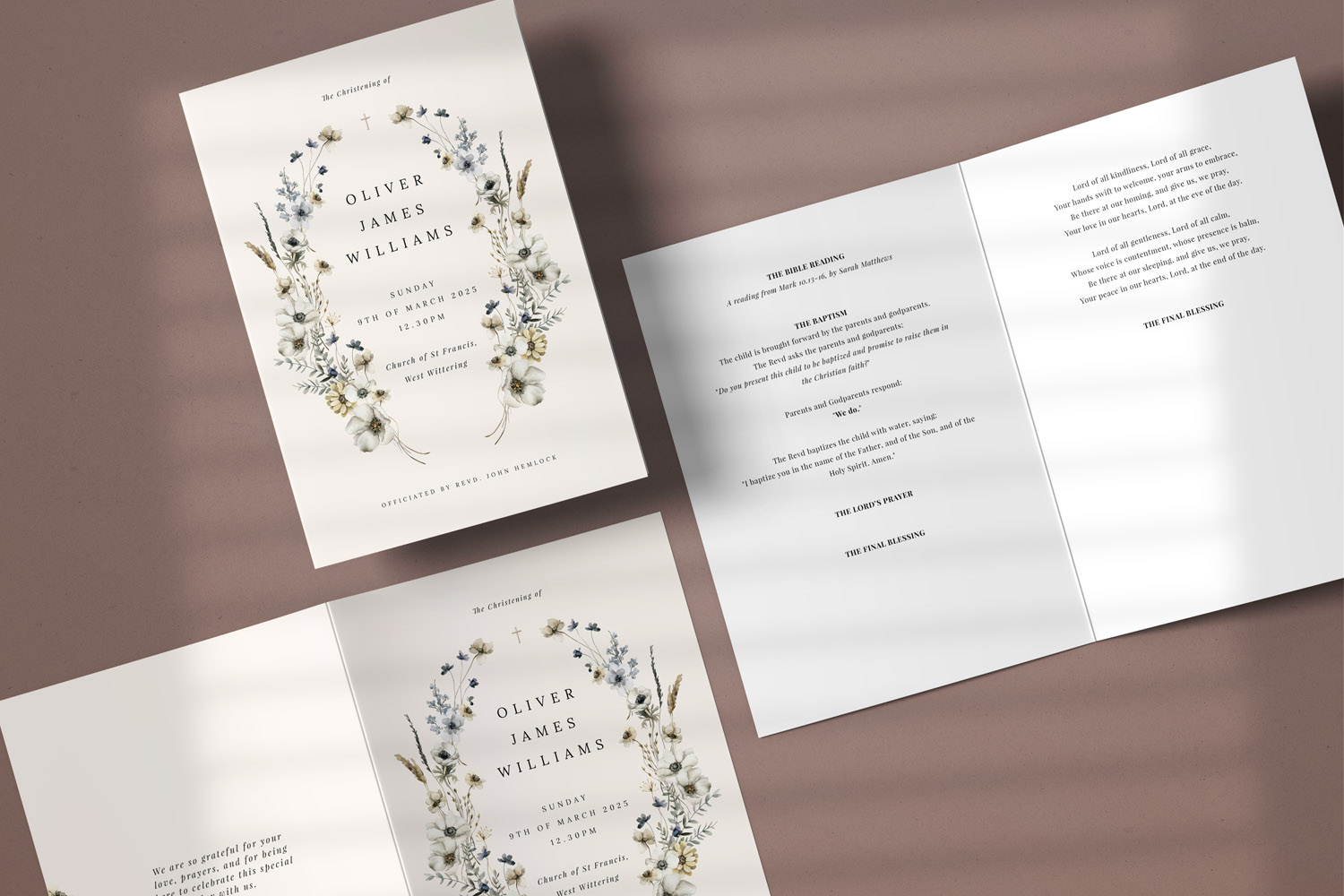
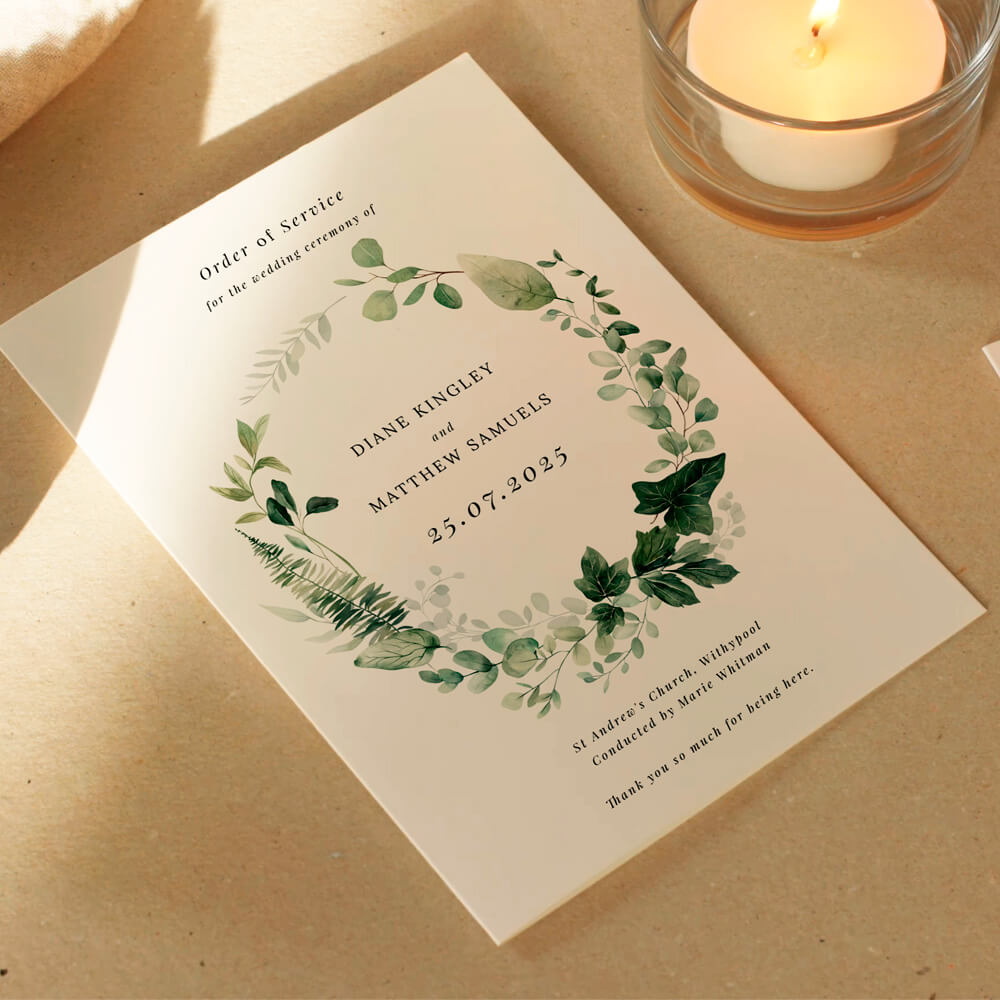
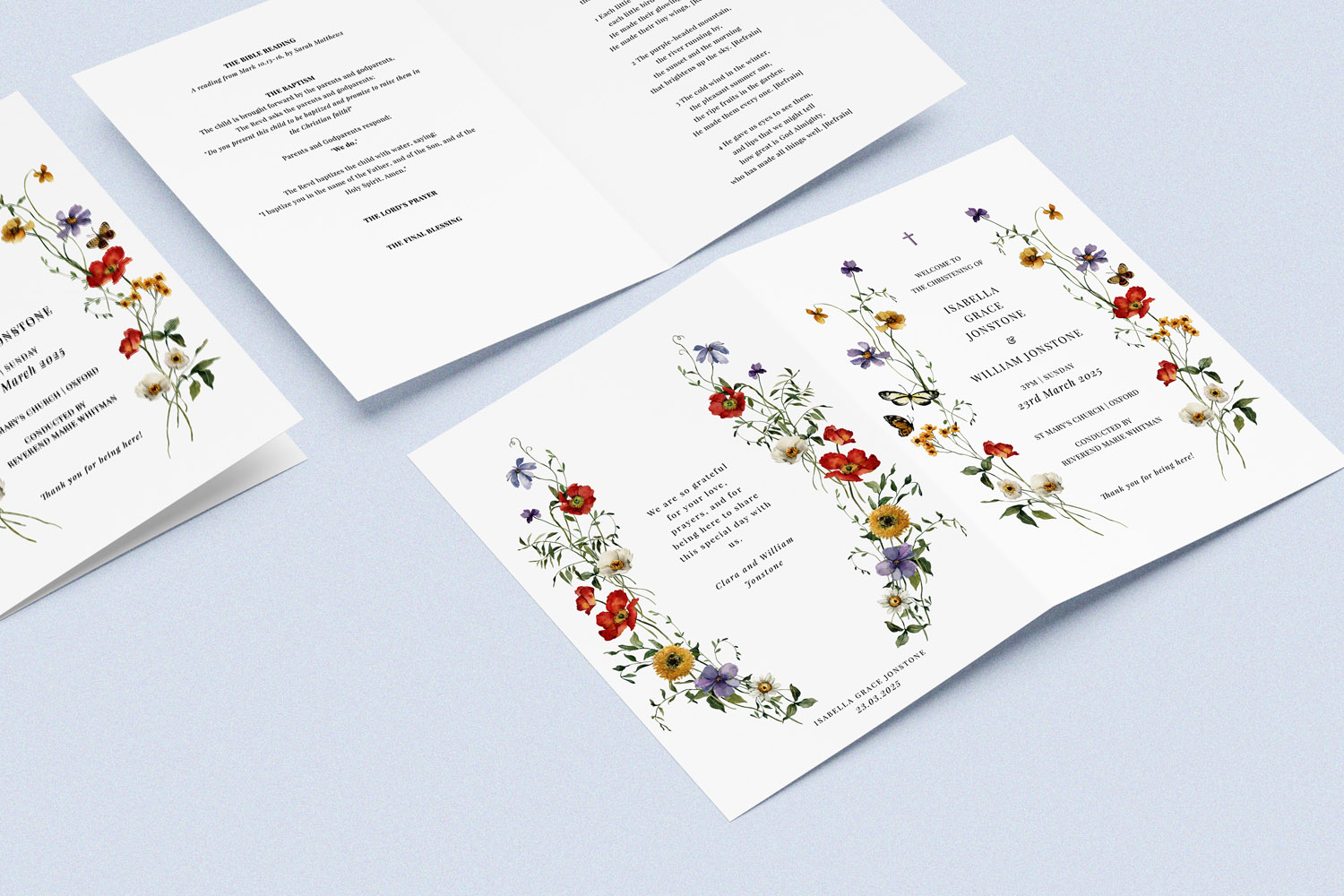
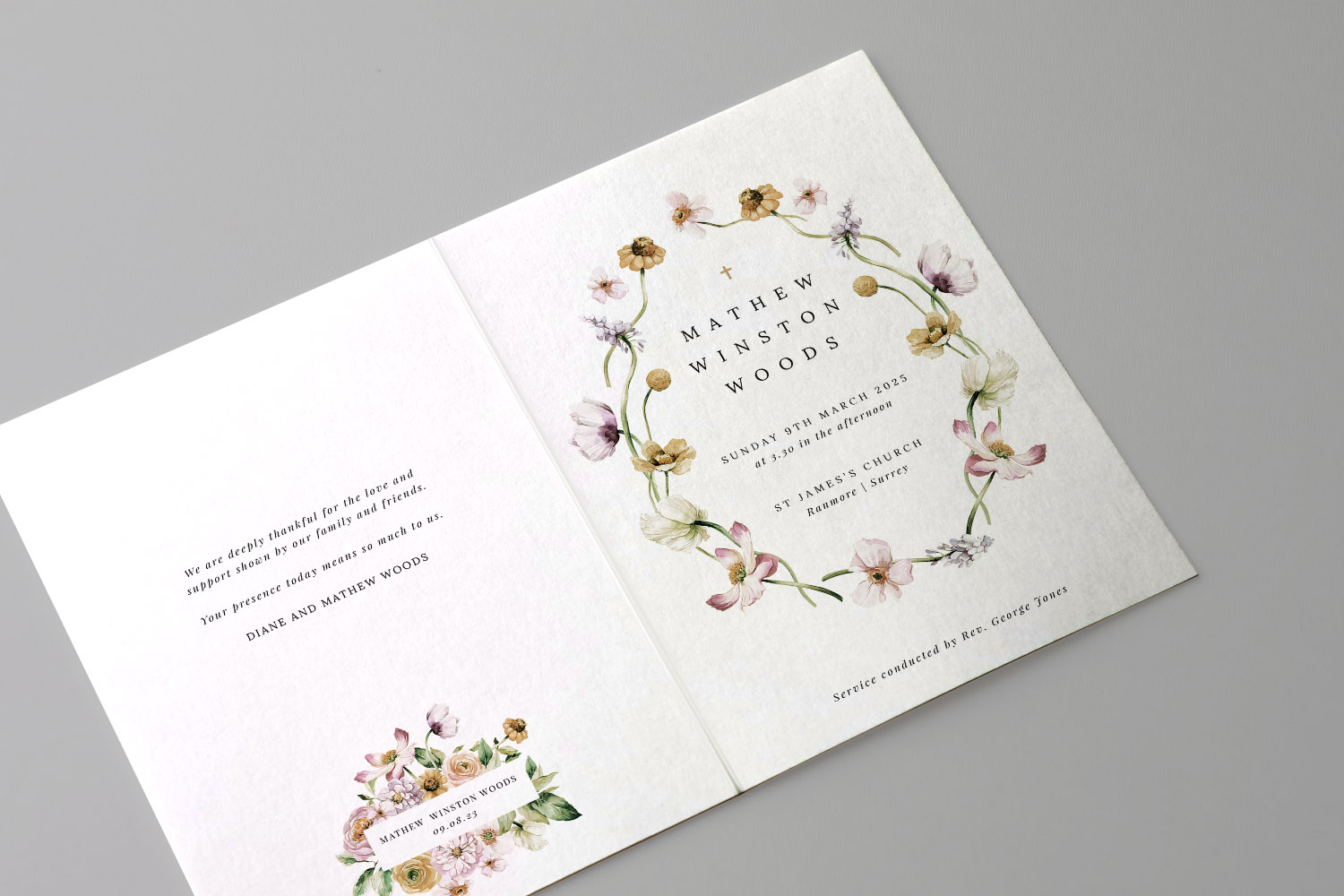
Elegant christening order of service featuring a delicate floral wreath cover and clear layout for hymns and readings, ideal for special ceremonies
Readings, psalms and scripture: structure, attribution and permissions
Place readings where people expect them
A typical Anglican or Catholic service places readings between opening prayers and the sermon/homily, with the baptismal liturgy later. In printed programmes, group the readings together and introduce each with a clear heading such as First Reading or Psalm. If you’re including all the words, keep the reading intact on a single page if possible.
Attribution and translation notes
Under each reading, add a short line such as:
1 Corinthians 13:4–7 (NRSV), read by Alex (Godparent)
This keeps the tone respectful and helps anyone following along in their own Bible. If your church prefers a specific translation, use that consistently.
Multiple readings and readers
If you have two or more readers, list them on the page where the reading appears. For a tidy programme, you can also include a “Participants” note near the back cover that thanks readers, musicians, and helpers.
Where to put acknowledgements
A short, warm thank-you paragraph often sits neatly on the inside back page: a line to your priest or minister, godparents, family, and any musicians. If you’re inviting guests to a reception, this is a good place to add the address or a small map. You might also use a QR code to link to directions or a photo album; our editor includes a QR tool for that.
Copyright: what to check and how to show it
- Hymns and modern worship songs. Many are covered by church licences managed locally (for example, your parish may hold a blanket licence). Ask your church office whether your selected lyrics are covered and what line of credit they prefer in the booklet.
- Bible translations. Some are public domain; others require a short permission line. Again, the church office will know the norm.
- What to print. If permission is required, add a small credit at the foot of the relevant page or on the back page (e.g., “Words reproduced under church licence. All rights reserved.”).
- Photos and poems. If you’re including a contemporary poem or a professional photograph, obtain permission from the copyright holder and add an attribution line.
Balancing white space with content
When a page is starting to feel crowded—three verses, a reading, responses, and a note—you’ll often get a better result by stepping up the page count rather than shrinking text. Remember: you’re creating a guide to a moving, spoken, and sung moment. Clarity is kinder than compression.
Designing online? You can start from any of our ready-made layouts and adjust the structure to suit your service. If you want a clean, timeless feel, explore our white designs. For a keepsake look, try a portrait cover from the photo styles, or pick something from our curated girl and boy collections to match the day.

FAQs: formatting hymns and readings for a christening booklet
A few quick answers to common questions when you’re laying out the order of service.
A: Most families find an 8-page booklet comfortable: cover and welcome; hymn one; reading; hymn two; prayers and thanks; back cover. If your verses are unusually long or you’re printing responses in full, 12 pages gives extra breathing space.
A: If guests may not know the words, include full lyrics. Keep each verse together and avoid small type. When most attendees will know the hymn, titles alone (with a melody cue for the musicians) can keep the booklet tidy.
A: Paste the hymn text, then manually insert line breaks at natural pauses; set a consistent blank line between verses; and avoid mid-word hyphenation. If a verse spills, push it to the next page rather than leaving a single orphaned line.
A: The inside back page is ideal for a short thank-you note to clergy, godparents, readers, and guests. If you’re including reception details, place them here too.
A: Yes. Add a small QR code near the relevant item or on the back page with a brief label (“Listen to the hymns” / “Service livestream”). Our editor includes a QR generator to make this simple.
Ready to start? Build your booklet in minutes with our Christening Order of Service collection, then browse photo covers, minimal white styles, and curated options for girls and boys.
Catholic vs Church of England: what actually changes in a christening order of service
Curious about the differences between a Catholic and Church of England christening order of service? This article guides you through the main elements, key distinctions, and practical tips for planning a clear, welcoming christening booklet for your ceremony.
How to Add Photos to Your Christening Order of Service
Discover how to add photos to your Christening Order of Service with thoughtful placement, technical tips, and design ideas for a beautiful, personal booklet. Create a keepsake that balances cherished images with clear hymns and readings, plus optional QR codes.
Matching Christening Stationery: Order of Service & Thank You Cards
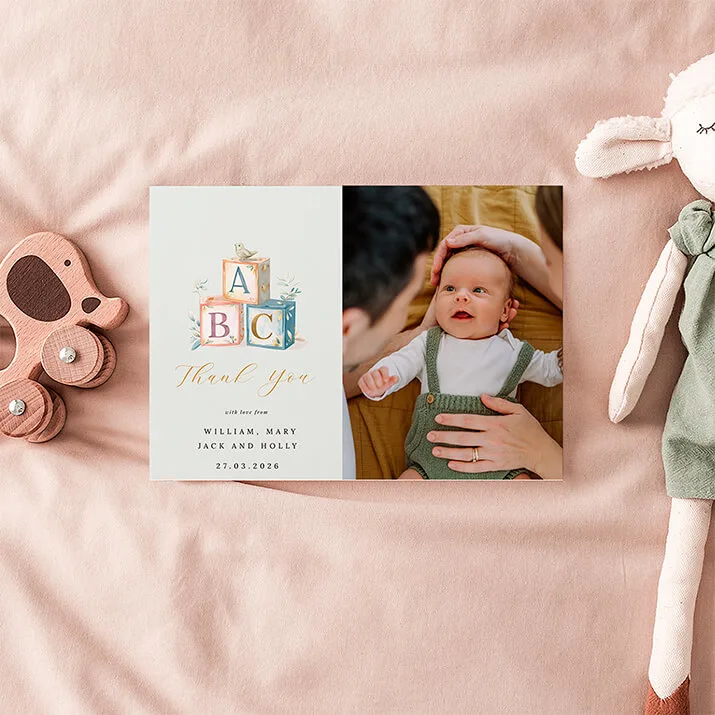
Discover how to create a beautifully coordinated christening stationery suite by matching your invitation, order of service, and thank you cards. This guide offers practical tips for using colours, fonts, and motifs to achieve a polished, memorable celebration.
What to Include in a Christening Order of Service
Explore how to create a meaningful christening order of service with this UK-focused guide, featuring essential sections, layout tips, and personal touches to help you design an easy-to-follow programme for your special day.
Products related to christening order of service booklets:


Latest Blog Updates
Create a meaningful christening order of service booklet to commemorate your child’s special day. Find guidance on content, layouts, and design options for a seamless ceremony.