Engagement invitation wording etiquette for different types of celebrations
Congratulations—now comes the small but mighty task of writing your engagement invitations. The wording you choose sets the tone, tells guests what to expect and, crucially, makes logistics easy. This guide walks through clear, modern etiquette for UK couples across different kinds of celebrations—cocktail evenings, garden BBQs, intimate dinners, surprise parties and events hosted by friends or family. It focuses on tone, order and structure (not templates), and it covers when to include hosts, dress code, arrival notes and how to handle modern RSVPs such as QR codes. When you’re ready to put words onto a card, you can personalise one of our engagement party invitations and choose a style that matches your plans.
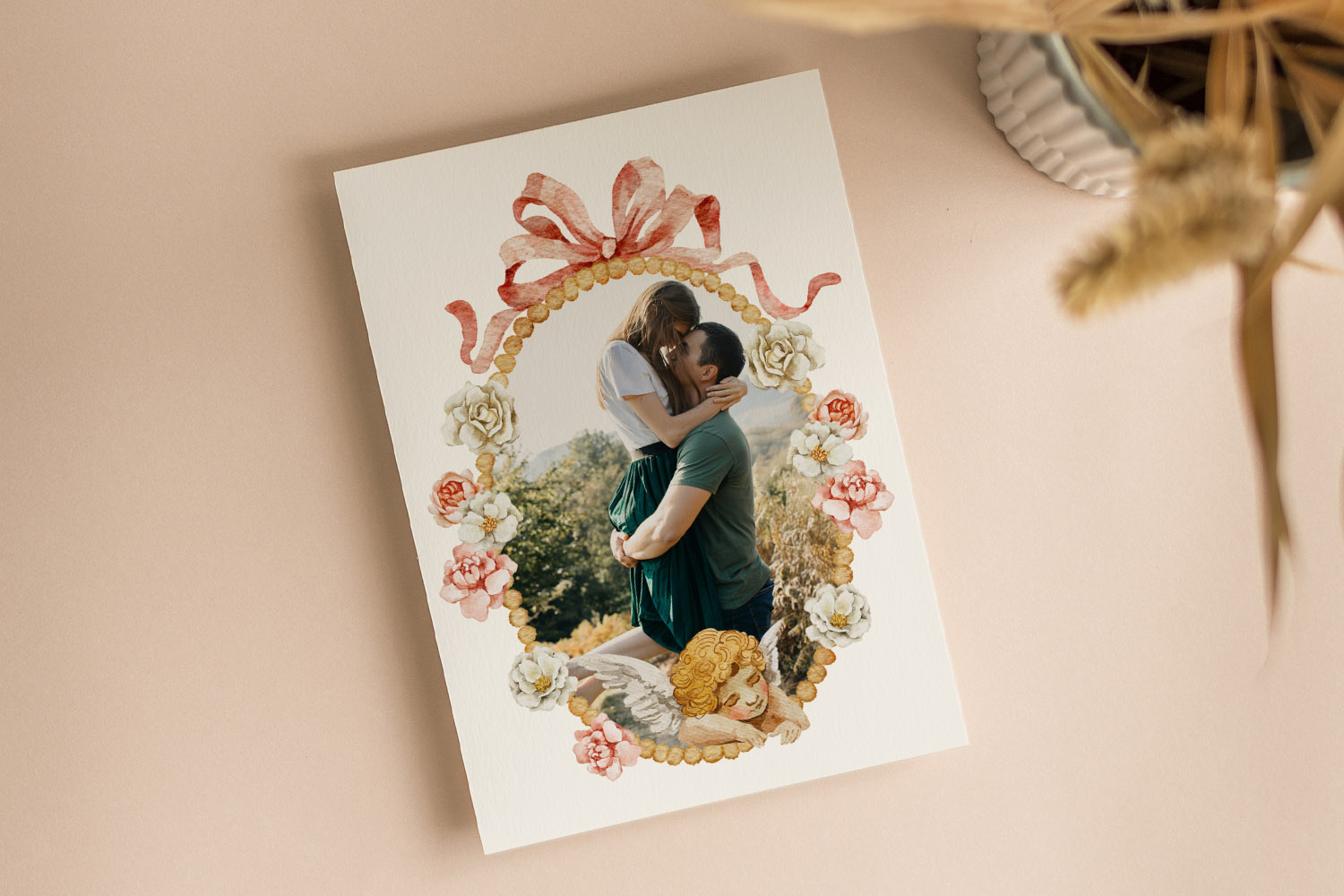
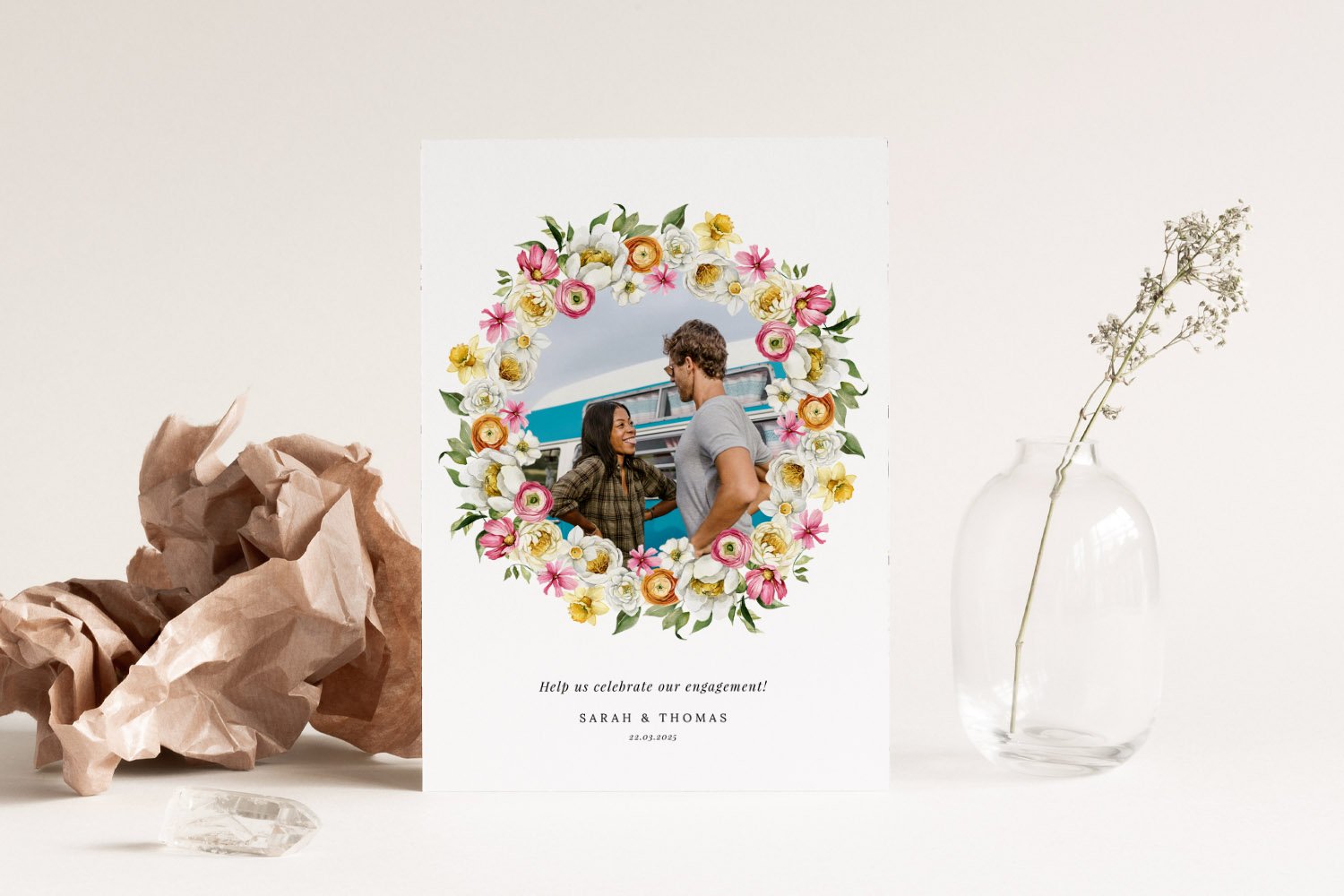
Elegant engagement party invitations with a couple's photo framed by floral accents and a cherub, perfect for announcing your celebration.
1) The building blocks of clear, polite wording (UK style)
Before tailoring language to your event, get the fundamentals right. A straightforward UK invitation usually follows this order:
- Host line – Who’s inviting? (Couple / parents / friends)
- Occasion – That it’s an engagement celebration
- Names – The couple’s names (full names if the event is formal)
- Date & time – In UK format (e.g., Saturday 14 June 2025, from 7.30pm)
- Venue – Name and full address
- RSVP – How and by when (give a firm date)
- Helpful extras – Dress code, “adults only”, access notes, parking, dietary or gift guidance
- RSVPs: postal card or QR code?
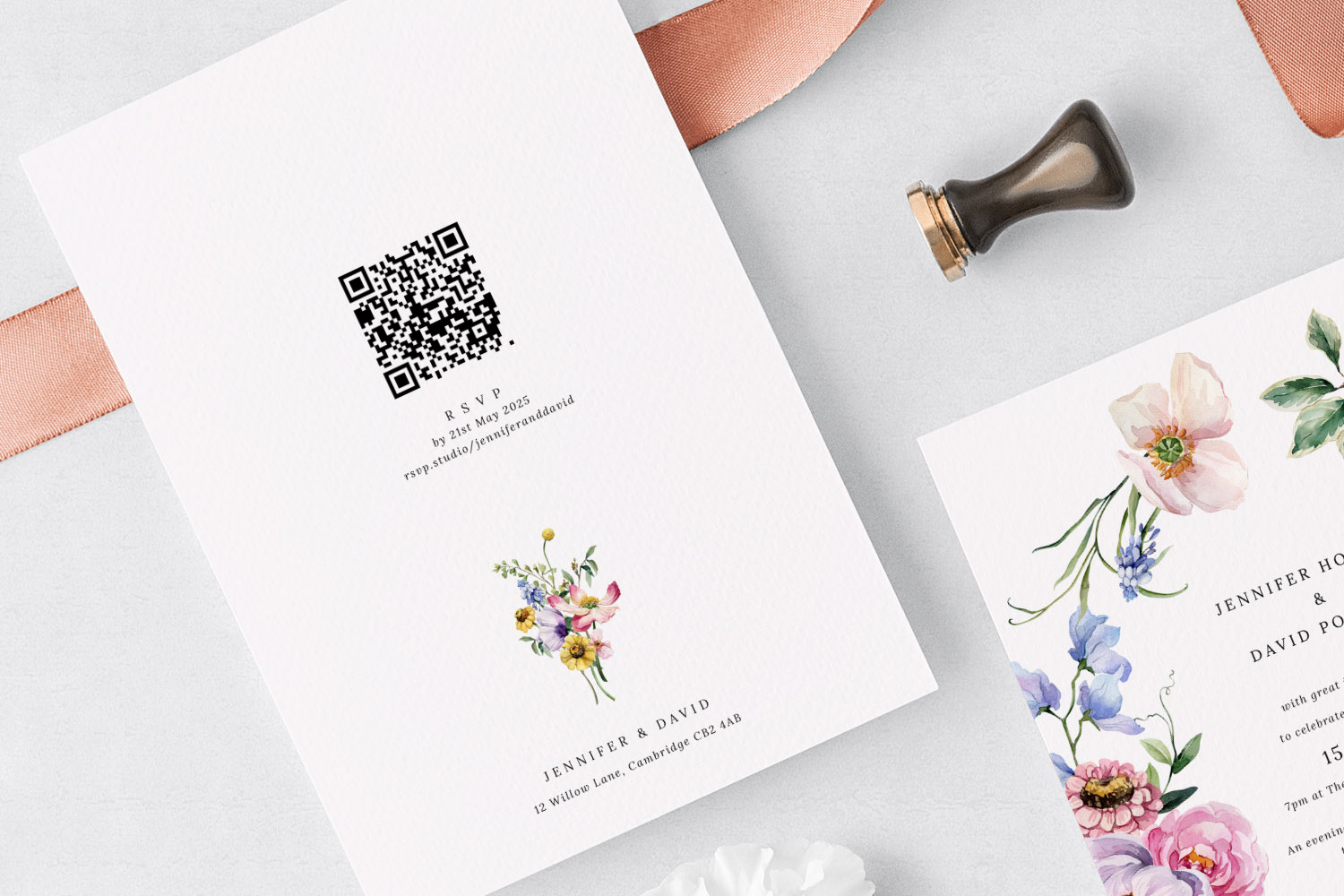
Both are acceptable; pick one clear route. A traditional card suits formal dinners. For most modern parties, a QR code that opens an online form is fast and tidy—no stamps, instant head-counts and easy dietary tracking. If you’re designing online, you can include a small QR code on the card with a simple line such as “Kindly respond via the QR code by Friday 12 July”. Keep it short; the invitation is not the place for long instructions.
Dress code notes—only when useful.
Add attire guidance when the venue or activity implies a level of formality (“Black tie”, “Cocktail attire”, “Smart casual”) or practical footwear (“Garden party—lawn-friendly shoes recommended”). If the dress code is obvious from the venue (e.g., casual pub) or from the time of day, you can omit it.
Polite boundaries.
If you’re not inviting children, say so clearly and kindly: “Adults only celebration.” If you don’t want presents: “No gifts, please—your presence is plenty.” If you’d prefer donations or a specific alternative, keep it optional and brief.
A note on tone.
Write as you’d speak to your guests. Formal events benefit from full names, complete sentences and titles. Relaxed gatherings can use warmer, lighter phrasing—just ensure the essentials above remain crisp.

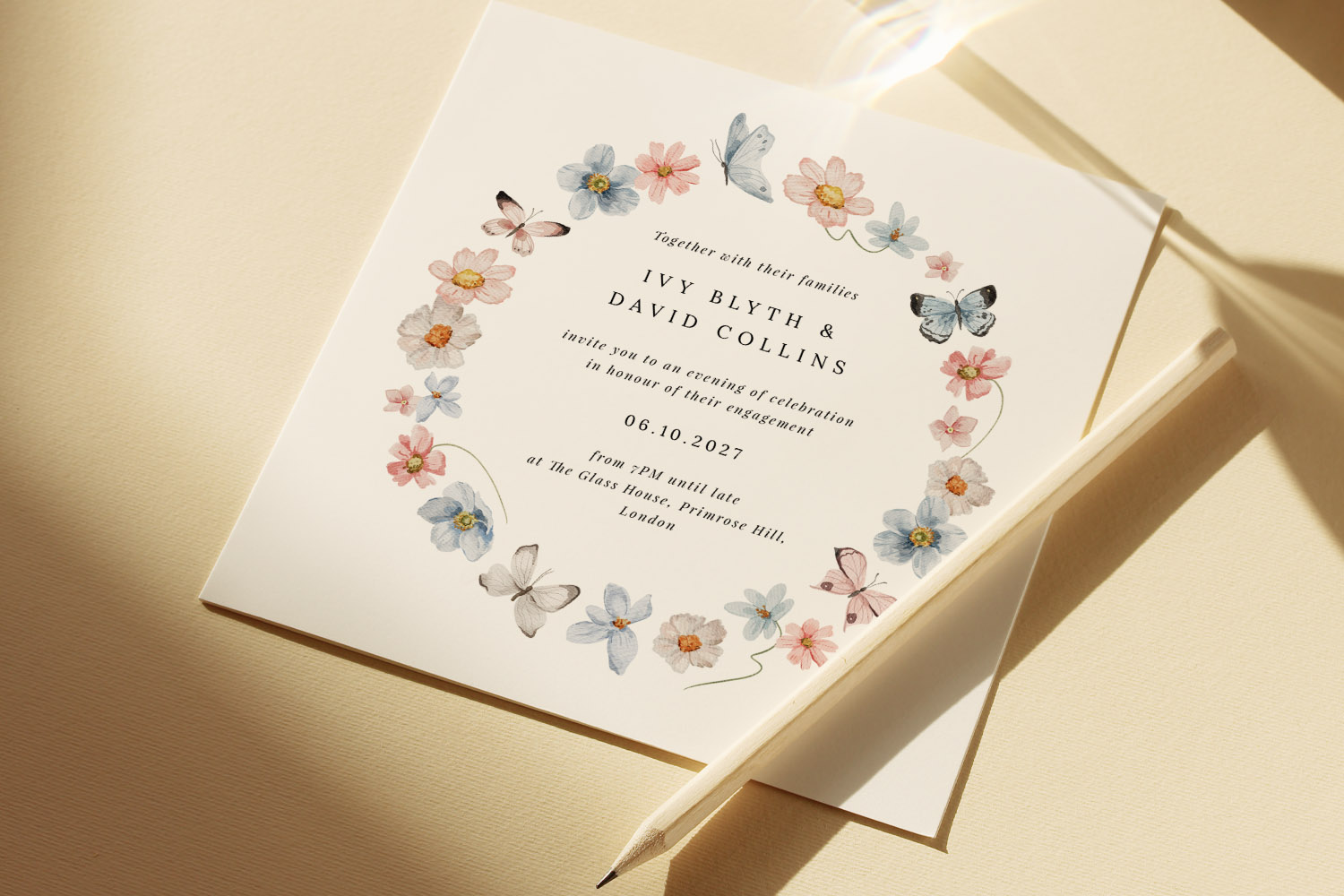
Elegant engagement party invitations with a delicate floral watercolour motif, perfect for announcing your celebration in style.
2) Who’s inviting whom? Hosts, names and overall tone
When the couple are hosting.
Lead with the couple or open with the occasion—either is fine. For a relaxed party, “We’re celebrating our engagement and would love you to join us” keeps things friendly. For a formal dinner, start with names and keep punctuation clean and minimal.
When parents or family are hosting.
Put the hosts first (“[Names] invite you to celebrate the engagement of [Couple’s names]”). This makes it clear who’s organising, where replies should go and who guests can contact with questions.
When friends are throwing the party.
State the hosts and mention the couple by name (“Hosted by [Friends’ names] to celebrate [Couple’s names]”). Add the host’s contact detail for RSVPs if the couple shouldn’t see responses (especially for surprises).
Ordering names.
Use the couple’s preferred order. If you’re unsure, keep it alphabetical by first name. For gender-neutral or same-sex couples, avoid assumptions and choose what feels authentic.
Style should match the event.
Your card design helps set expectations before anyone reads a word. Think look + language: a black-tie dinner sits beautifully with elegant engagement invitations; a city bar suits modern engagement invitations; a countryside or back-garden gathering pairs naturally with rustic engagement invitations; and if you’d like to share your proposal moment, consider photo engagement invitations. All of these styles are easy to personalise within our range of engagement party invitations.

Elegant engagement party invitations with a delicate floral motif, perfect for announcing your celebration in a stylish and personal way.
3) Scenario-by-scenario wording advice
Below are etiquette pointers and example fragments (not full templates) tailored to common types of engagement party. Pick the pieces that fit your plans, and keep the structure from Section 1.
Cocktail evening (hotel bar, private room, rooftop)
Tone: Polished, upbeat.
Include: Start time (“from 7.30pm”), venue dress code if relevant (“Cocktail attire”), whether canapés are served.
Helpful lines:
- “Join us for cocktails and canapés to celebrate our engagement.”
- “Speeches at 8.15pm—do arrive a little early.”
- “Bar closes at 11pm.”
RSVP: A QR code works well here; set a firm date 2–3 weeks before so you can finalise numbers.
Garden BBQ (back garden, park hire, barn)
Tone: Warm, informal.
Include: From/to window (“12–5pm”), weather plan (“gazebo/heaters”), parking or location pin, footwear note.
Helpful lines:
- “Garden BBQ to celebrate our engagement—casual dress, lawn-friendly shoes.”
- “We’ll have veggie options—please note any allergies when you RSVP.”
- “If it rains, we’ll head inside—same address.”
RSVP: Use one method only. A QR code is perfect for collecting dietary info.
Intimate dinner (restaurant private dining, at home)
Tone: Formal or quietly refined.
Include: Exact start time, seating (“seated dinner”), set-menu note if applicable.
Helpful lines:
- “Please join us for a seated dinner to celebrate our engagement.”
- “Kindly let us know any dietary requirements with your RSVP.”
- “Black tie optional” or “Smart cocktail attire” if you want to elevate the mood.
RSVP: Postal cards feel at home here, but a QR code is still acceptable—keep the wording discreet.
Surprise party (friends or family hosting)
Tone: Clear and conspiratorial—but never confusing.
Key etiquette:
- Put hosts first and the couple second.
- Include an arrival time and a surprise time (“Arrive by 6.45pm for a 7pm surprise”).
- Make the “Shh—it’s a surprise!” line prominent.
- Send RSVPs to the host, not the couple.
Helpful lines: - “Hosted by [Names]—please keep this a secret from [Couple’s names].”
- “Contact [Host’s name] only with questions.”
- “Parking at rear—enter via the side gate.”
Hosted by friends or family (non-surprise)
Tone: Welcoming, appreciative.
Include: Host names and relationship if helpful (“Hosted by her parents, [Names]”).
Helpful lines:
- “[Hosts’ names] invite you to celebrate the engagement of [Couple’s names].”
- “RSVP to [Host’s name] by [Date].”
- If the couple won’t manage RSVPs, say so plainly (“Please reply to [Host], not the couple”).
When and how to use dress codes
- Use short, recognisable terms: “Black tie”, “Cocktail attire”, “Smart casual”, “Garden party”.
- Place the note near RSVPs or as a final line.
- Avoid quirky phrases that could be misread.
Gift, children and practical notes—polite, brief, helpful
- No gifts: “No gifts, please—your presence is more than enough.”
- Children: “Adults only” or “Children welcome from 4pm.”
- Access: “Step-free access available—please tell us if you need assistance.”
- Transport: “Taxis can access the courtyard—last trains from [Station] at 23:12.”
UK formatting quick wins
- Prefer Saturday 14 June 2025 (day–month–year).
- Times read cleanly as 7.30pm or 7pm.
- Keep addresses on separate lines and include a postcode.
- Avoid over-punctuation; crisp line breaks do the work.
Bringing it all together on the card
Once the language is set, match it with a design that signals your tone at a glance—e.g., a sleek layout for cocktails, soft botanicals for a garden do, or a favourite photo for a relaxed get-together. Our range of engagement party invitations includes elegant, modern, photo-led and rustic options you can personalise in minutes.

Engagement invitation wording: FAQs
Questions tend to arise around hosts, dates, RSVPs and dress codes. These short answers follow current UK practice and are easy to adapt to your plans.
Whoever is organising the party and managing replies—often the couple, but it may be parents or friends. Put the host line first to make it obvious, then follow with the couple’s names and the occasion.
No. Include one only if it genuinely helps guests arrive suitably dressed (black-tie bar, rooftop in winter, lawn in summer). Keep it to a familiar two-word phrase.
Day–month–year works best (e.g., Saturday 14 June 2025). For time, 7.30pm or 7pm are tidy and readable. Avoid US formats.
Pick one route (postal card or digital). State it clearly and give a firm “RSVP by” date—two to four weeks before the party is typical. A small QR code linked to an online form is efficient for head-counts and dietary notes.
Short and warm: “No gifts, please—your presence is plenty.” If you prefer an alternative, make it optional (“If you wish…”).
Paper Types for Engagement Party Invitations: Smooth, Textured or Silk?
Discover the ideal paper types for engagement party invitations in this helpful guide, covering smooth, textured, silk, and super-thick card stocks. Find out how each choice influences colour, typography, and photography to perfect your invitation design.
RSVP Options for Engagement Party Invitations: Email, QR Code or Website?
Discover the best RSVP options for engagement party invitations, from email and QR codes to website forms and printed inserts. This guide helps you choose the right method for your guest list, making responses easy to collect and manage.
What to include on an engagement party invitation (UK examples)
Learn what to include on a UK engagement party invitation, covering key details, RSVP options, wording ideas, and design tips. This guide ensures your invitations are clear, inviting, and set the perfect tone for your celebration.
Products related to engagement party invitations:

Trends & Tips
Engagement party invitations are an exciting part of wedding planning. Check out our blog for tips on timing, RSVP management, and how to personalise your invitations for the big celebration.