What to Include on a Wedding Menu Card: A Practical UK Guide
Couples often ask, “What exactly goes on a wedding menu card?” The short answer: enough to guide and reassure your guests, not so much that it clutters the table. Below is a clear, human-first guide to help you decide what to include, how to format it, and when to add extras—so your menus look beautiful and read effortlessly.
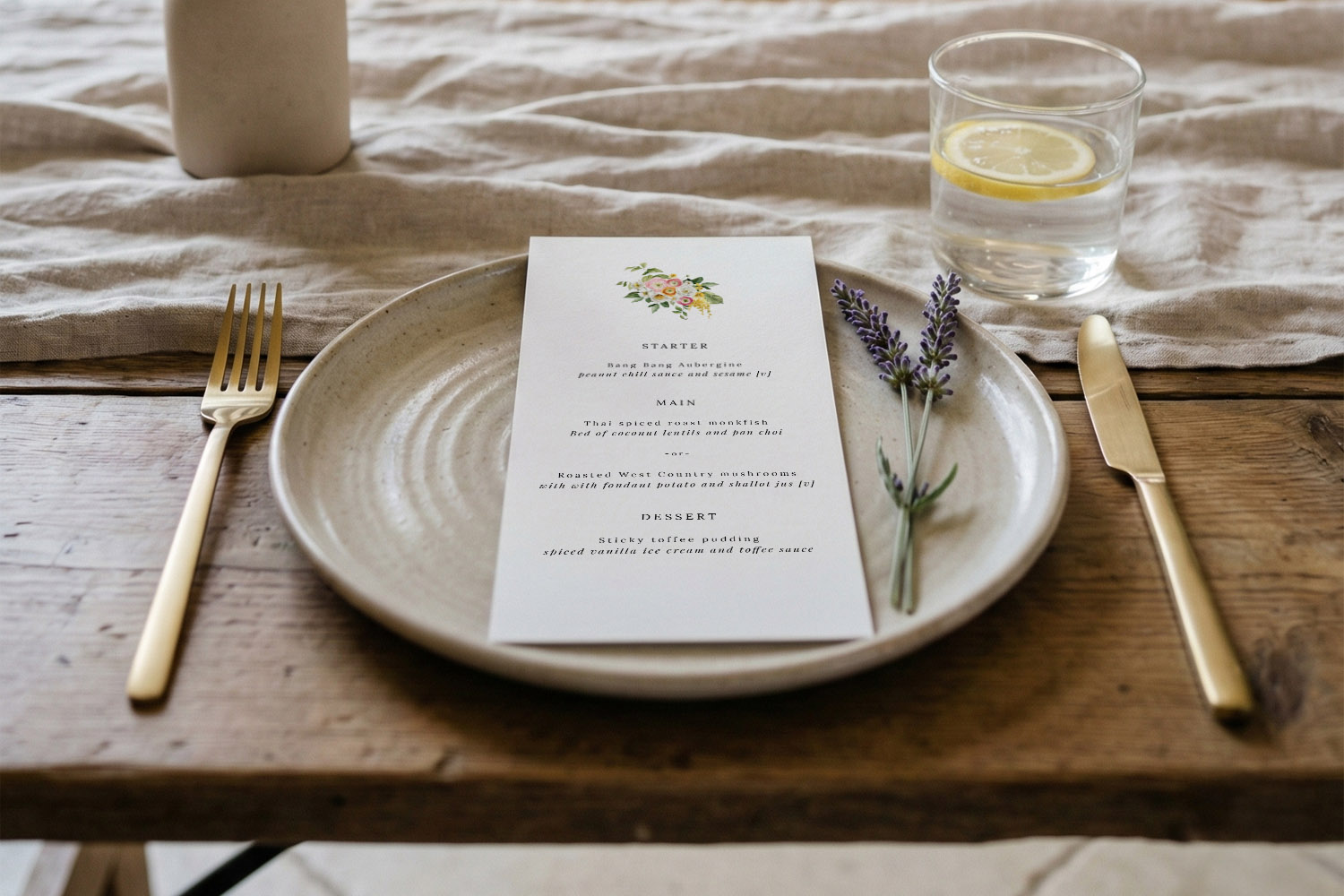
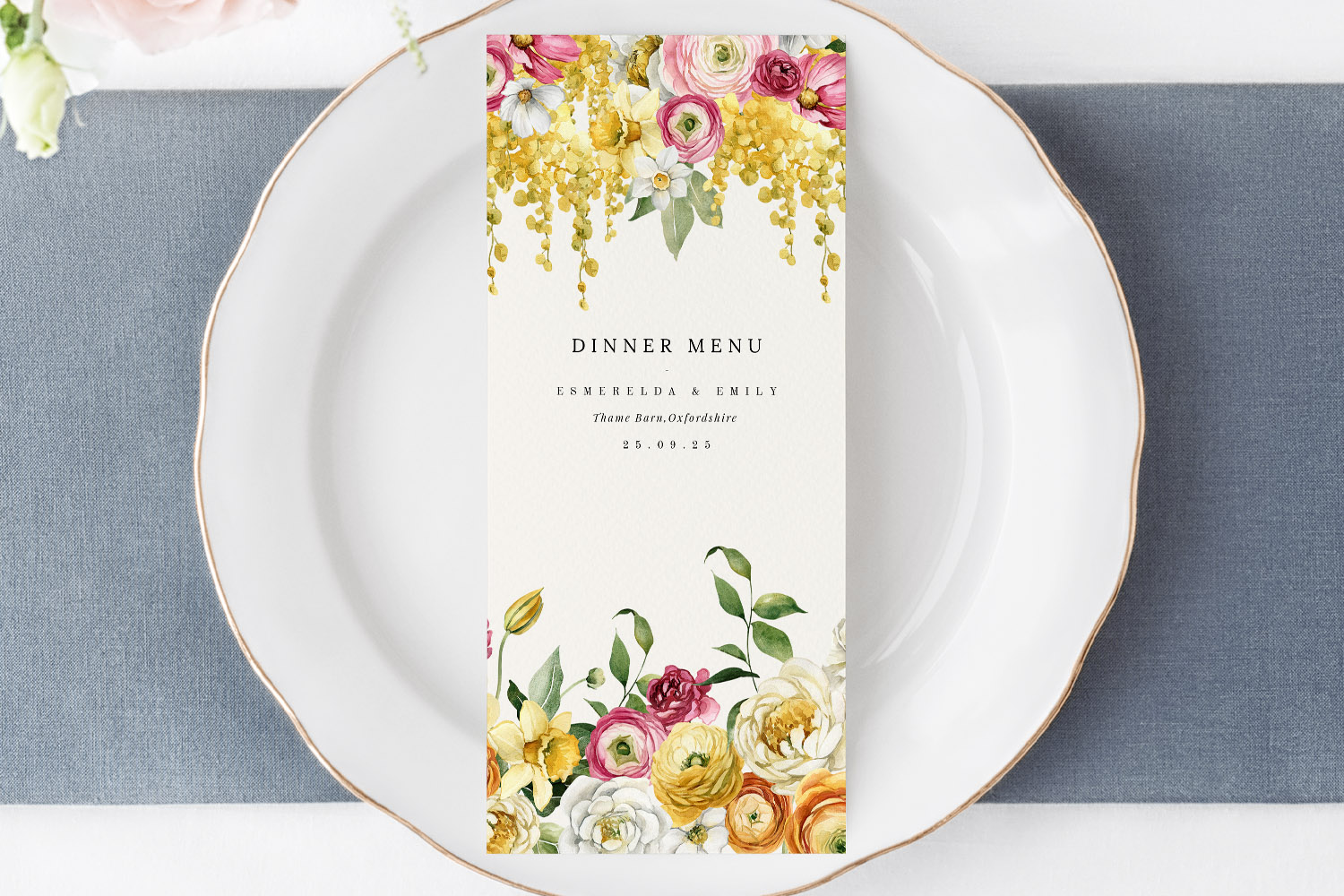
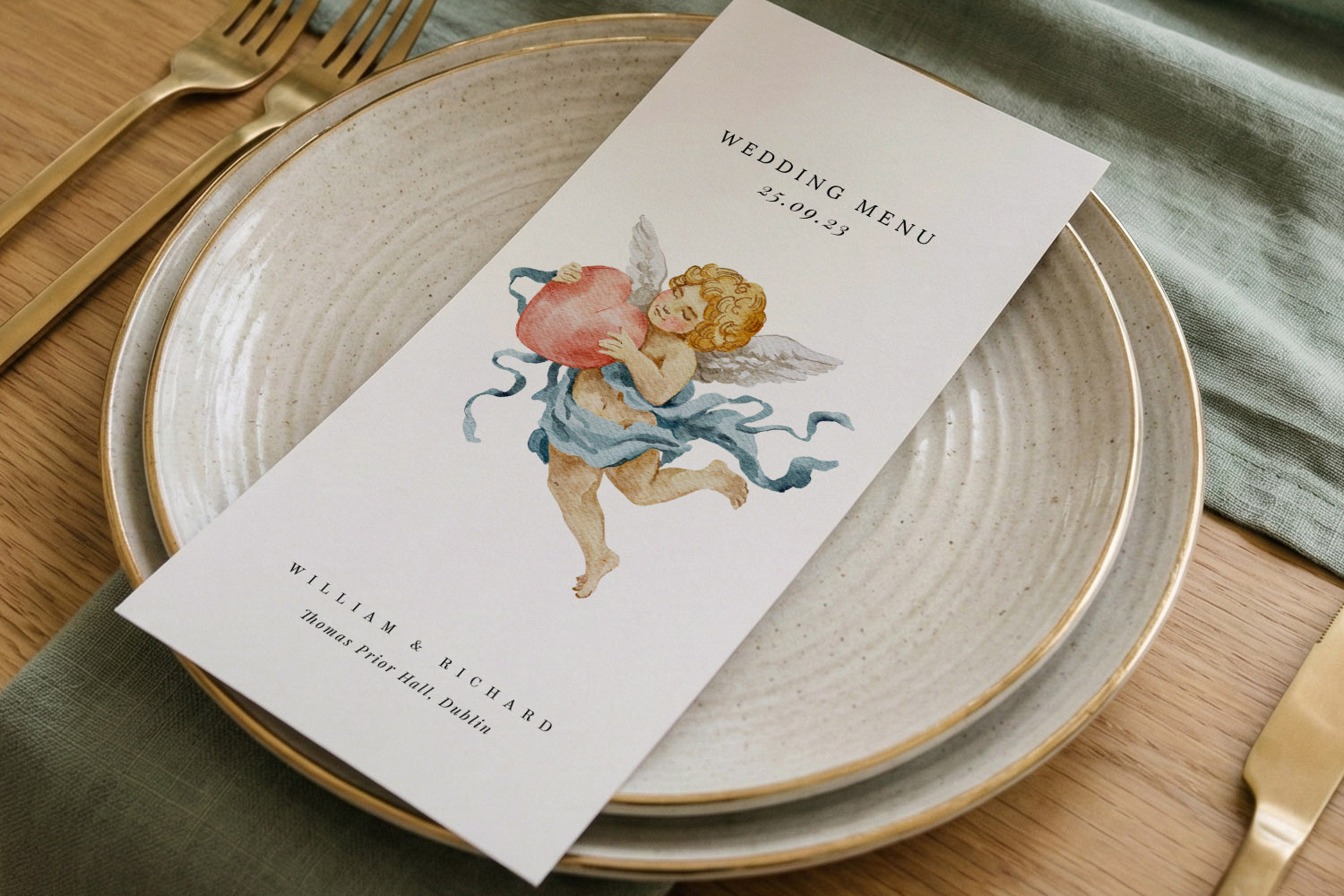
Elegant wedding menus with a floral motif, styled on a rustic table setting with gold cutlery and fresh lavender for a refined touch
1) The essentials to include on your menu (and why)
A well-structured menu card does three jobs: informs guests, complements your table styling, and helps caterers and hosts manage dietary needs smoothly. Here’s a proven structure that keeps things concise and elegant:
Top line (optional but useful)
- Couple’s names and wedding date; venue if you wish. This creates a keepsake feel without taking centre stage.
Course headings
- Use straightforward headings such as Starter, Main, Dessert, and Drinks. If you’re hosting a buffet or sharing boards, label them clearly (e.g., Sharing Starters or Evening Buffet).
Dish titles and succinct descriptions
- Keep dish names short and appetising, with one crisp line of description if needed (e.g., Heritage tomato salad – basil, burrata, capers). Avoid chef-level detail or long allergy disclaimers here; let icons or a short note do the heavy lifting.
Dietary indicators and allergen notes
- Add simple icons (V, Ve, GF) or a succinct key (“V = vegetarian; Ve = vegan; GF = gluten-free”). For full allergen transparency, either add a short footnote or a QR code that links to a detailed list online. Utterly Printable’s online designer lets you add icons, edit fonts/colours and generate QR codes directly on your menu design.
Drinks and pairings
- If you’re including wines, list by grape/varietal, region, and optionally vintage (e.g., Sauvignon Blanc, Loire Valley, 2023). Keep it uncluttered—pairings should enhance, not overwhelm.
Optional keepsake touches
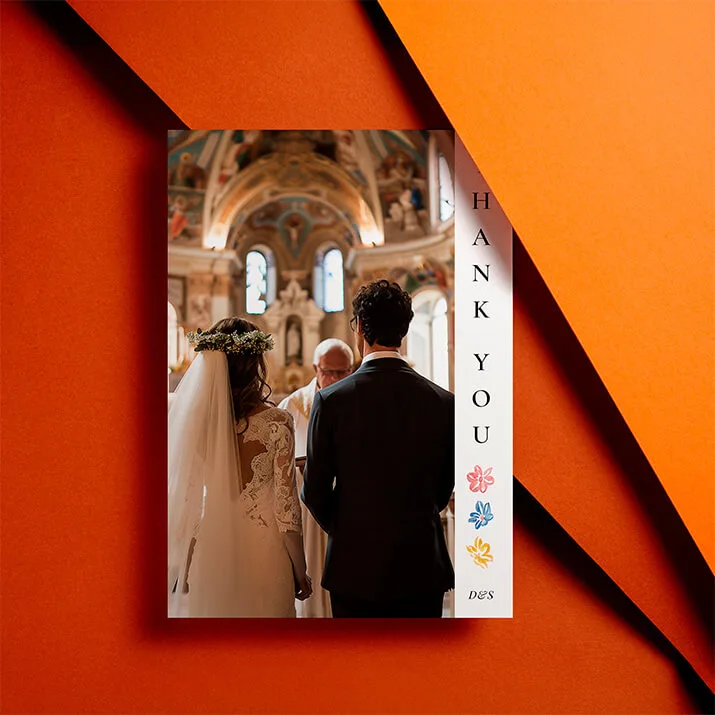
- A short thank-you message at the end reads warmly without sounding sales-y: “Thank you for celebrating with us.”
If you’re still choosing a look, you’ll find plenty of styles to match your tablescape—from a time-honoured layout in our classic wedding menu designs to clean, typography-led layouts in the modern collection, refined flourishes in elegant menu templates, and characterful looks in our vintage styles. Browse the full range of wedding meal menu templates to see what suits your day.
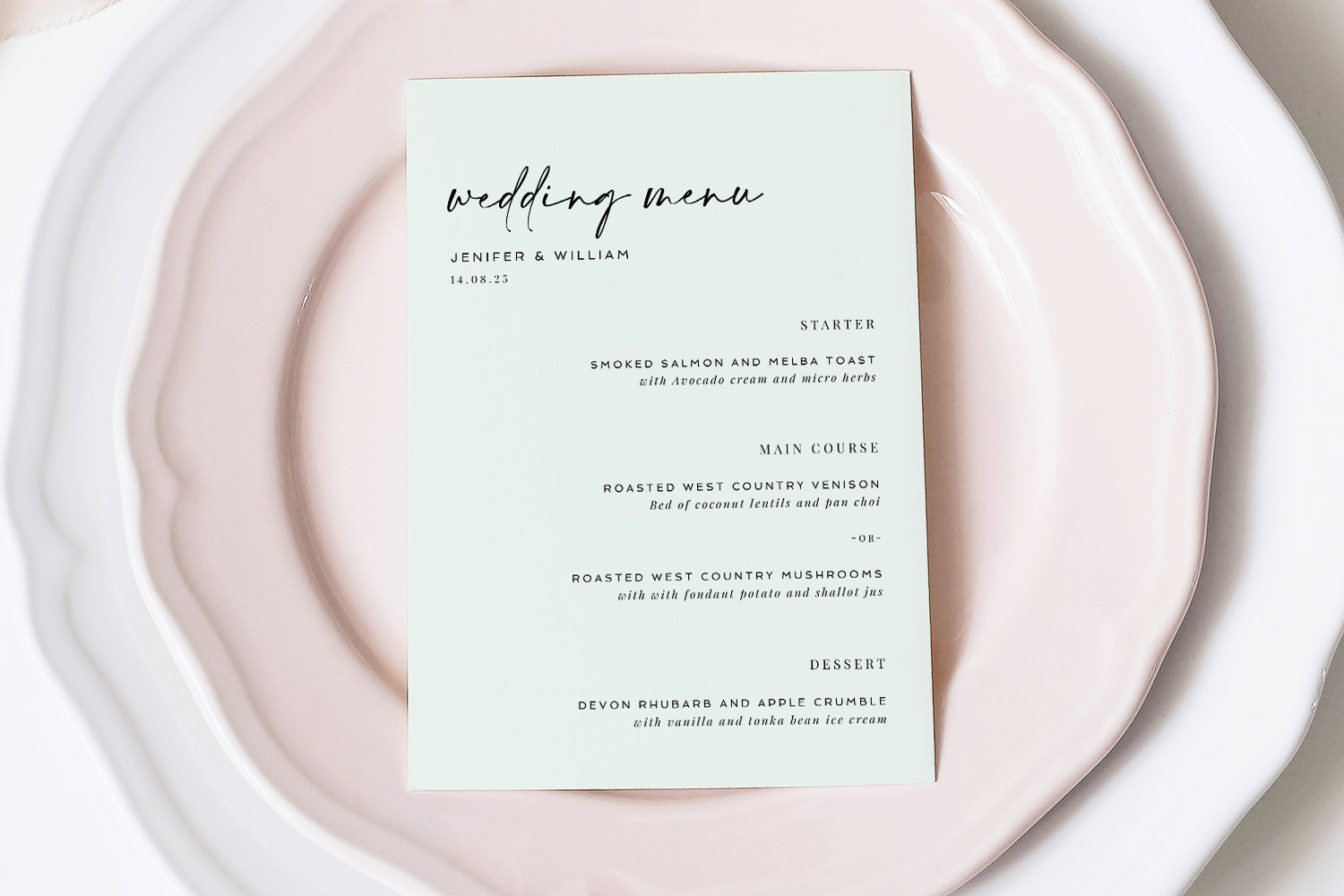
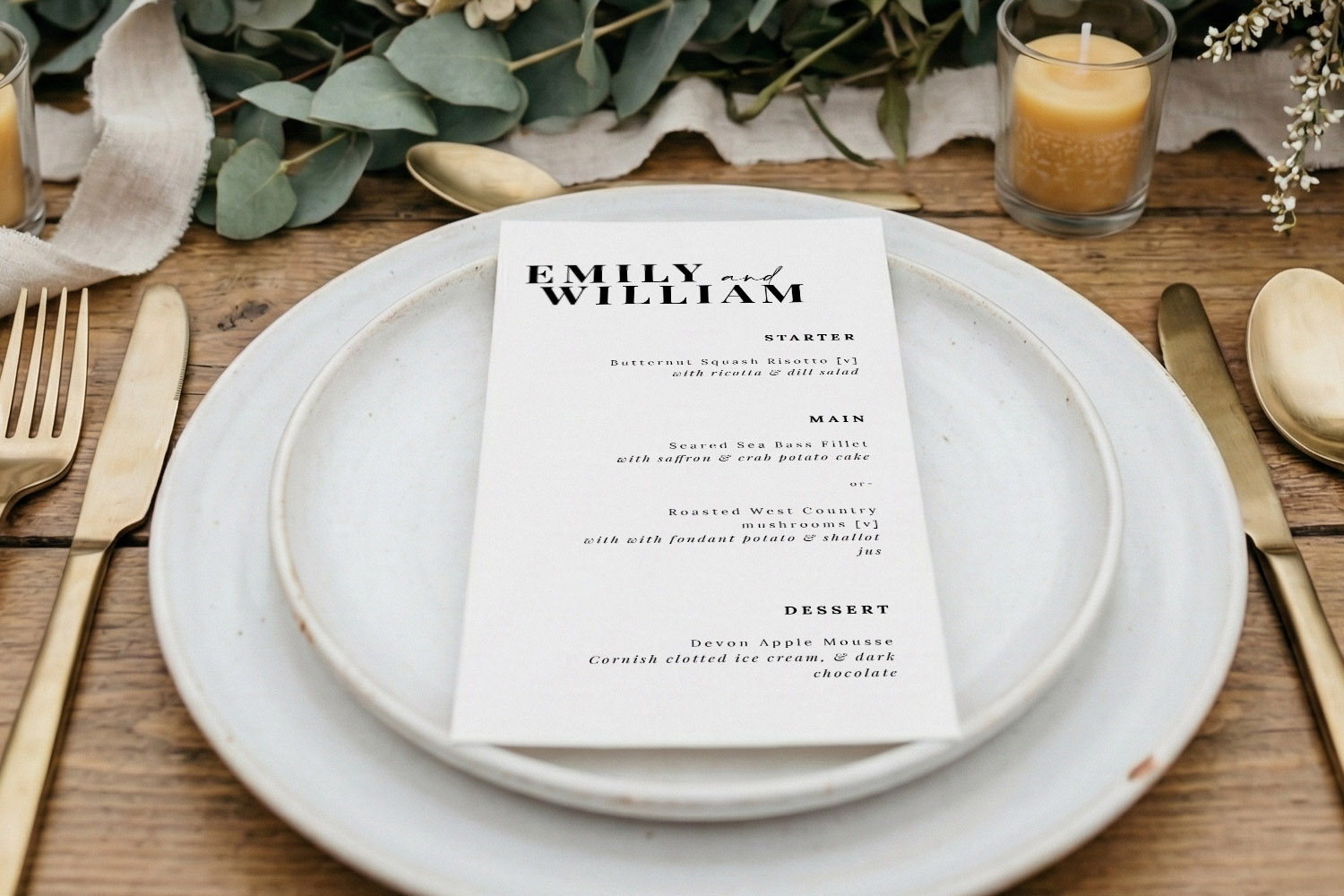
Elegant wedding menus with simple black text on white card, styled on pastel plates, perfect for a modern wedding table setting.
2) Individual menus vs shared menus: what to include for each
Choosing between one menu per place setting or a single menu per table changes what you include and how you format it.
One menu per place setting
Best for: formal, multi-course meals, tasting menus, or when many guests have dietary requirements.
What to include:
- The full course list, concise descriptions, and dietary icons.
- Optional guest name at the top so the card doubles as a place card—tidy and space-saving.
- A closing thank-you line for keepsake value.
Design and size tips:
- DL and 5″×7″ feel refined without dominating the setting; A5 works where you have generous place settings. Utterly Printable offers DL (21 × 9.9 cm), A5, 5″×7″, and 148 mm square menu formats, all ready to personalise online.
One shared menu per table
Best for: family-style dining, feasting boards, set menus that don’t vary by guest.
What to include:
- Course headings and succinct dish lists, kept readable from a short distance.
- A clear drinks section (house wines, beer, soft drinks); keep it short.
- Optional QR code linking to full allergen information.
Design and size tips:
- Consider the 148 mm square or A5 format for legibility at the centre of the table. For a statement piece, print one or two menus per table on Super Thick (650gsm) card so they stand upright in a small stand or lean neatly against floral arrangements.
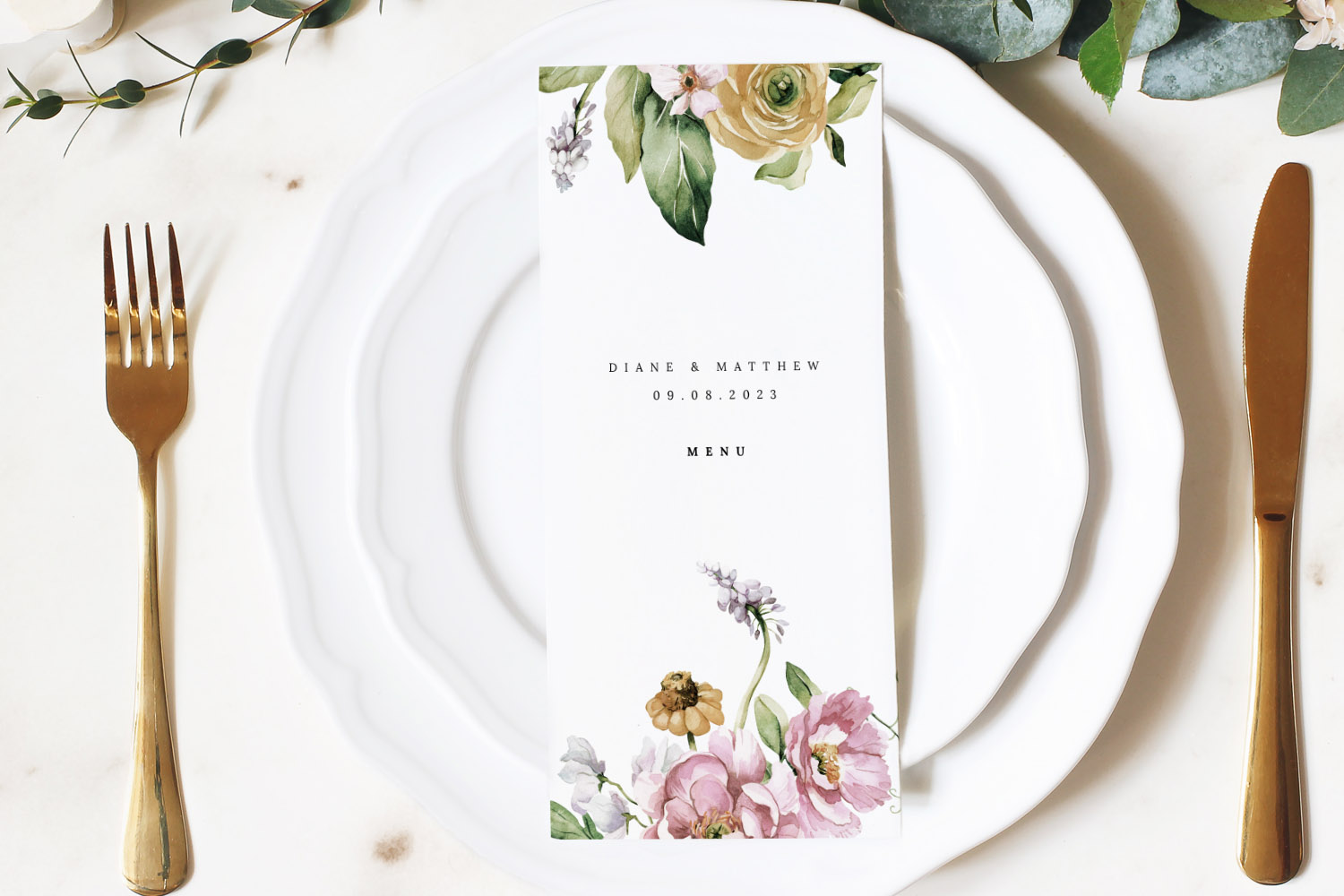
Elegant wedding menus featuring a floral motif, displayed on white crockery with gold cutlery, perfect for a stylish reception table setting.
3) Formatting, etiquette and “nice-to-have” extras
Headings and type
- Keep headings consistent (e.g., Starter / Main / Dessert) and avoid ALL CAPS for long dish names—it harms readability.
- Use 1–2 harmonious fonts; let size and weight (bold for headings) do the hierarchy.
Wording your dishes
- Lead with the hero ingredient: Lemon roast chicken rather than Roasted chicken with lemon; it scans faster.
- Descriptions work best at 5–10 words; save chef’s notes for your caterer.
Allergen etiquette
- Be clear, concise, and consistent with icons or a footnote. If options differ by guest, print variant menus (e.g., a vegan version with a small “Ve” key at the top), or add guest-specific notes subtly under dish titles.
Naming wines and drinks
- For clarity: Varietal + Region (optional vintage). If space is tight, list one house red and one house white; add a QR code to the full bar list.
Timings, speeches and toasts
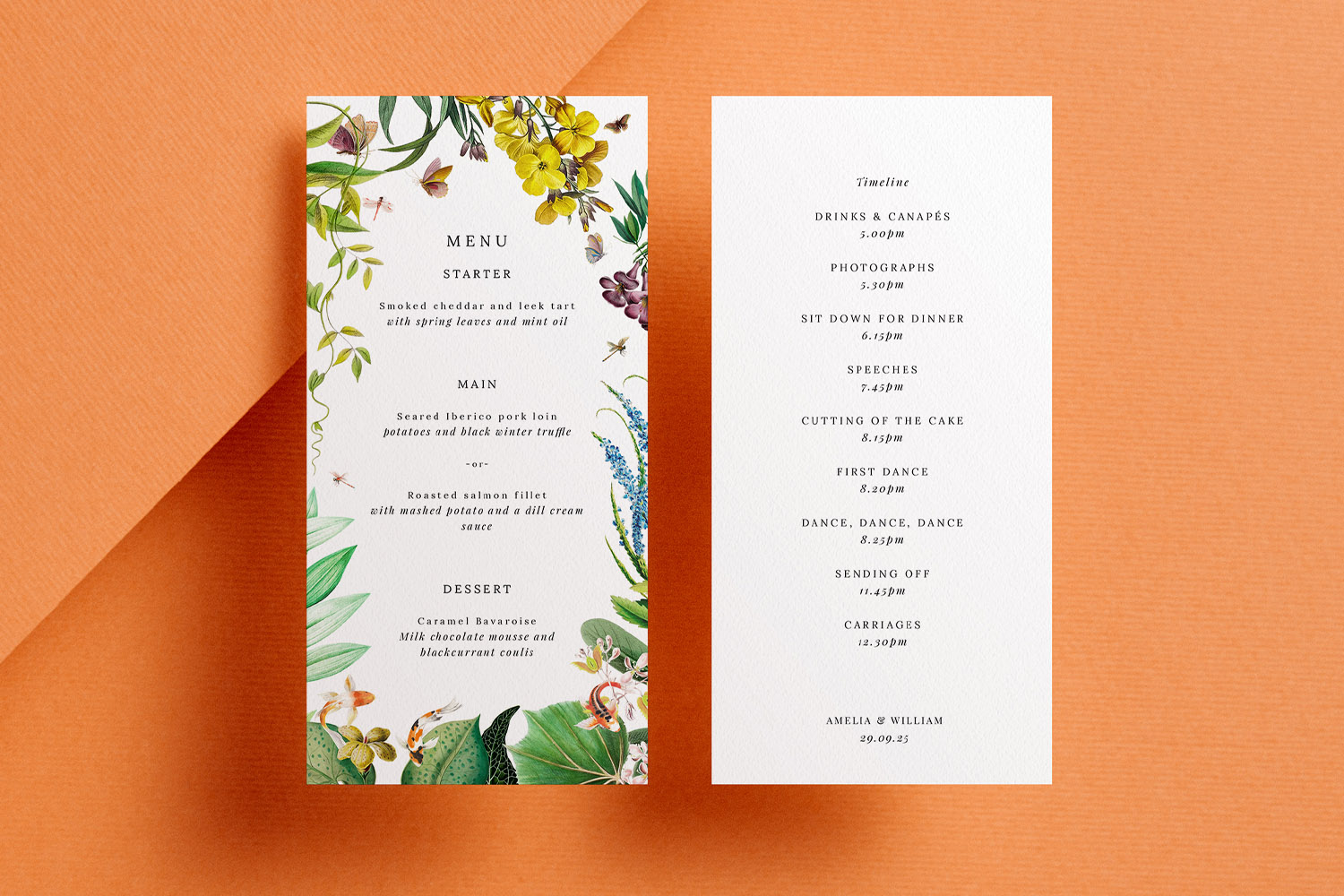
- Only include a timeline if it sits below the menu and doesn’t crowd the card. A compact three-line format works: Speeches 7.45; Cake 8.15; Dancing 8.30. If timings are fluid, skip them or move them to the table plan or an on-the-day sign.
QR codes and digital info
- QR codes are brilliant for allergen lists, wine lists, or photo-sharing links. Utterly Printable’s online editor includes built-in QR-code generation, so you can link to a Google Doc or your wedding website in seconds.
Sustainability and print choices
- If you’re placing one menu at every setting, choose a fully recyclable, FSC-certified stock and keep ink coverage moderate. Utterly Printable prints in the UK on FSC stocks, with a download-only option if you prefer to print locally.
Proofing before you commit
- Order a printed sample to check colour and readability on your chosen stock; it’s a small step that prevents last-minute surprises. Utterly Printable offers printed samples from £3.49 and an express 1–2 working-day production option if you’re tight on time.

FAQs
You’ll find the answers concise and practical. Use them as a checklist while you personalise your menus online.
Course headings, dish titles, brief descriptions (if needed), a clear dietary key (V/Ve/GF), and—optionally—your names and wedding date at the top. Keep it readable at arm’s length.
Aim for one short line per dish. Focus on the hero flavours; skip cooking techniques unless they matter (e.g., slow-cooked).
Either as icons next to dishes or a small footnote at the bottom. For full details, add a QR code to the complete list online—clean and compliant without clutter.
Only if space allows. If your menu feels crowded, move timings to your order-of-the-day board or table plan.
Yes—especially useful when guests have different choices. It also doubles as a place card, reducing stationery pieces on the table.
Helpful next step: When you’re ready to personalise, explore the full collection of wedding meal menu templates, or jump straight to a style that suits: classic, modern, elegant, or vintage. You can edit fonts and colours, add icons or QR codes, choose from FSC card stocks, and even order a printed sample before committing—ideal for a stress-free finish on the day.
Collecting Menu Choices Through Your Digital Wedding RSVP
Collecting menu choices through your digital wedding RSVP makes planning easier for couples and caterers alike. Discover how RSVP.studio streamlines guest meal selections, dietary requirements, and event attendance, all in one secure, mobile-friendly platform designed for modern weddings.
Dietary icons & allergen labelling for wedding menus (UK guide)
Discover practical tips for using dietary icons and allergen labelling on UK wedding menus. This guide explains how to create clear, stylish menu cards with symbols, legends, and QR codes, helping guests easily navigate dietary requirements.
How to lay out a wedding menu for clarity and style
Learn how to design a clear and stylish wedding menu with practical tips on structure, typography, spacing, and design. This guide ensures your menu looks polished and perfectly complements your celebration’s overall stationery suite.
Wedding Menu Size Guide: DL vs A5 vs 5×7 vs Square
Explore the differences between DL, A5, 5√ó7, and square wedding menu sizes in this helpful guide. Learn which menu card format best suits your table layout, menu length, and design style for a beautifully coordinated wedding reception.
Products related to wedding menu cards:

Read & Be Inspired
Wedding menu templates let you showcase your carefully curated meal. Discover tips on designing beautiful menus, incorporating themes, and making them a standout part of your reception décor.