Save the Date Etiquette in the UK: Rules, Modern Trends & Common Mistakes
A calm, practical guide to who gets one, what to include, and how to avoid missteps—whether you’re planning a micro-wedding, a weekday ceremony or a destination celebration.
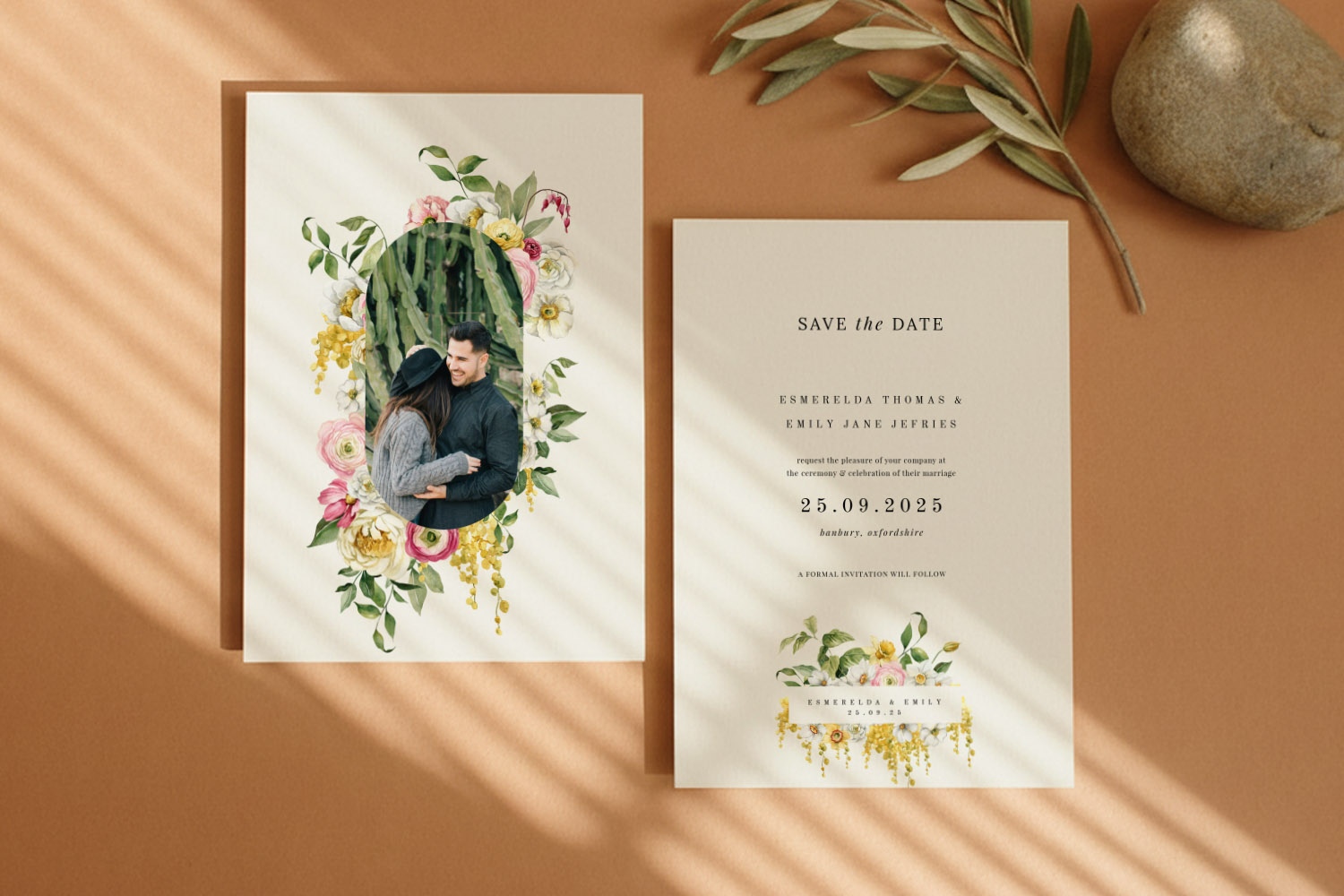
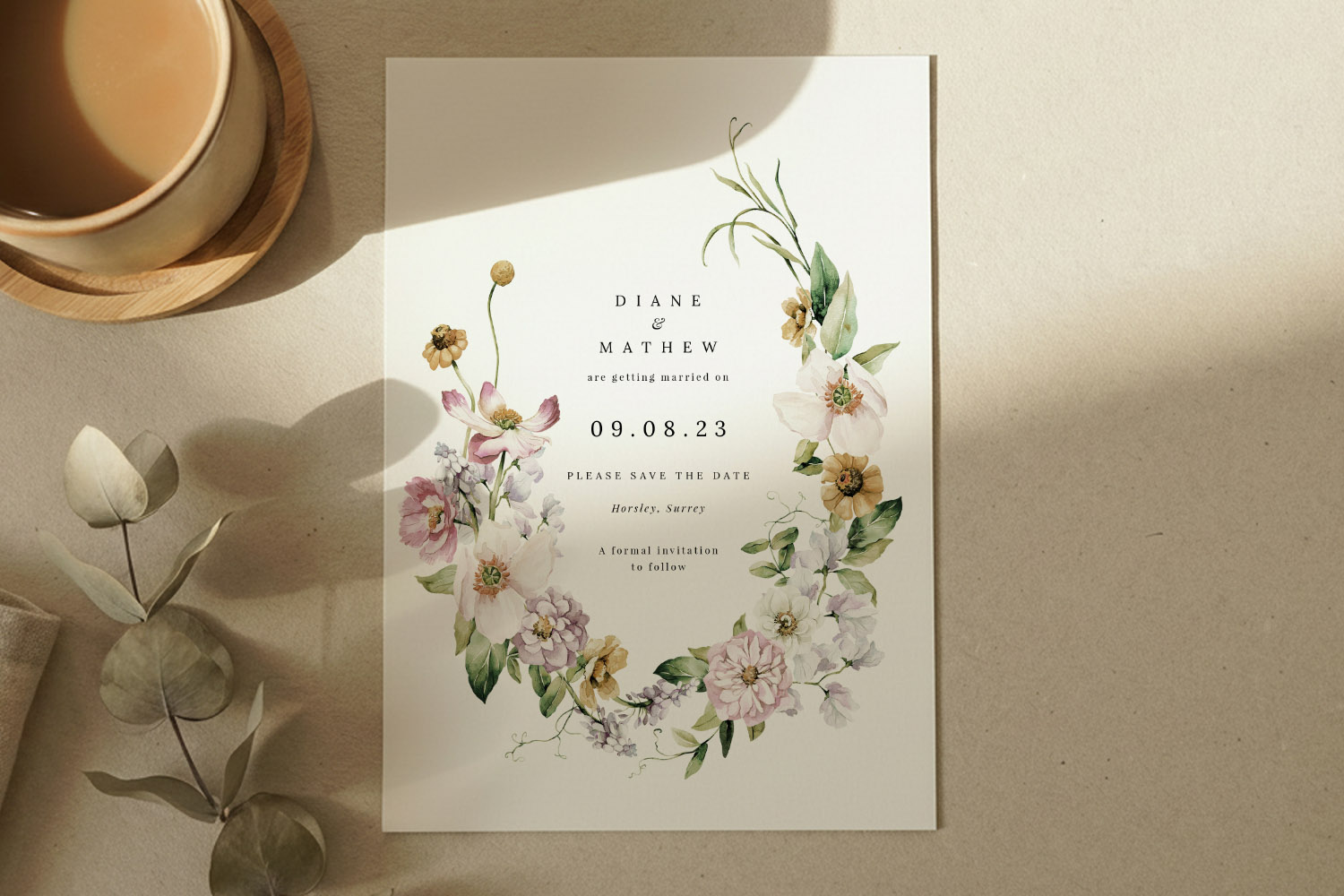
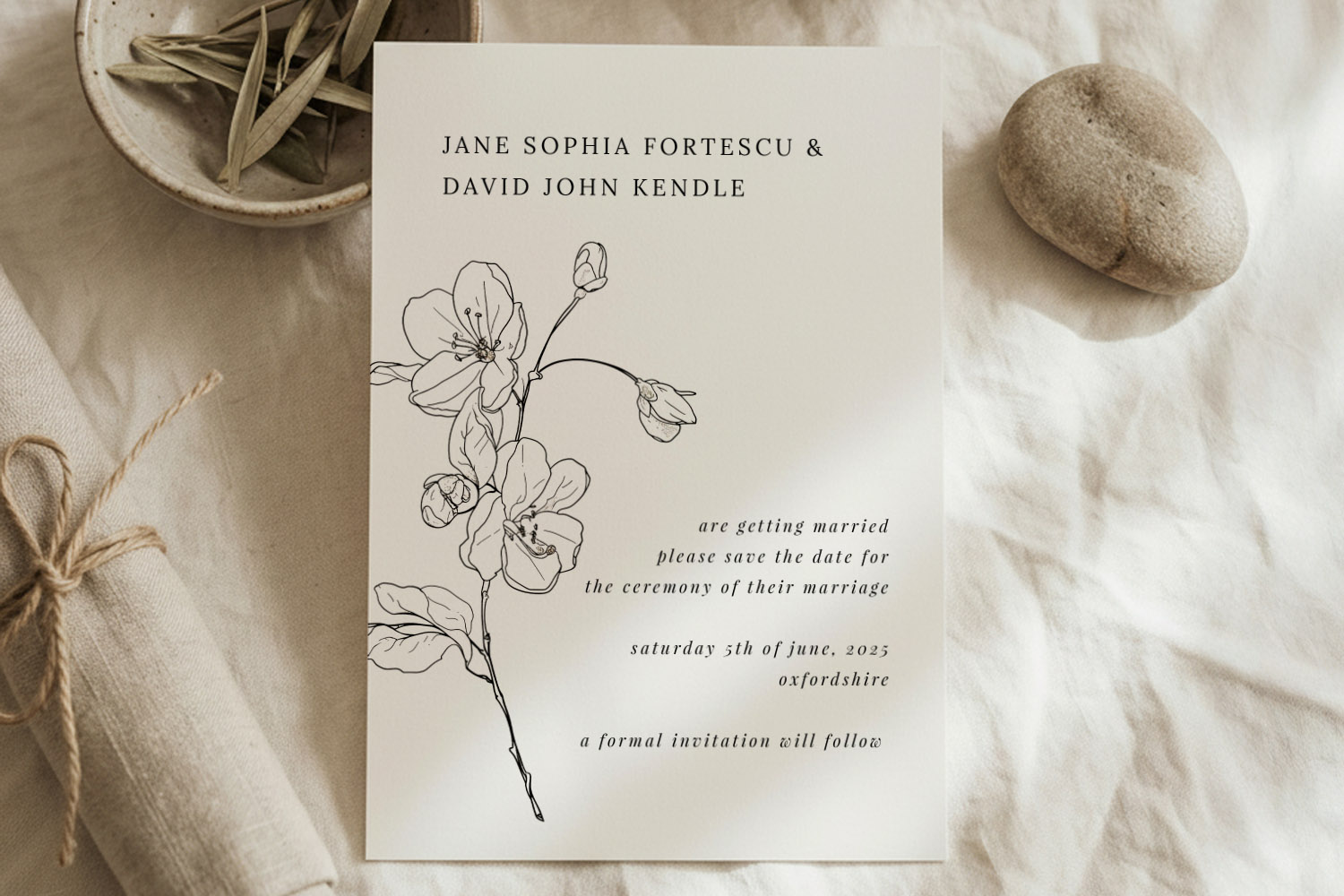
Elegant Wedding Save the Dates with a floral motif, personalised with a couple’s photo and event details, perfect for announcing your big day
Save the Date Etiquette in the UK: Rules, Modern Trends & Common Mistakes
Save-the-date cards are a simple courtesy with big impact: they help guests protect the date long before formal invitations arrive. This guide covers UK etiquette—who to send them to, what to include (and what to leave out), the right timing, digital versus printed formats, and how to approach modern scenarios like second weddings, micro-weddings, child-free celebrations and weekday ceremonies. You’ll also find wording tips and the most common mistakes to avoid. If you’re still choosing a design, you can browse elegant wedding save the date templates and explore different save the date styles to match your day.
Who should receive a save the date—and what to include
.
Save-the-date etiquette is anchored in a single rule: only send one to someone you fully intend to invite to the wedding. In UK terms, a save the date is a promise; once sent, that person should be on your final guest list for the ceremony or the relevant part of the day.
Who to send to
- Core guest list: Everyone on your A-list—day guests and, if you wish, evening-only guests (make the distinction clear in the wording).
- Partners and plus-ones: Where possible, name known partners. If a plus-one is undecided, it’s better to wait until you can confirm rather than hint at an invitation that might not materialise.
- Families with children: If your day is child-free, make that policy clear early (see wording below) to prevent confusion later.
- International guests: Prioritise them. Extra notice helps with flights, visas and time off work.
- VIPs and key contributors: Anyone critical to the day—readers, ushers, best people—should hear early so they can commit.
What to include (and what to leave out)
Keep the information concise but useful:
- Names of the couple
- Date (and approximate time if it matters for travel)
- Location (town/county is sufficient at this stage; the exact venue comes with the invitation)
- A simple line: “Formal invitation to follow”
- Wedding website for travel info and updates (a QR code is fine if you’re sending printed cards)
Things to avoid on a save the date:
- Registry or gift details
- Menu choices, dress code and other day-of specifics (unless it’s a special request—e.g., black-tie or outdoor footwear—where early notice helps)
- RSVP requests (those belong with the invitation and your wedding RSVP card templates)
A note on continuity
If you’re building a co-ordinated stationery suite, keep an eye on colours, typefaces and tone so the look flows neatly into your invitations, order of service templates and, later, your personalised wedding table plans.
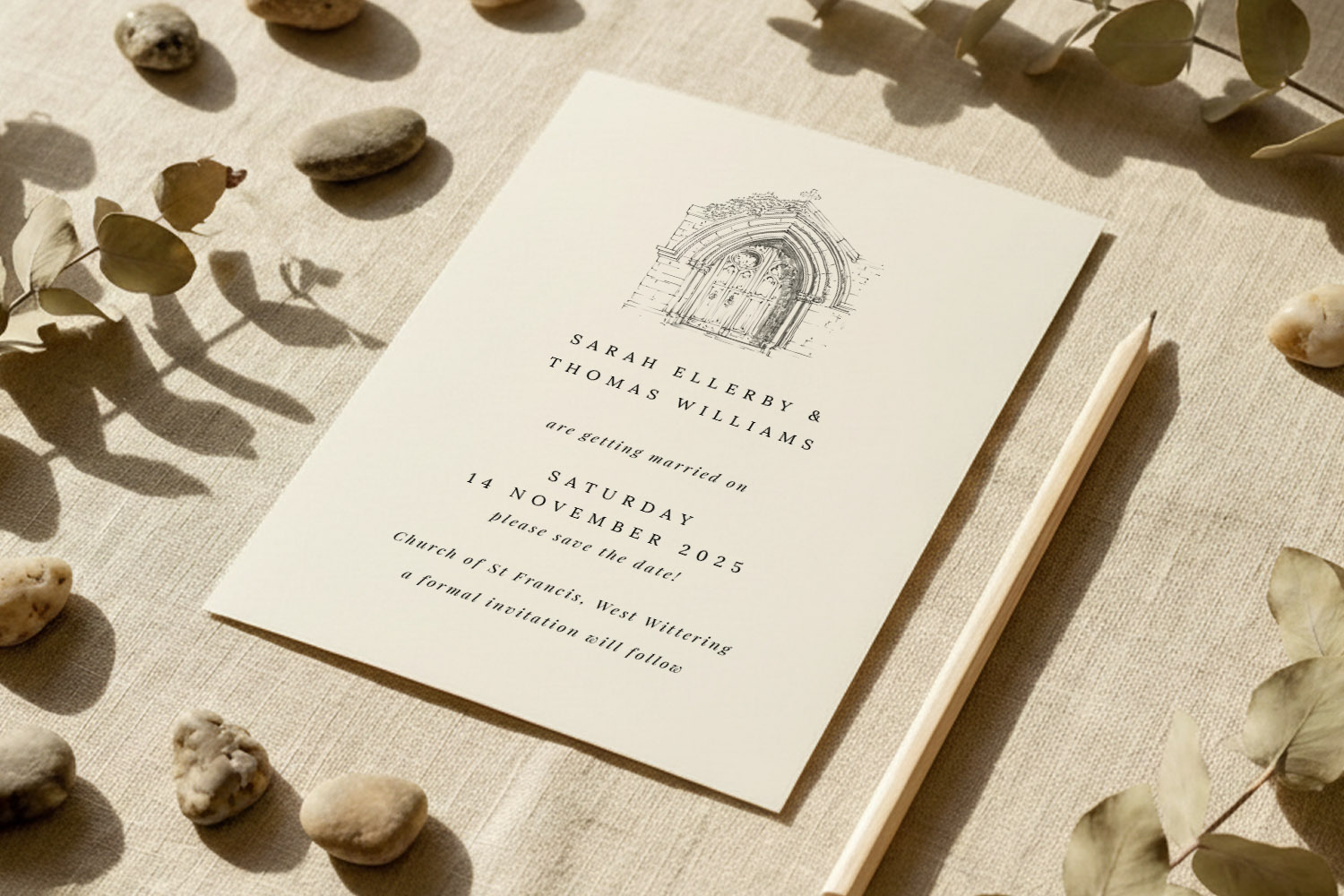
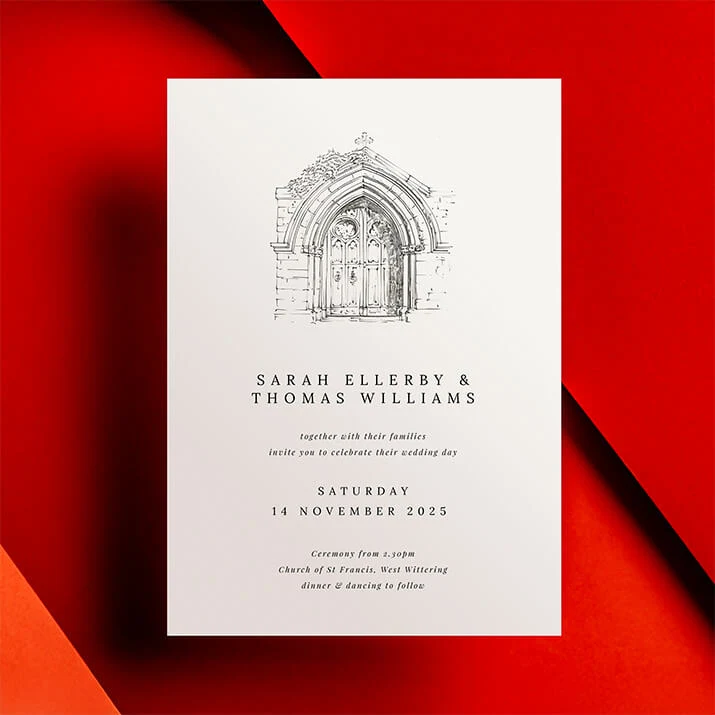
Elegant wedding save the dates card featuring a church sketch, perfect for announcing your special day with timeless style and simplicity.
Timing & format: when to send and whether to go digital
When to send in the UK
- Standard UK weddings: 8–12 months ahead is a sensible window.
- Peak dates & bank holidays: Lean towards the earlier end of the window to beat diary clashes.
- Destination weddings or far-flung guests: 12–18 months is considerate.
- Micro-weddings or short engagements: 4–6 months can work if travel is minimal and your guest count is small.
Printed vs digital save the dates
Both are acceptable. Printed cards feel keepsake-worthy and are easy for guests to pin to noticeboards. Digital versions (email or private link) are fast, eco-minded and great for last-minute planners. Many couples use a hybrid: printed for close family or those who appreciate something tangible, digital for friends who live in their inboxes. Whatever you choose, consistency matters—ensure names, dates and spellings match what will appear on the invitation.
Addressing etiquette
- Address households formally (titles optional—use what suits your guests).
- Name every invited person where possible to avoid assumptions about children or plus-ones.
- If you’re hosting a weekday ceremony, mention the weekday by name (“Friday, 12 June 2026”) to emphasise the need for leave from work.
Delivery tips
Post domestically in one batch so everyone receives theirs at roughly the same time. For international guests, allow extra postal time or use a digital save the date alongside print to ensure nothing goes astray.
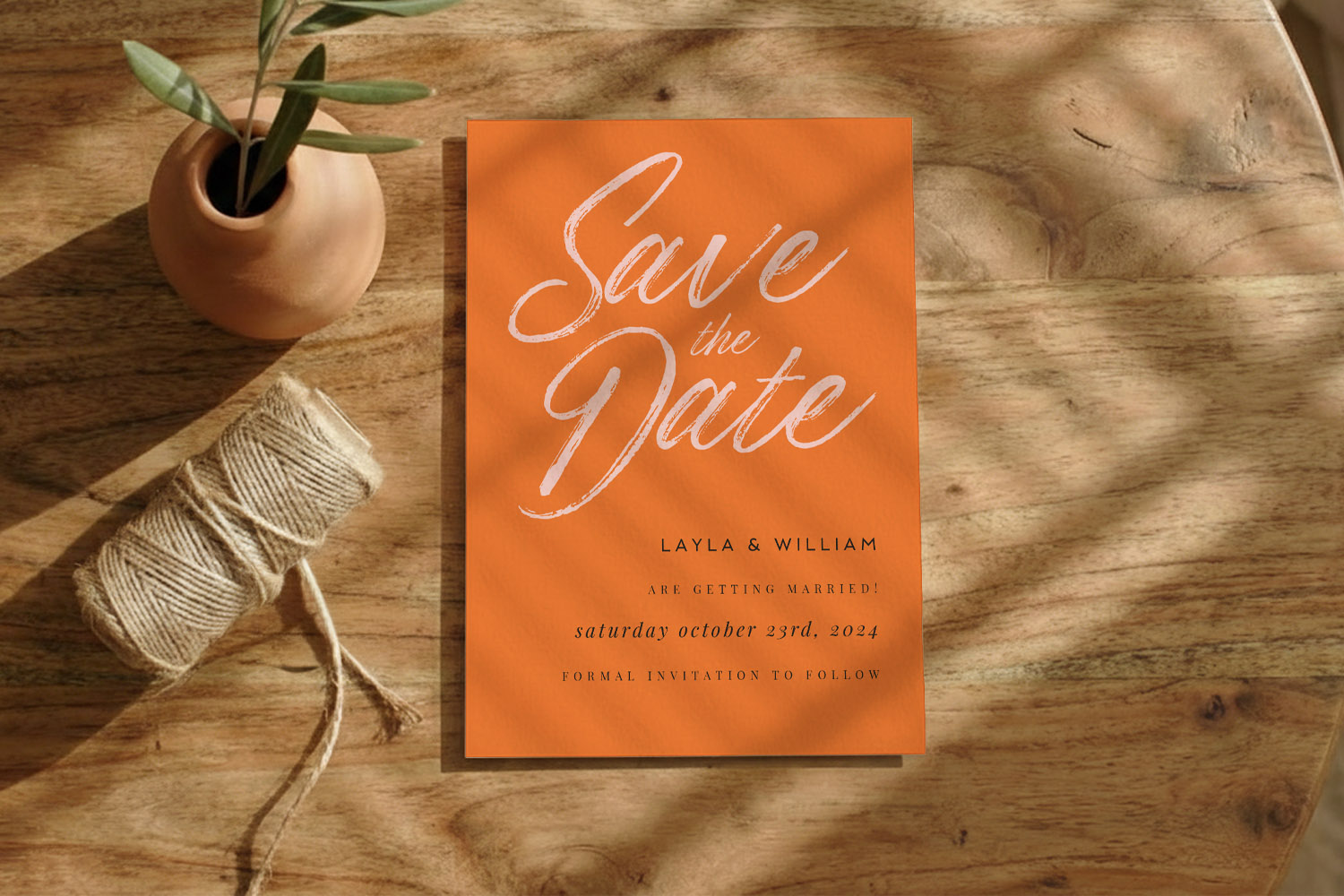
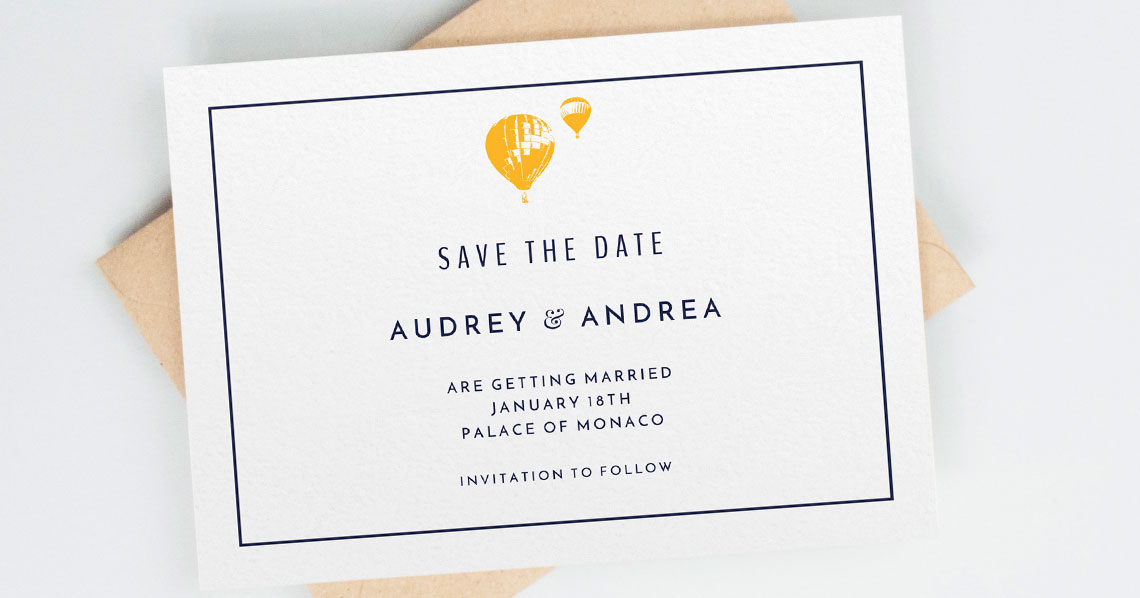
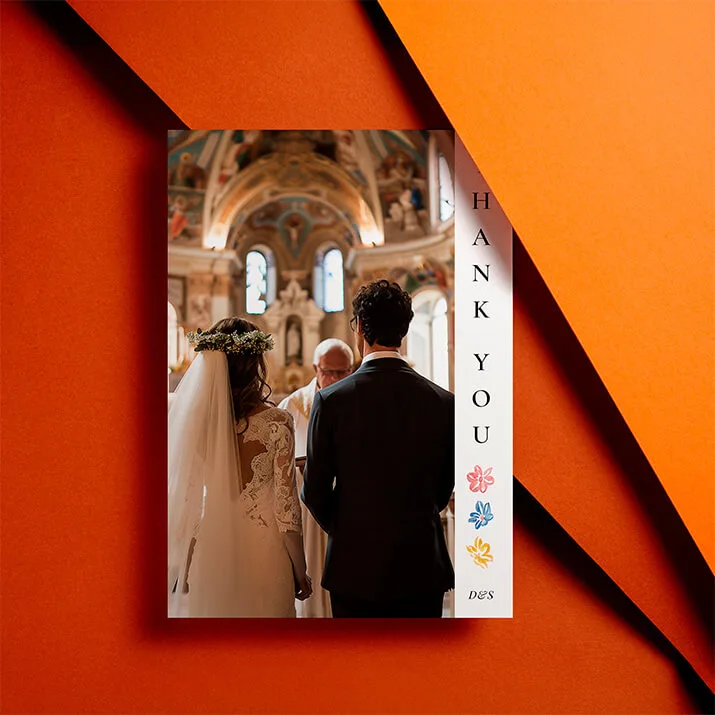
This wedding save the dates card features a modern orange design with elegant script, perfect for announcing your special day in style.
Modern scenarios, wording tips & mistakes to avoid
Second weddings
Etiquette is relaxed. You can skip traditional formalities if they don’t feel “you”. Keep wording warm and straightforward—no need to reference prior marriages.
Micro-weddings
Clarity is kind. If you’re hosting an intimate ceremony with a larger afterparty later, consider separate save the dates (or a clear line) so guests understand which event they’re being asked to ring-fence.
Child-free weddings
Set expectations early but kindly. Try:
- “We kindly request no children at our wedding.”
- “Due to limited space, we’re unable to invite little ones—thank you for understanding.”
Weekday ceremonies
Spell out the weekday and consider a pointer to travel or accommodation info on your website. The earlier notice helps with annual leave requests.
Wording examples
- Classic:
Save the Date
Amelia Morgan & Theo Clarke
Saturday, 20 September 2026 — Bath, Somerset
Formal invitation to follow - Evening-only:
Please Save the Date for our evening celebration
Friday, 5 June 2026 — Leeds
Details to follow - Destination:
Save the Weekend — 14–16 May 2026, Puglia, Italy
More travel details on our website
Common mistakes to avoid
- Sending too early (two years out can invite plan changes and confusion).
- Sending too late (inside four months for a large UK wedding risks clashes).
- Including too much information (keep venue specifics, timings and menus for the invitation).
- Forgetting international guests (they need the longest runway—send theirs first).
- Not checking the digital proof (one typo multiplies fast across print and pixels).
- Assuming plus-ones (name invited guests explicitly to avoid awkwardness).
- Mixing A-list and B-list messaging (a save the date is a commitment—don’t send it if you’re unsure).
- Inconsistent names or spellings (match what will appear on the invitation and, later, your on-the-day stationery).
A quick note on design
Choose a style that hints at the celebration to come—whether modern minimalist typography, a floral motif or a favourite photo. If you need inspiration, explore curated save the date design styles or browse the full collection of wedding save the date templates to keep everything consistent from first announcement to the final seating chart.

Save the Date Etiquette FAQs
Short on time? These brisk answers cover the questions couples ask us most about UK save-the-date etiquette.
Yes. In the UK, a save the date is a clear signal that a formal invitation will follow. Only send them to confirmed guests.
Aim for 8–12 months ahead; earlier for destination or bank-holiday weekends. For micro-weddings or short engagements, 4–6 months can work.
Absolutely. Digital is fast and eco-minded, and it’s fine to mix digital and printed formats depending on your guests.
Names, date, town/county, a wedding website link, and “formal invitation to follow.” Leave registry and RSVP details for the invitation stage.
Mention it gently on the save the date and reinforce it with the invitation. Clear, warm wording avoids confusion.
Matching your save the date to the rest of your wedding stationery: a practical guide
Learn how to coordinate your save the date with your wedding stationery in this practical guide. Explore easy tips for matching colours, typography, motifs, and layout, creating a cohesive look for your invitations and on-the-day pieces.
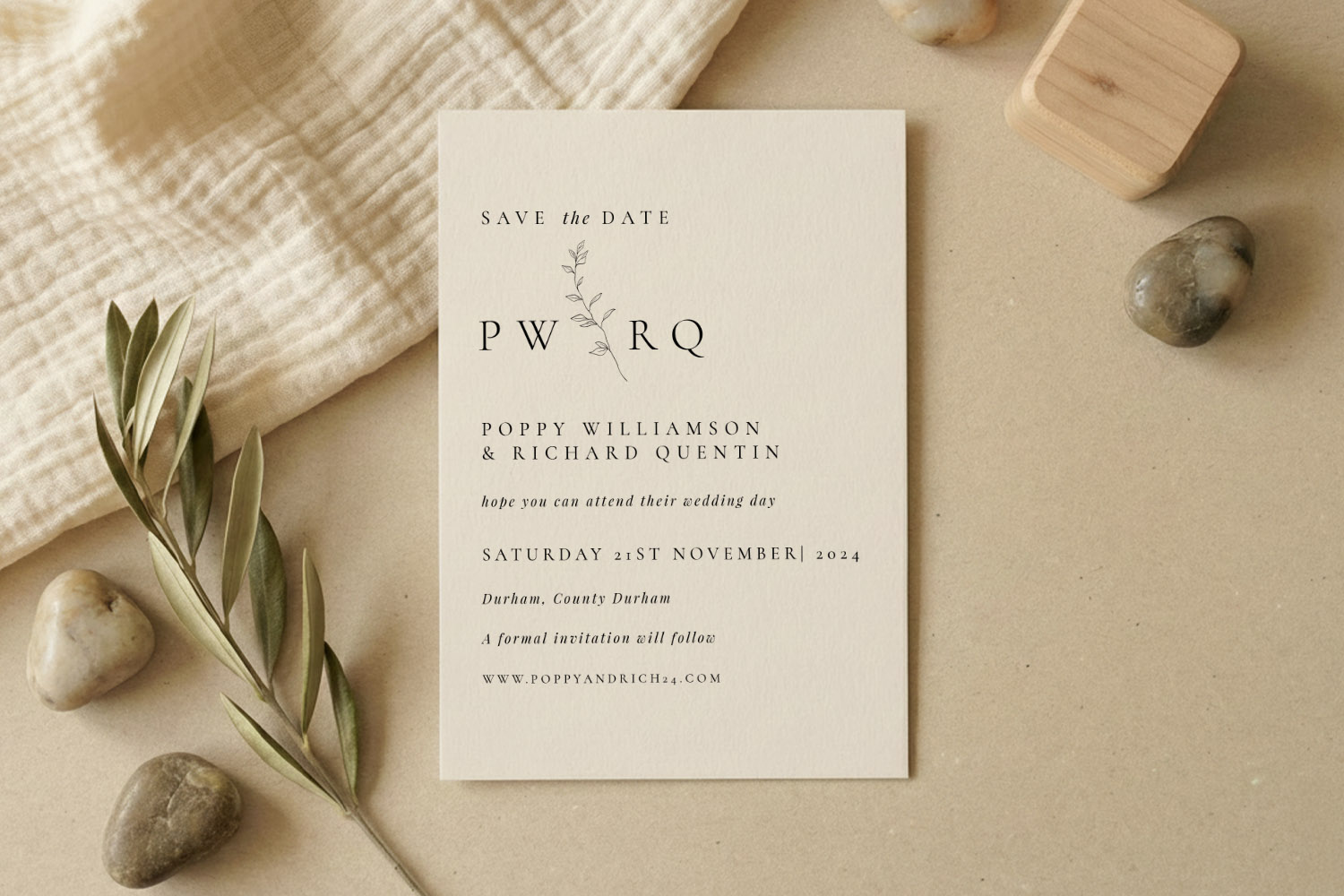
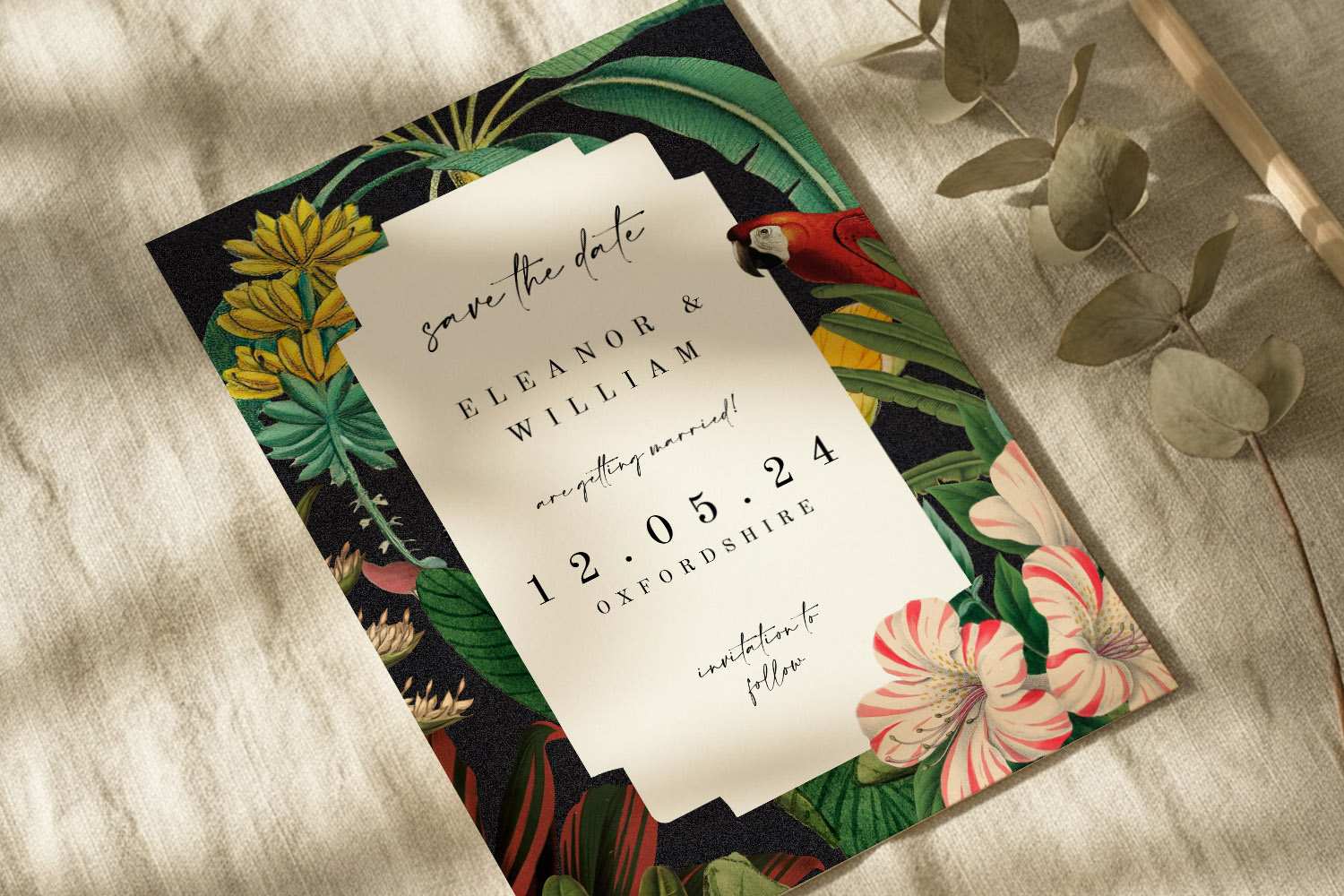
Save the Dates with QR Codes — What They Are and How to Use Them
Explore how QR codes on wedding save the dates make sharing RSVP forms, travel info, and your website easy. Get practical tips for QR code placement, styling, and testing to keep invitations modern, elegant, and guest-friendly.
What to Write on a Wedding Save the Date (Complete Wording Guide)
Learn what to write on a wedding save the date with this comprehensive wording guide, including essential details, optional extras, and ready-to-use examples for every style to help you create clear, stylish, and stress-free save the dates.
Which Paper Stock Is Best for Wedding Save the Dates? (324gsm vs 350gsm vs Silk vs 650gsm)
Discover which paper stock is best for wedding save the dates as we compare 324gsm, 350gsm, silk, and 650gsm options. Learn how finish, colour, and texture influence your card’s look, feel, and practicality for your special announcement.
Products related to wedding save the date cards:

Trends & Tips
Save the dates are the perfect way to announce your big day. Check out the blog for inspiration on personalisation, timing, and coordinating them with the rest of your wedding stationery.