Wedding Menu Size Guide: DL vs A5 vs 5×7 vs Square
Choosing the right size for your wedding menu card makes a surprising difference to how your tables look and how easily guests can read the food and drink on offer. At Utterly Printable, our wedding menu templates come in four popular formats—DL, A5, 5×7 and 148 mm square—each with its own strengths for text length, table layout and design style. This practical guide compares the options so you can pick with confidence.
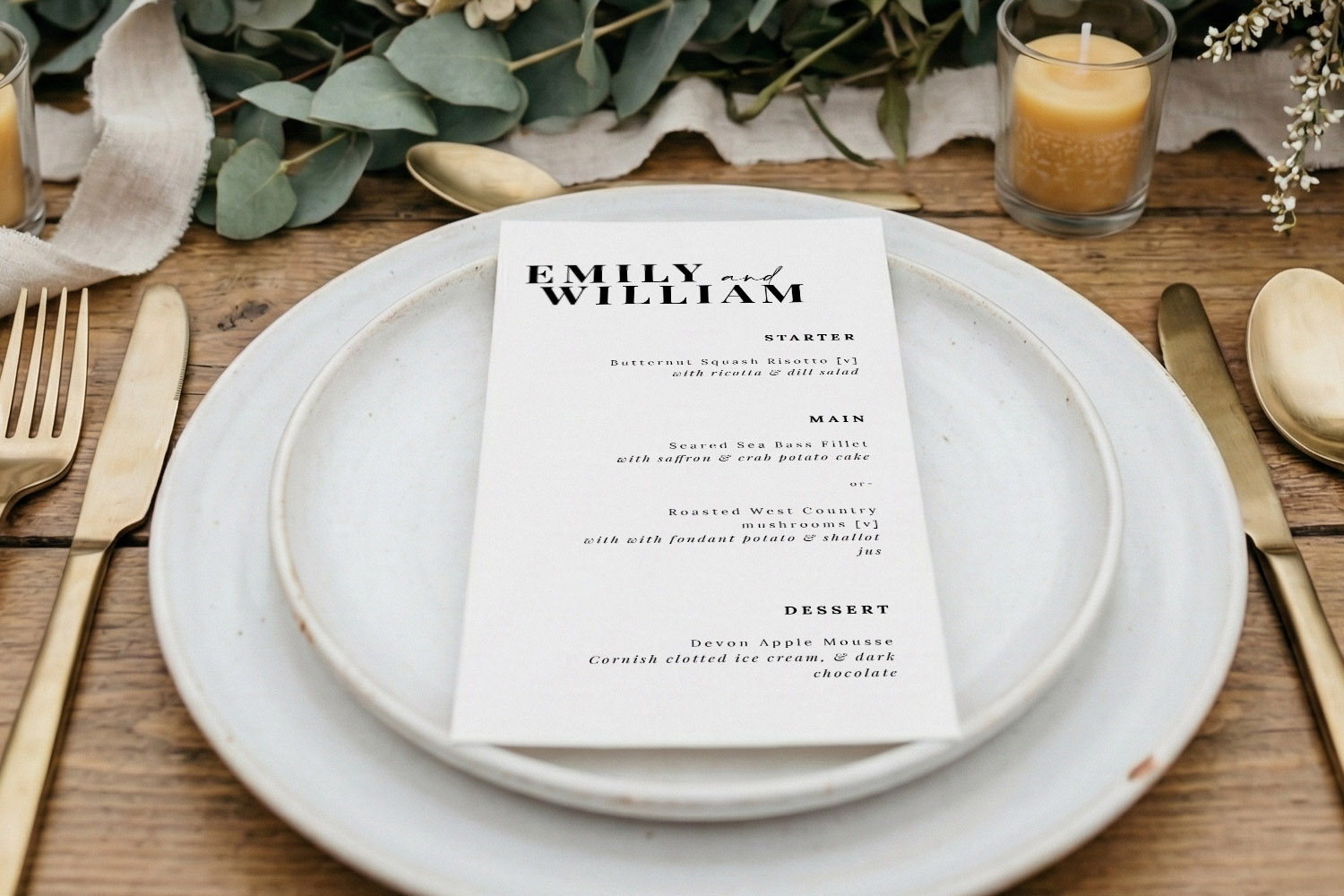
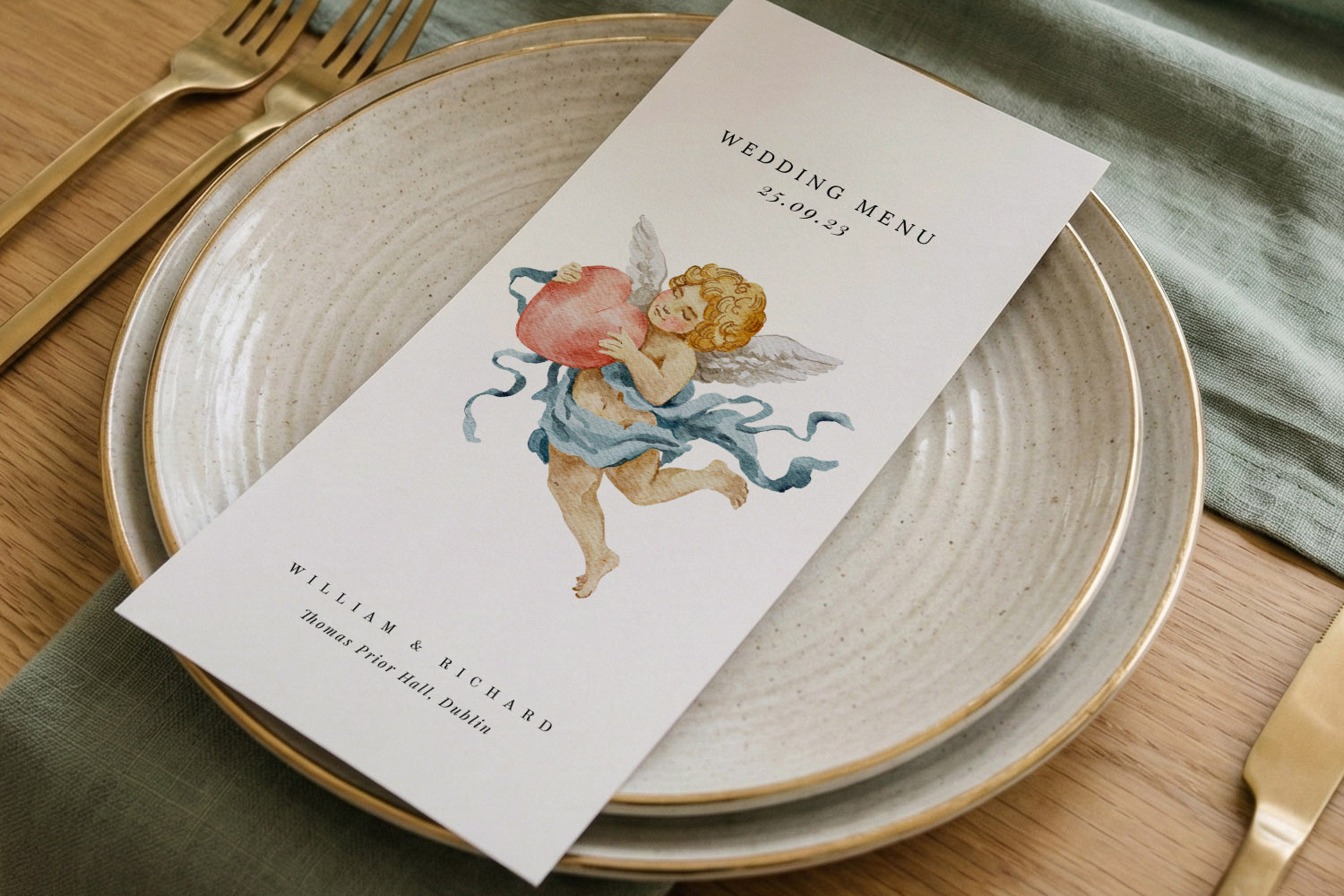
Elegant wedding menus displayed on a white plate with gold cutlery, perfect for rustic or contemporary wedding table settings.
1) The four sizes at a glance (with typical uses)
DL — 21 cm × 9.9 cm (210 × 99 mm)
A tall, slim classic. DL menus are brilliant for tucking into a napkin fold or placing neatly on a plate without dominating the setting. They suit concise, well-spaced wording—think three courses with short dish descriptions, or a simple sharing feast outline. In portrait, a DL menu reads like a refined bookmark; in landscape, it works as a modern band across a charger.
A5 — 14.8 cm × 21 cm (148 × 210 mm)
Substantial and versatile. A5 is perfect for longer menus, tasting menus, or when you want room for extras such as wine pairings or a short thank-you note. It’s also a comfortable size for one-per-table menus, and it holds up visually on larger charger plates.
5×7 — 12.7 cm × 17.8 cm (127 × 178 mm)
Balanced and familiar. 5×7 sits between DL and A5 in feel: plenty of space for a three- or four-course meal with brief descriptions, but compact enough to look tidy on individual place settings. It’s a popular pick for classic or modern layouts with a headline, neat dividers and clear course headings.
Square — 148 × 148 mm
Stylish symmetry. The 148 mm square is striking on the centre of a plate and pairs beautifully with minimalist or floral artwork that benefits from equal margins. Space is similar to 5×7, but the geometry creates a contemporary, editorial look—great for bold typographic menus or a hero illustration.
To explore designs tailored to your taste, browse our style collections for minimal menus, rustic menus, and floral menus, or view all menu styles in one place.
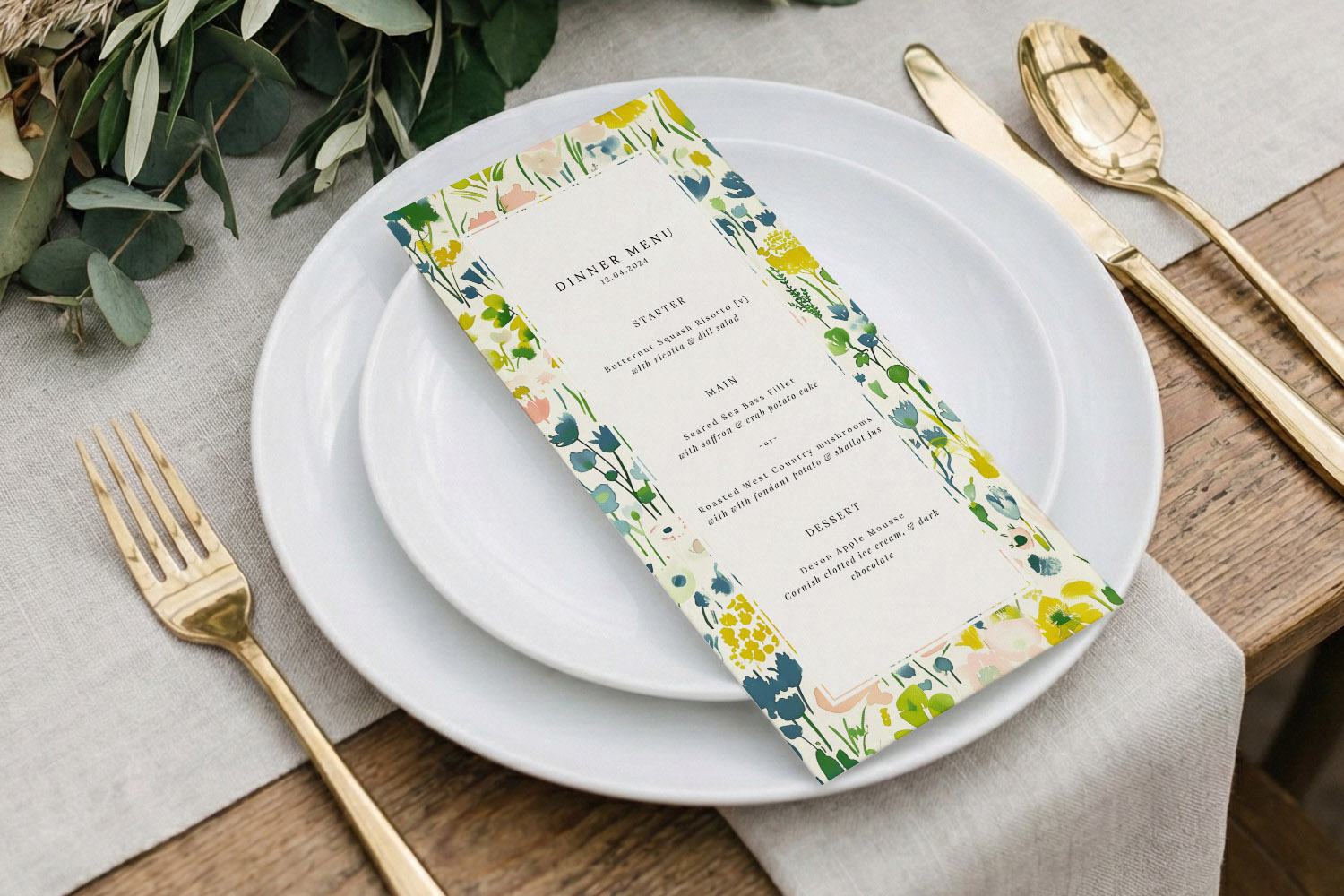
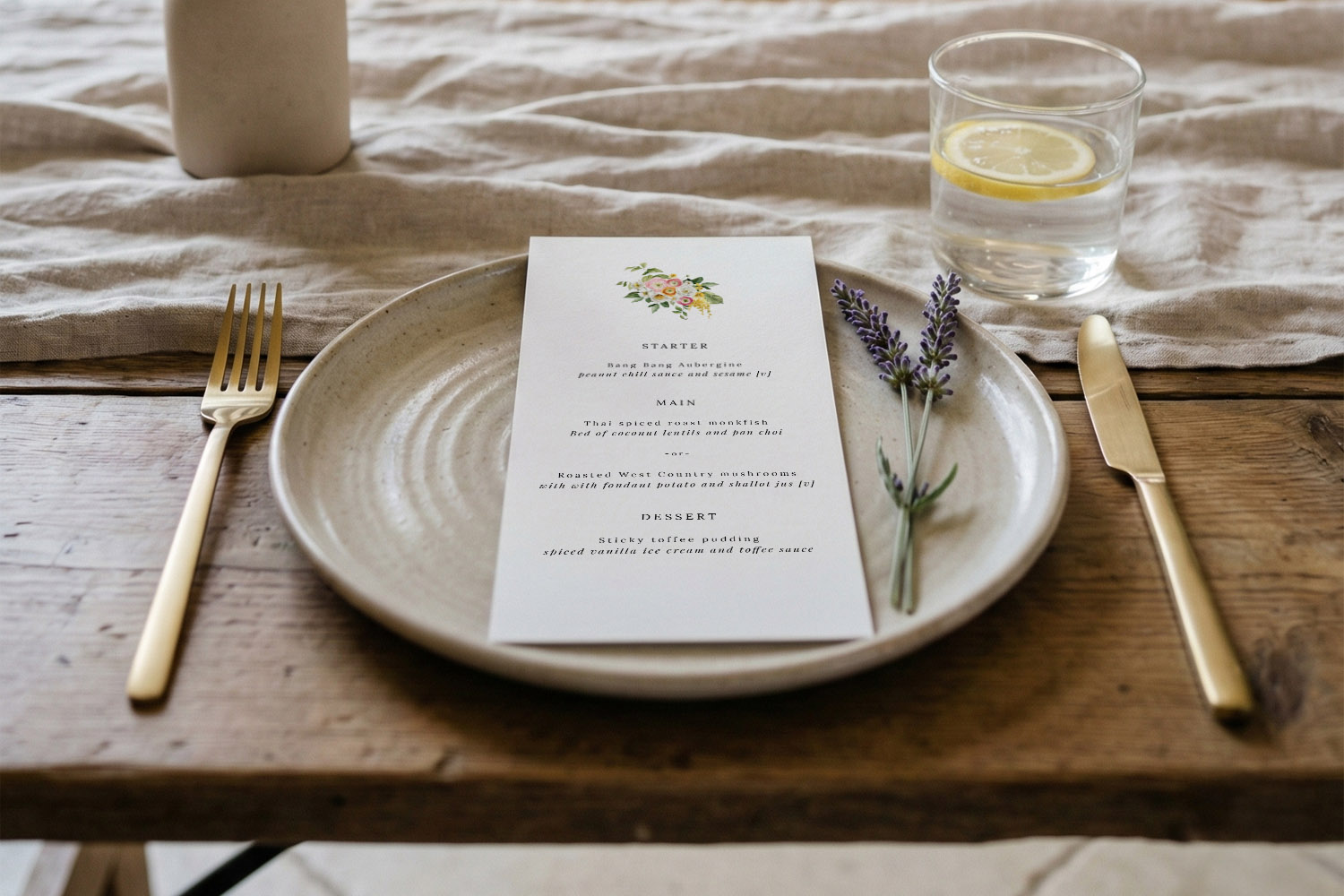
Elegant wedding menus featuring a vibrant floral design, beautifully displayed on a table setting with gold cutlery and fresh greenery.
2) How much text comfortably fits on each size?
The exact capacity depends on your font choices and spacing, but the guidance below assumes clear body text around 11–12 pt, headings at 14–18 pt, and sensible margins. It’s deliberately conservative so your menus remain easy to scan in candlelight.
DL (210 × 99 mm)
- Ideal for: 3 courses with short descriptions; sharing feast overview; simple set menu.
- Safe word count: ~120–200 words.
- Layout tips: Use course headers (“Starter”, “Main”, “Dessert”) and keep dish names punchy. If you need a vegetarian symbol or allergen note, place it on a final line rather than after every dish.
A5 (148 × 210 mm)
- Ideal for: 3–5 courses, tasting menus, paired wines, supplier credits or a thank-you.
- Safe word count: ~220–380 words.
- Layout tips: A5 gives room for extra details (ingredients, origins, or short wine notes). Consider a two-column layout in landscape if you want pairings on the right and courses on the left, or keep a single portrait column for a traditional reading flow.
5×7 (127 × 178 mm)
- Ideal for: 3–4 courses with brief descriptions; children’s menus; evening food lists.
- Safe word count: ~160–260 words.
- Layout tips: Use a centred, stacked header and consistent dividers to keep things tidy. If you’re including a short welcome line or a one-sentence thank-you, 5×7 handles it well without crowding.
Square (148 × 148 mm)
- Ideal for: 3–4 courses, tasting menus with compact notes; typographic or illustrated layouts.
- Safe word count: ~160–260 words.
- Layout tips: The square format loves symmetry. Keep margins even, align course headers, and consider a subtle border or monogram to frame the content.
Font, spacing and readability
- Body text: 11–12 pt reads well at dinner; smaller can look delicate under warm lights.
- Line length: Aim for 50–70 characters (including spaces) for smooth reading.
- Line spacing: Slightly looser than on an invitation; give each dish “air” so guests can track lines easily.
If you’re still unsure, personalise one of our wedding menu cards online and preview live; you’ll see at a glance whether to step up or down a size.
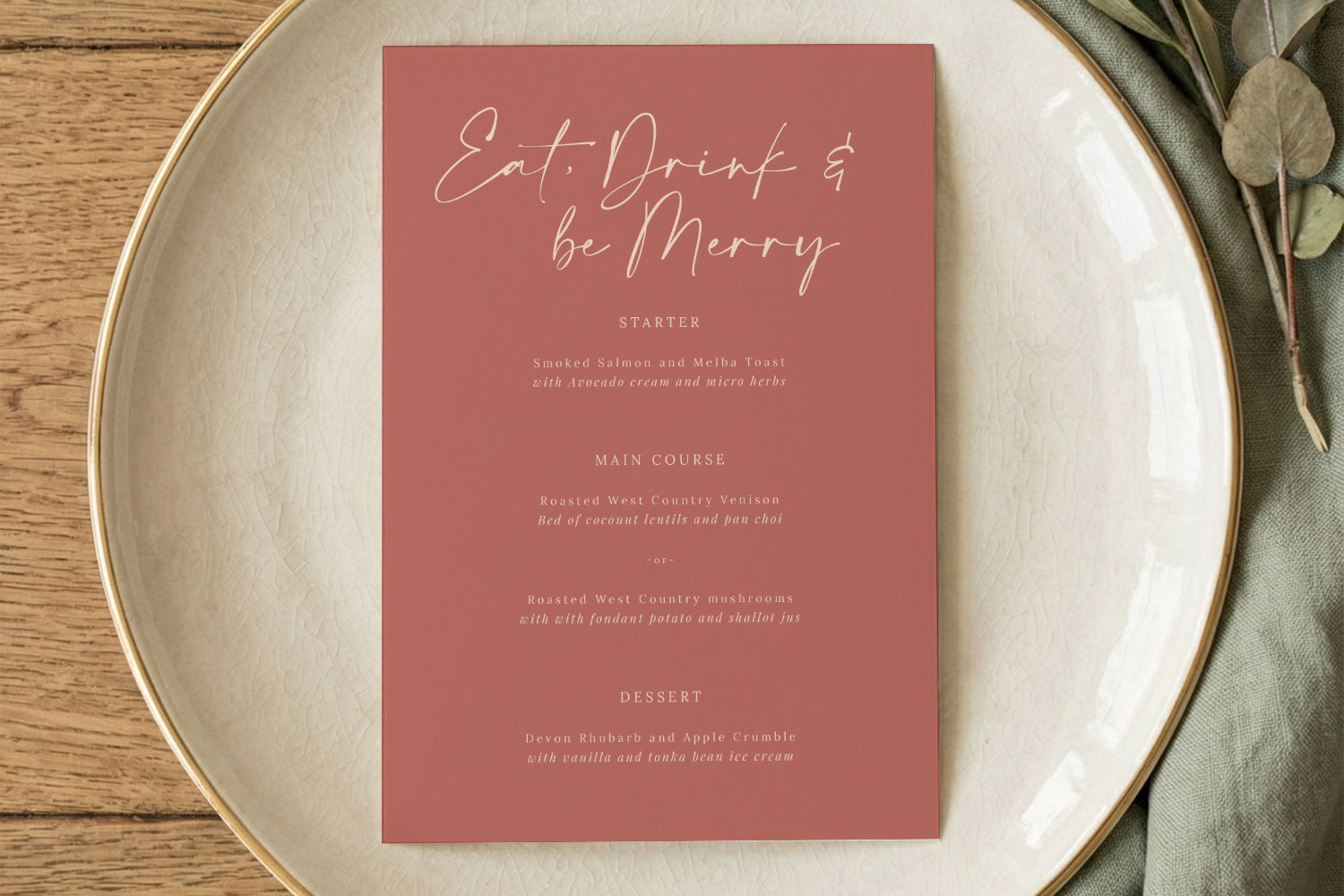
This stylish wedding menu features a blush pink design with modern calligraphy, perfect for adding elegance to your wedding table setting.
3) Placement, orientation and design: what looks best on the table?
On the plate vs on the napkin vs on a charger
- On the plate: Square and 5×7 look centred and intentional, especially with strong typography or floral artwork. A5 makes a statement on larger plates or when you want the menu to double as a keepsake.
- On the napkin: DL slides neatly into a napkin pocket or under a ribbon, creating a tailored hotel-style finish. 5×7 also works, particularly for thicker napkin folds.
- On a charger plate: A5 and square fill the space elegantly. They’re visible from standing height, which helps during a bustling reception.
One per person vs one per table
- Individual place settings: DL and 5×7 are wonderfully proportioned per place. They keep tables uncluttered while giving every guest their own copy.
- Sharing feasts / family-style: A5 or square suits a single menu per table or per two guests, making it easier to read from either side. If you want a centrepiece effect, a thick stock in A5 or square, stood in a small holder, feels restaurant-ready.
Portrait vs landscape (and when to use them)
- Portrait: Most natural for scan-down reading. Works well for DL, 5×7 and A5 when you have course headers stacked top to bottom.
- Landscape: Great for paired content. For example, in A5 landscape you can run courses in the left column and wines or allergens in the right. Landscape DL can act like a band across a charger or napkin for a contemporary look.
- Square: Either works; portrait gives a classic page feel, while landscape can feel editorial. Choose based on your artwork and the direction of any illustration.
Matching the size to your design style
- Minimalist layouts: DL and square amplify clean lines and generous spacing—see our minimal menu designs.
- Rustic or handmade textures: 5×7 and A5 give room for organic typography and small botanical motifs—browse our rustic menu collection.
- Floral and botanical artwork: Square and 5×7 frame illustration beautifully without cramping the text—explore our floral wedding menus.
- Still exploring? Start with our overview of all wedding menu styles and filter from there.
When you’re happy with size and layout, you can personalise fonts, colours and wording in minutes, then order professionally printed cards or download a high-resolution PDF—both options are available across our range of wedding menu templates.

FAQs: choosing the right wedding menu size
Here are concise answers to common questions about dimensions, readability and table setup so you can select a size with confidence.
A. DL is 21 cm × 9.9 cm (210 × 99 mm), A5 is 14.8 cm × 21 cm (148 × 210 mm), 5×7 is 12.7 cm × 17.8 cm (127 × 178 mm), and square menus are 148 × 148 mm.
A. DL or 5×7. Both keep an individual place setting neat while giving enough room for clear course headings and a short line or two per dish.
A. Yes. A5 or square works brilliantly one per table (or per side of a long table). The larger surface makes it easier for guests to read from different angles.
A. Portrait is the natural choice for list-style menus (starter, main, dessert). Landscape comes into its own when you want two tidy columns—for example, courses and paired wines side by side.
A. Not if you keep margins even and headings consistent. Square menus offer similar capacity to 5×7, but the geometry creates a clean, modern feel.
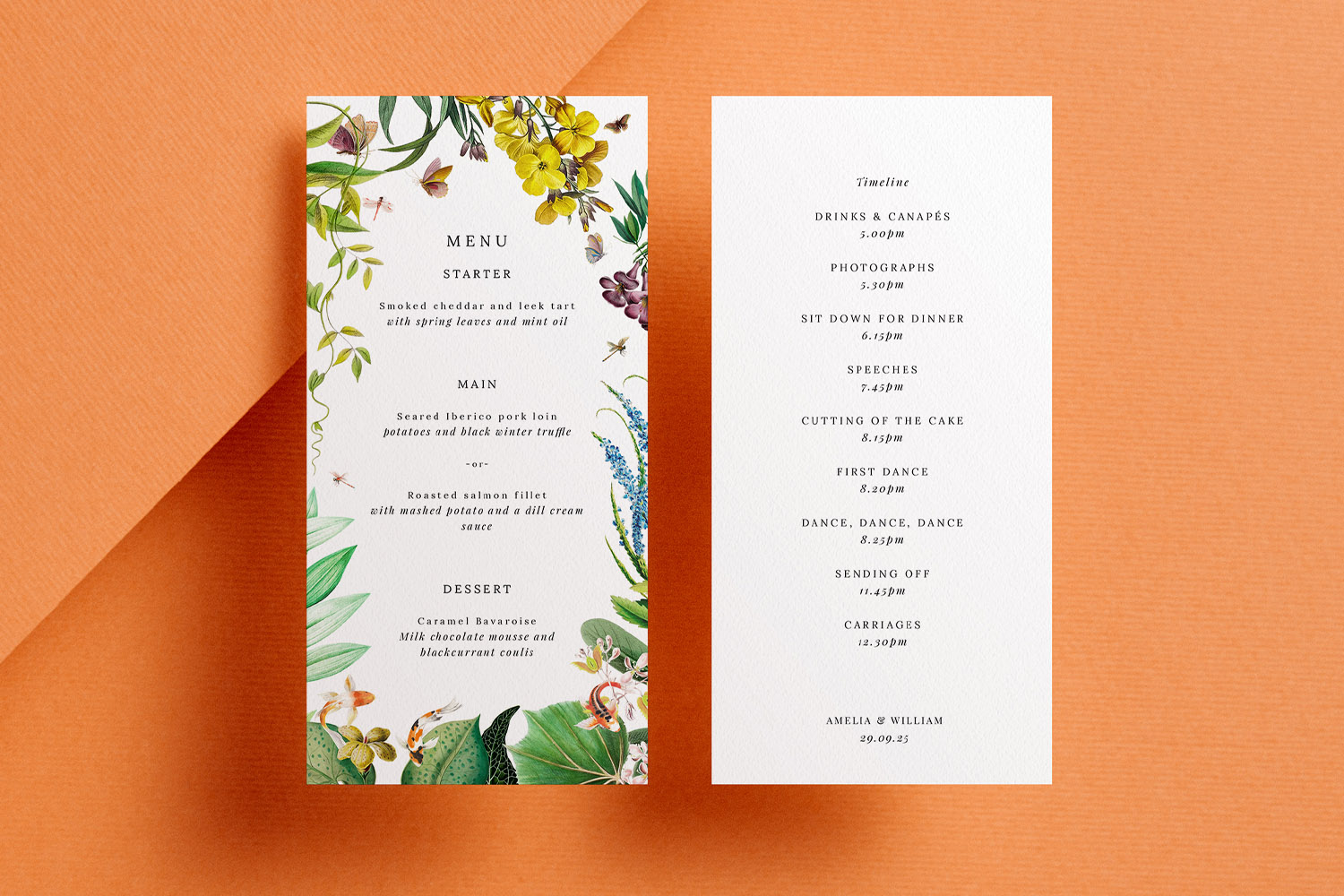
Collecting Menu Choices Through Your Digital Wedding RSVP
Collecting menu choices through your digital wedding RSVP makes planning easier for couples and caterers alike. Discover how RSVP.studio streamlines guest meal selections, dietary requirements, and event attendance, all in one secure, mobile-friendly platform designed for modern weddings.
Dietary icons & allergen labelling for wedding menus (UK guide)
Discover practical tips for using dietary icons and allergen labelling on UK wedding menus. This guide explains how to create clear, stylish menu cards with symbols, legends, and QR codes, helping guests easily navigate dietary requirements.
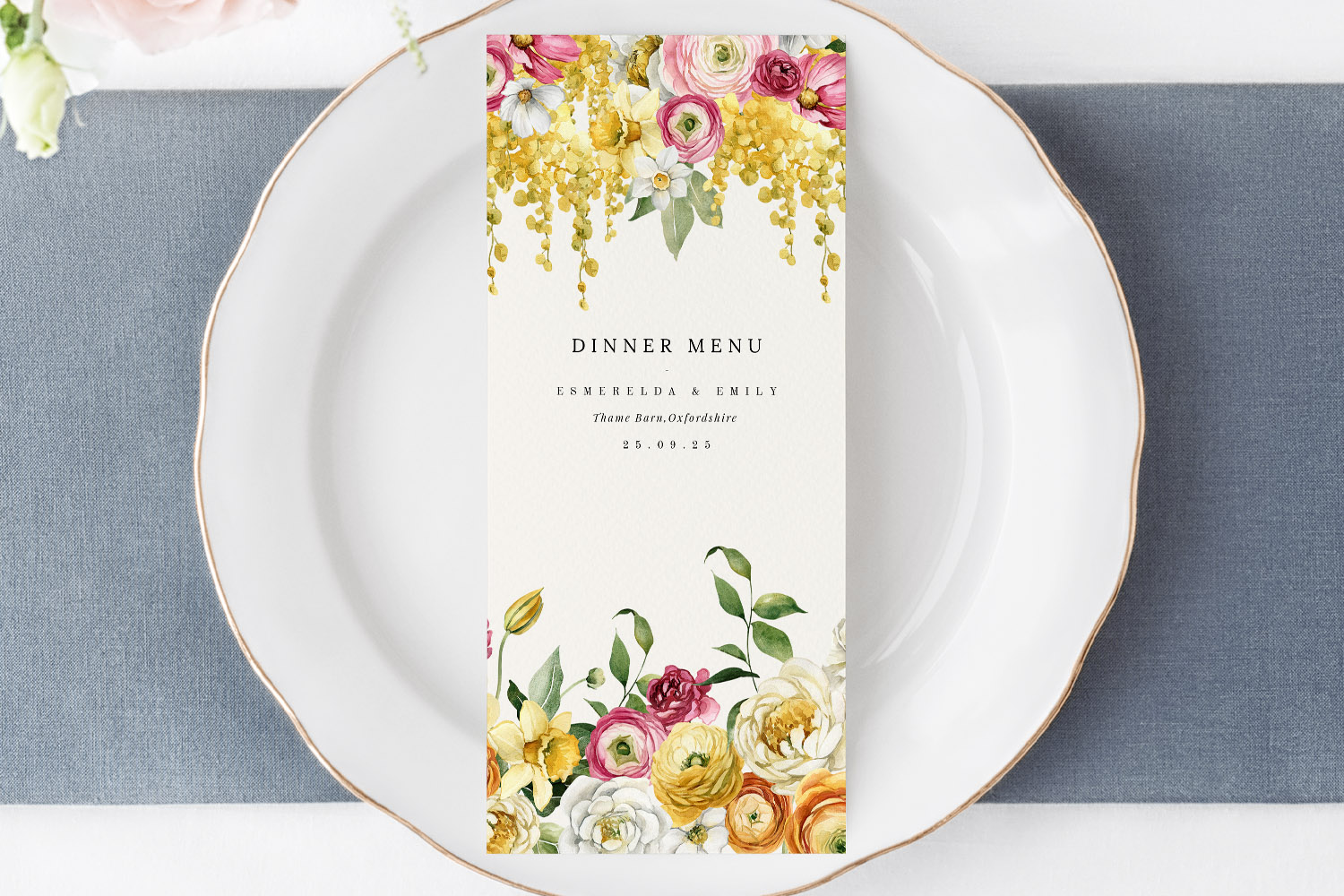
How to lay out a wedding menu for clarity and style
Learn how to design a clear and stylish wedding menu with practical tips on structure, typography, spacing, and design. This guide ensures your menu looks polished and perfectly complements your celebration’s overall stationery suite.
What to Include on a Wedding Menu Card: A Practical UK Guide
Learn how to design the perfect wedding menu card with this UK guide, featuring essential details to include, formatting tips for clarity and style, and advice on accommodating dietary needs while maintaining an elegant, inviting wedding table.
Products related to wedding menu cards:
Read & Be Inspired
Wedding menu templates let you showcase your carefully curated meal. Discover tips on designing beautiful menus, incorporating themes, and making them a standout part of your reception décor.