Common Wedding Seating Plan Mistakes (and How to Avoid Them)
A calm, practical guide to clearer, stress-free seating charts for your big day.
Planning a wedding table plan is one of those tasks that looks simple until you’re in the thick of it. Names multiply, last-minute changes appear, and what seemed legible on a laptop shrinks on the board. This guide walks through the most common wedding seating plan mistakes—then shows straightforward ways to avoid them, with layout and print tips drawn from how we produce wedding table plans every day.
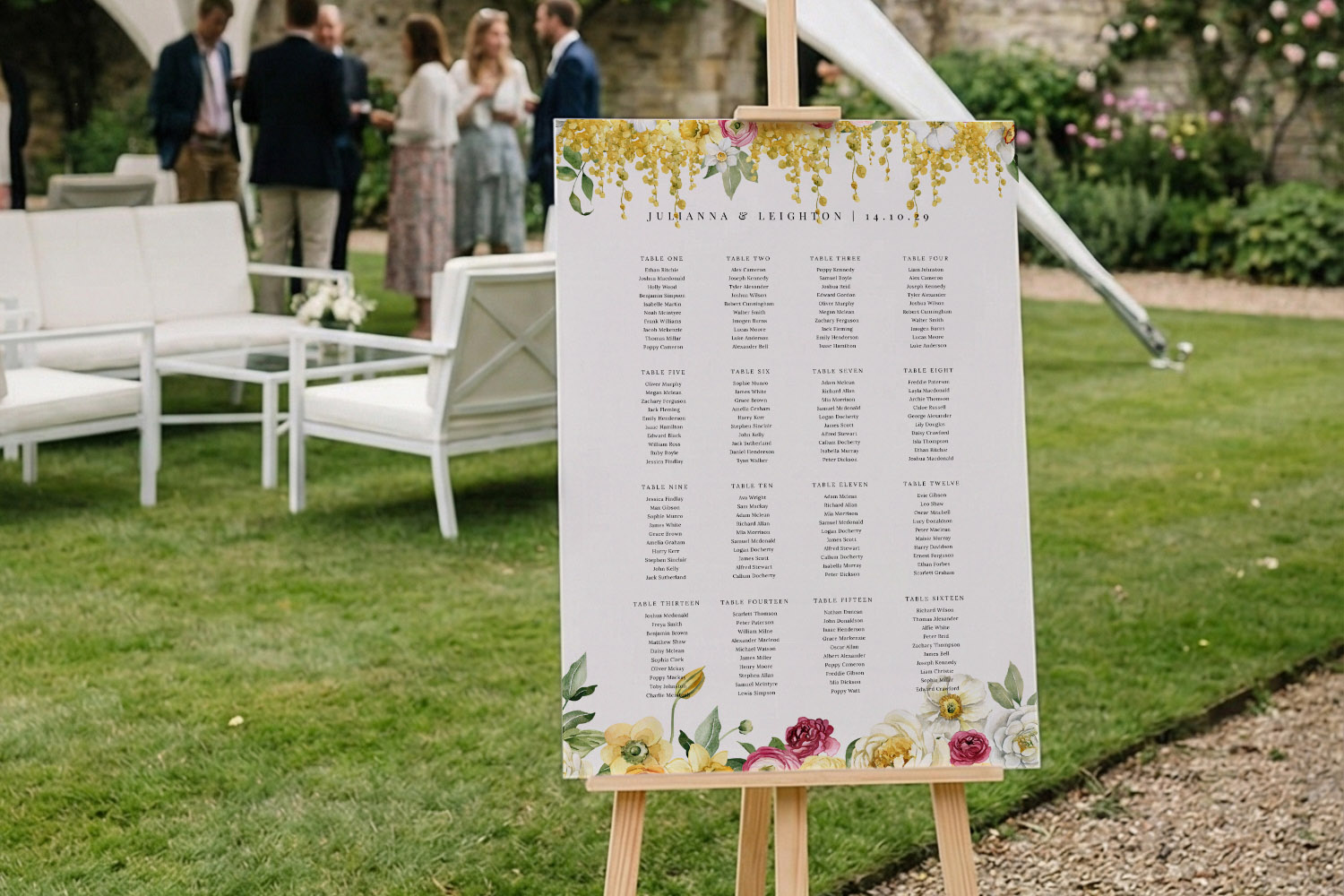
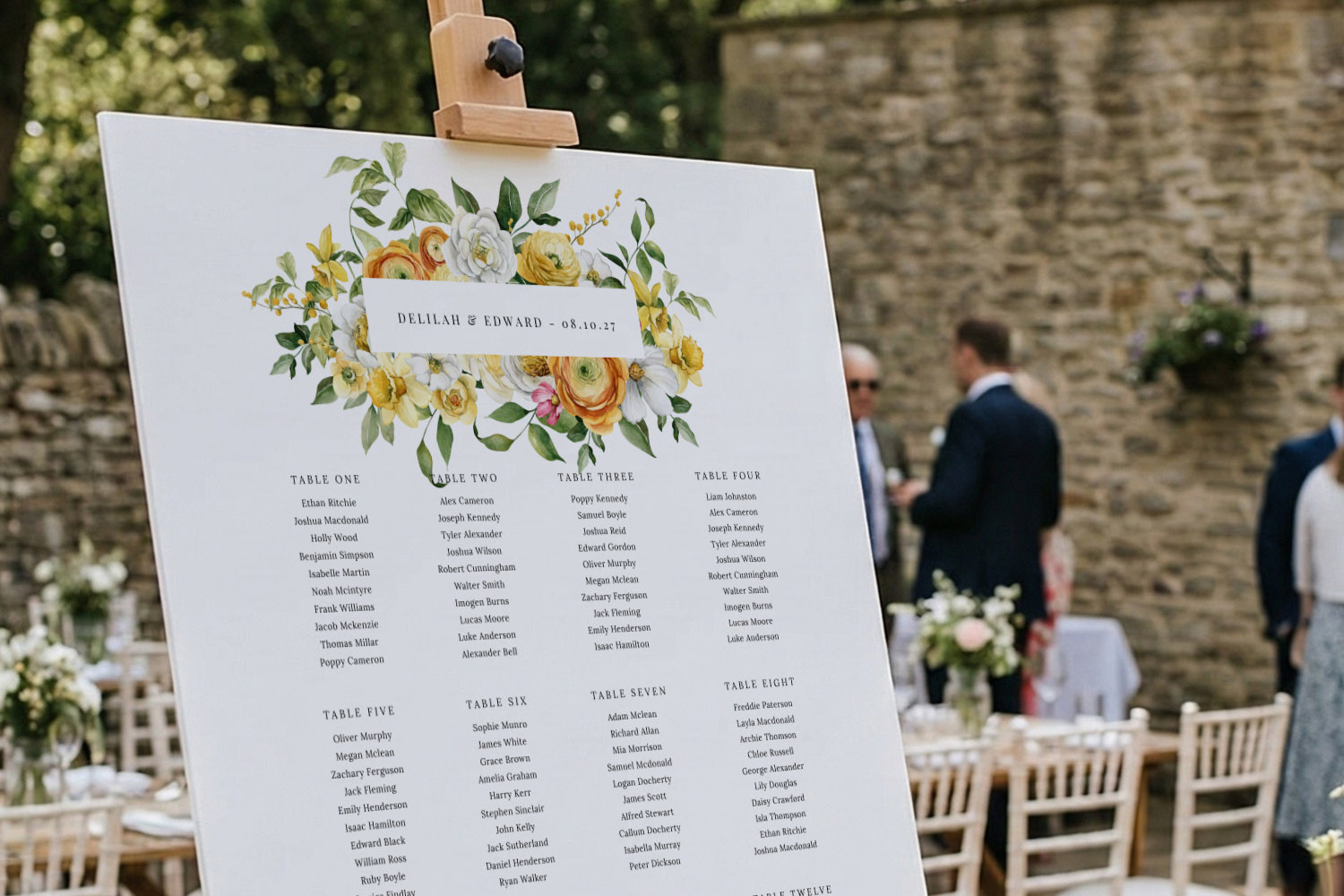
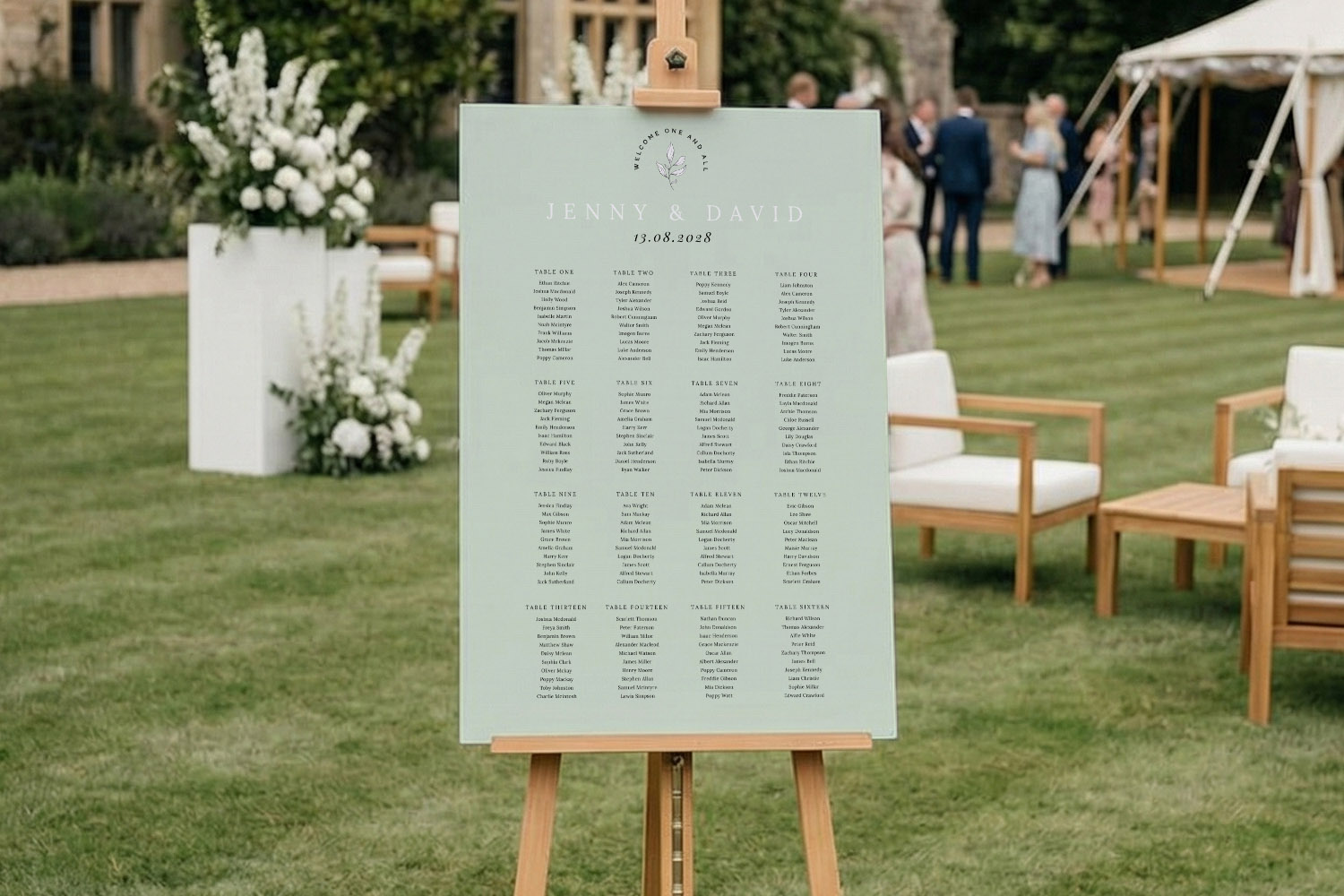
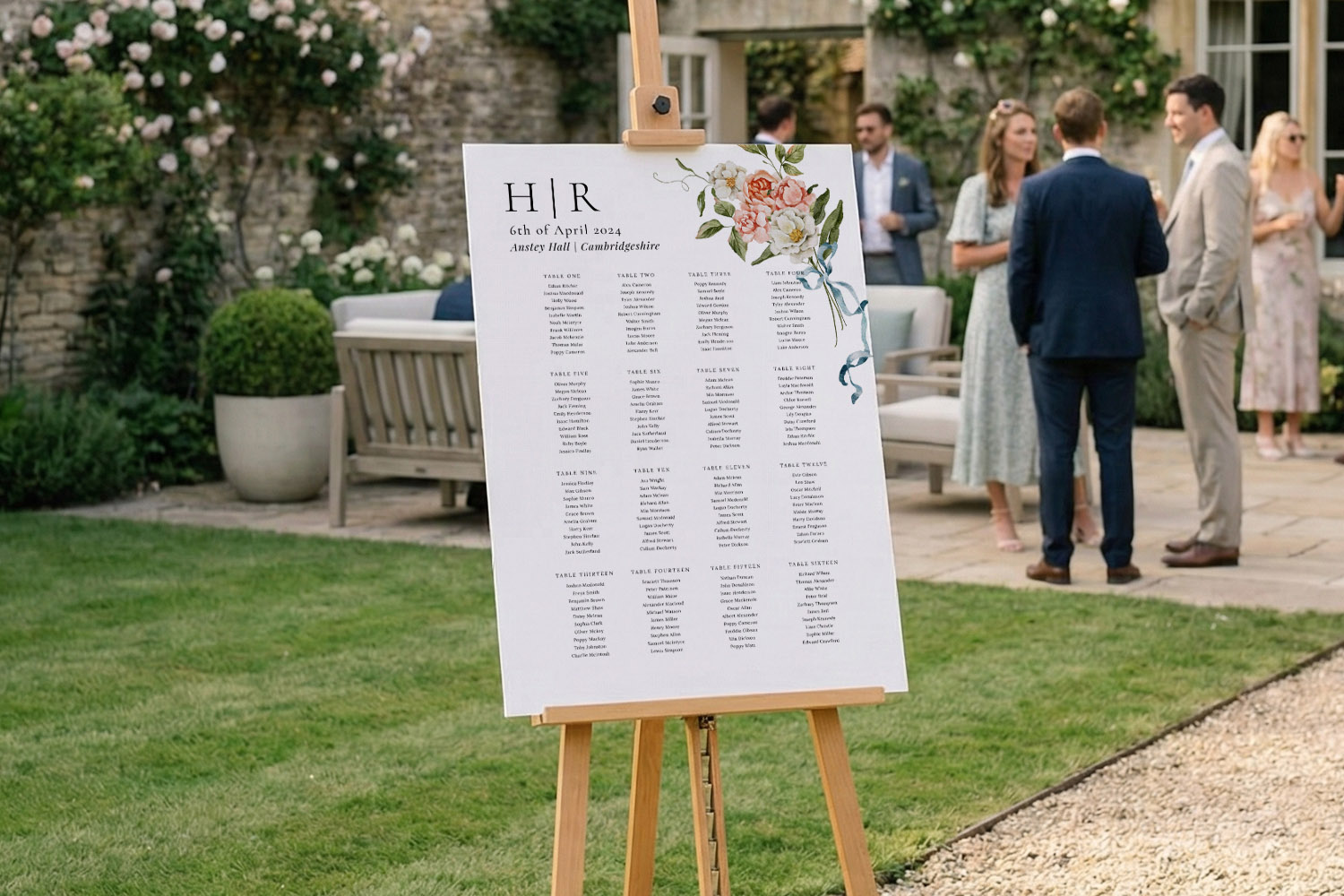
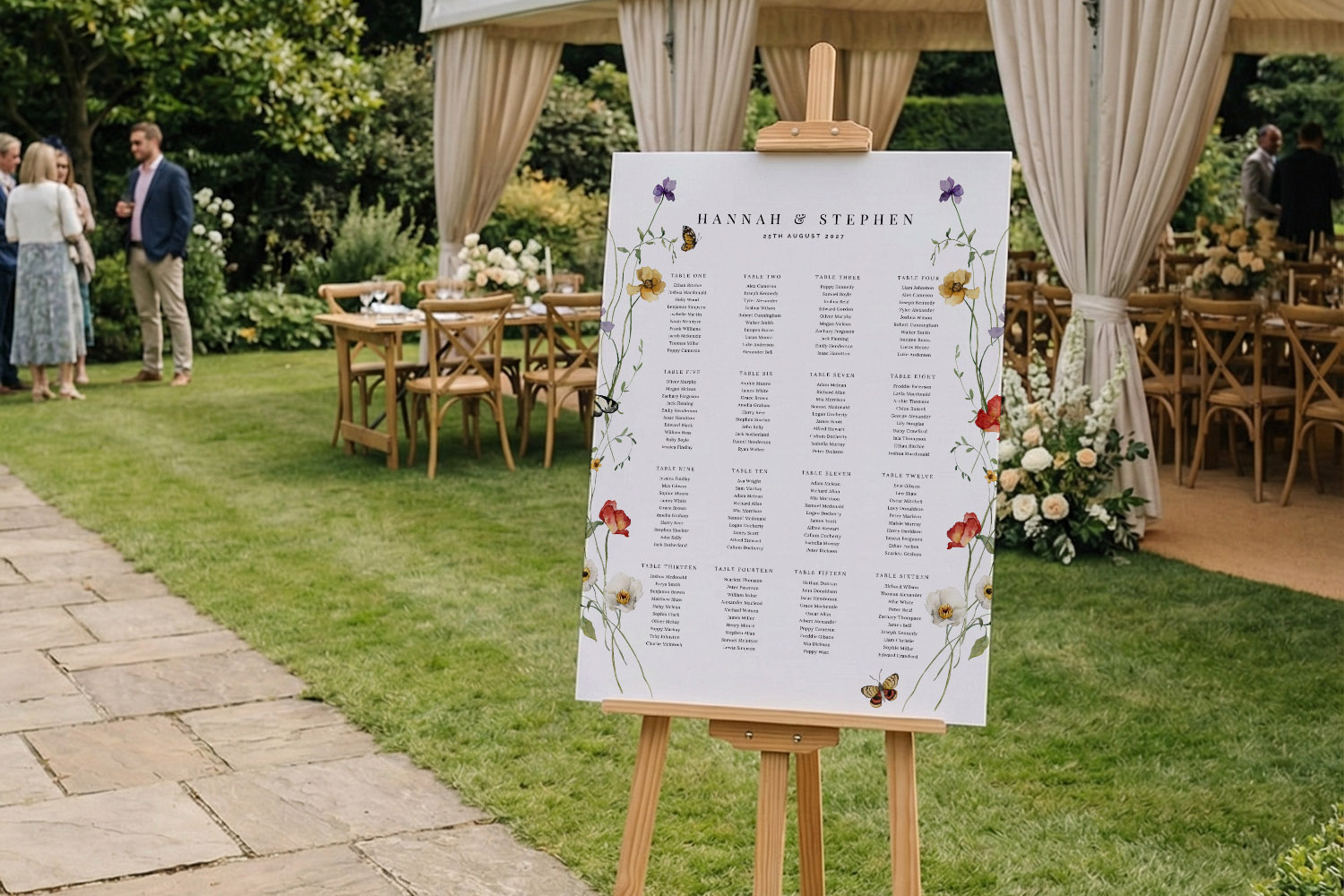
Elegant wedding table plan featuring a floral border, perfect for outdoor receptions and helping guests find their seats with ease.
1) Design pitfalls that hurt readability
Good design isn’t about adding more; it’s about making the essentials easy to see. These are the layout missteps we see most often, and how to fix them.
1. Tiny type that looks “fine on screen” but disappears at the venue
A board that sits by the dining-room entrance should be readable from about a metre away. As a rule of thumb, prioritise generous type for guest names and the table label. If you’re debating font size, go larger—especially for evening lighting or barn venues.
2. Low contrast and busy backgrounds
Delicate florals, kraft textures or watercolours are beautiful, but the text must sit on sufficient contrast. Prefer darker text on a pale ground (or vice versa), keep overlays solid enough, and avoid placing names over high-detail areas.
3. Inconsistent styling across tables
Mixing fonts, weights or spacing between tables forces the eye to relearn the layout each time. Use one typeface family, one line spacing system, and standardised table blocks to create a steady rhythm down the board. Consistency = faster scanning.
4. Overcrowded columns
Cramming long guest lists into narrow columns creates “walls of text”. Add breathing room with wider gutters and even left alignment (ragged right) for names; it’s measurably quicker to read than centred lists.
5. Vague or missing hierarchy
If the heading (“Find your seat”, your names, or the date) shouts louder than the table blocks, it steals attention from the task at hand. Establish a clear order: heading table label names any small notes.
6. Choosing the wrong board size
A2 (420 × 594 mm) suits intimate receptions; A1 (594 × 841 mm) is the safer choice for larger guest lists, ornate scripts or longer table names. When in doubt, choose A1 to preserve legibility without shrinking text.
How Utterly Printable helps: helps: our collection includes 18 clean, prebuilt table layouts—portrait and landscape—so spacing, gutters and typographic rhythm are handled for you. You pick the style and format, personalise online, and the structure stays tidy.
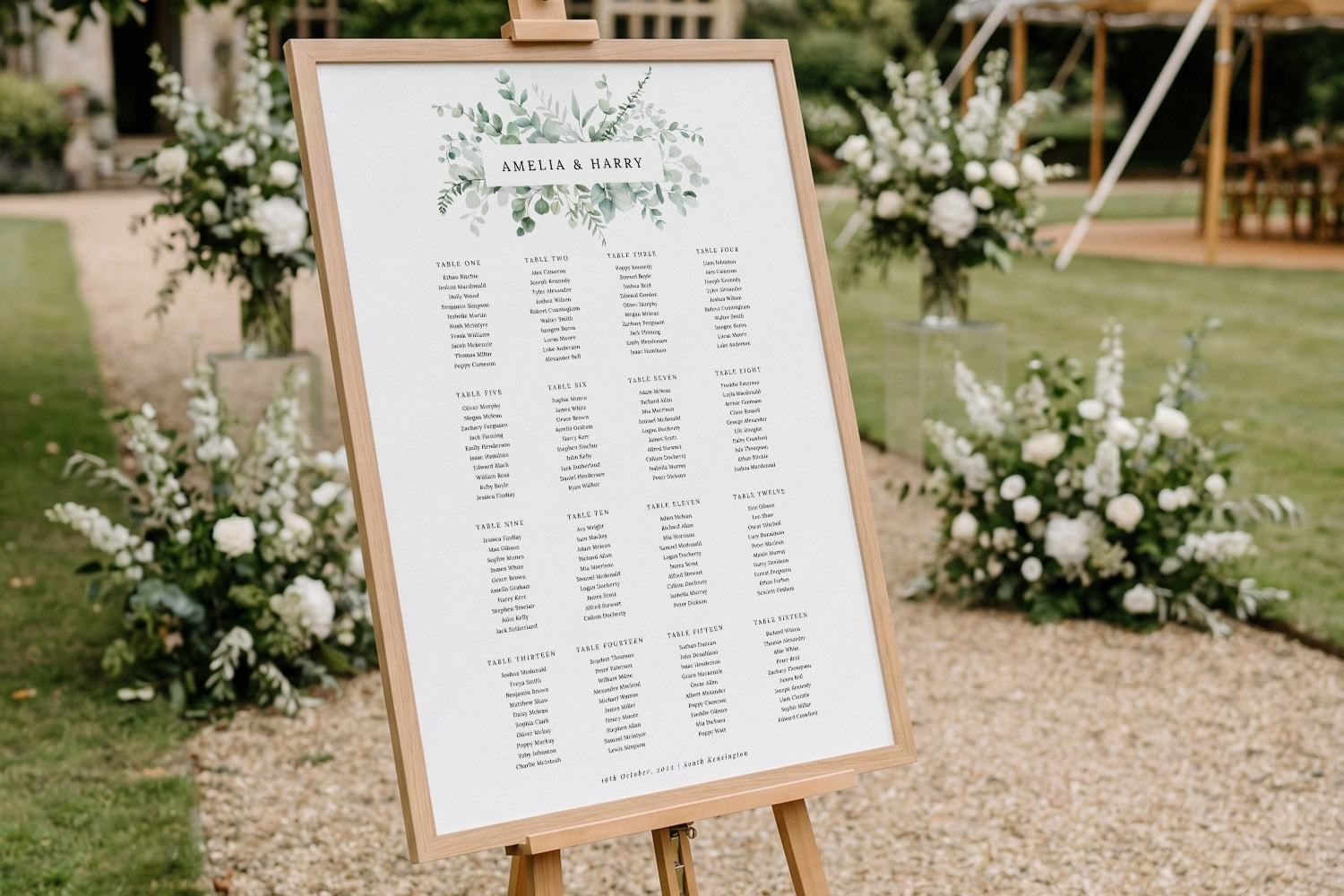
Elegant wedding table plans with a botanical theme, clearly listing guest names and table numbers for a stylish outdoor celebration.
2) Content & data mistakes that cause confusion
Even a beautiful plan can mislead if the information isn’t structured for quick decisions. Avoid these content traps:
1. Alphabetical list when the venue flow needs “by table” (or vice versa)
Alphabetical can be quickest for large receptions; listing by table helps when guests already know their table name/number. Pick one system and stick to it throughout. If you use table names (e.g., cities or cocktails), make sure they’re unambiguous and easy to spell.
2. Unclear table labels
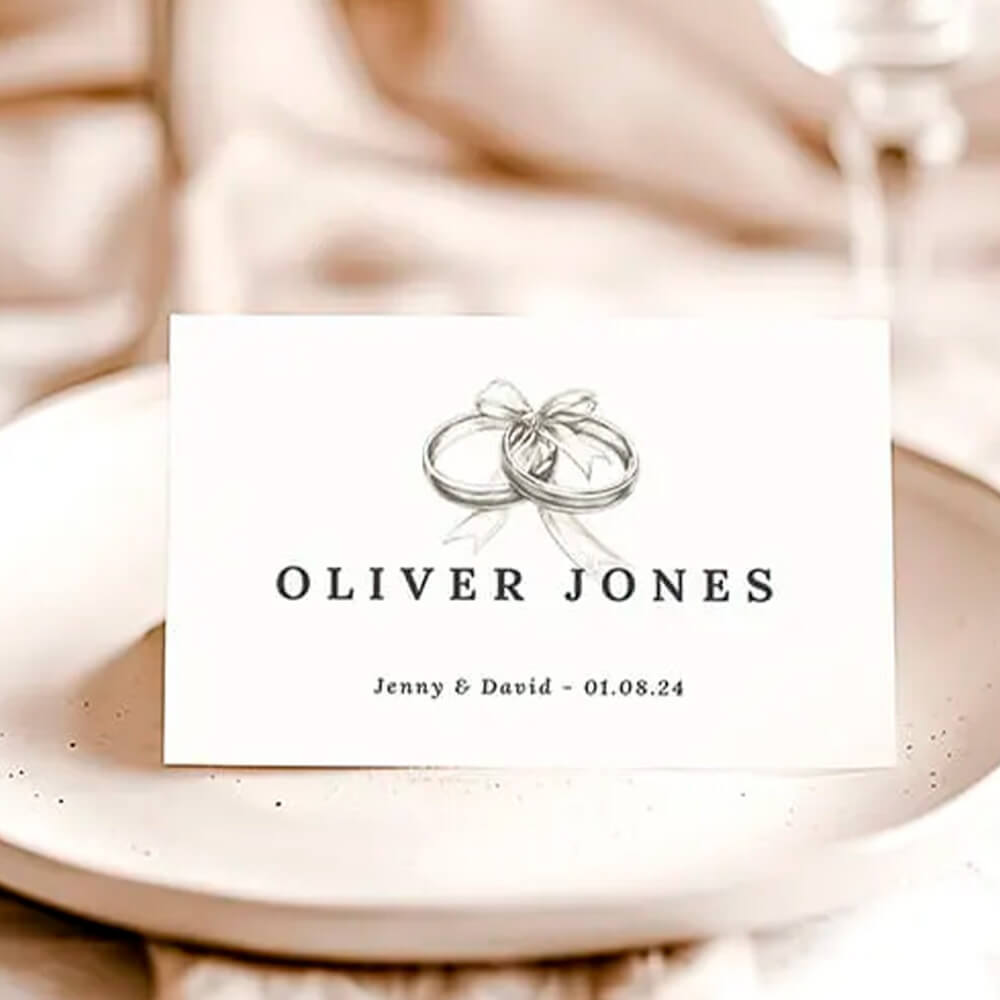
“Top table”, “Head table”, “Table One” and “Table 1” shouldn’t collide on the same board. Choose a simple scheme (numbers or themed names) and apply it uniformly across the plan and your place cards.
3. Overlong names and suffixes
Honorific’s, middle names and job titles bloat line length. Keep names as your guests would expect to be called on the day. For duplicate names, add an initial only where needed.
4. Forgetting accessibility
Good contrast, sensible type size and logical ordering help everyone—especially guests with visual impairments or dyslexia. Consider a simplified alphabetical copy for the welcome desk or a QR code linking to a digital version on your wedding site. Our editor supports adding QR codes if you want a scannable backup.
5. Proofing only on mobile
Always view a full-size proof on a laptop and, if possible, print an A4 mockup to sense-check spacing and line breaks.
6. Late edits without a checklist
Last-minute swaps are inevitable. Keep a simple ritual: update master list refresh table blocks Re-read top to bottom ask one other person to proof. Once a design goes into production, further edits aren’t possible, so that final checklist matters.
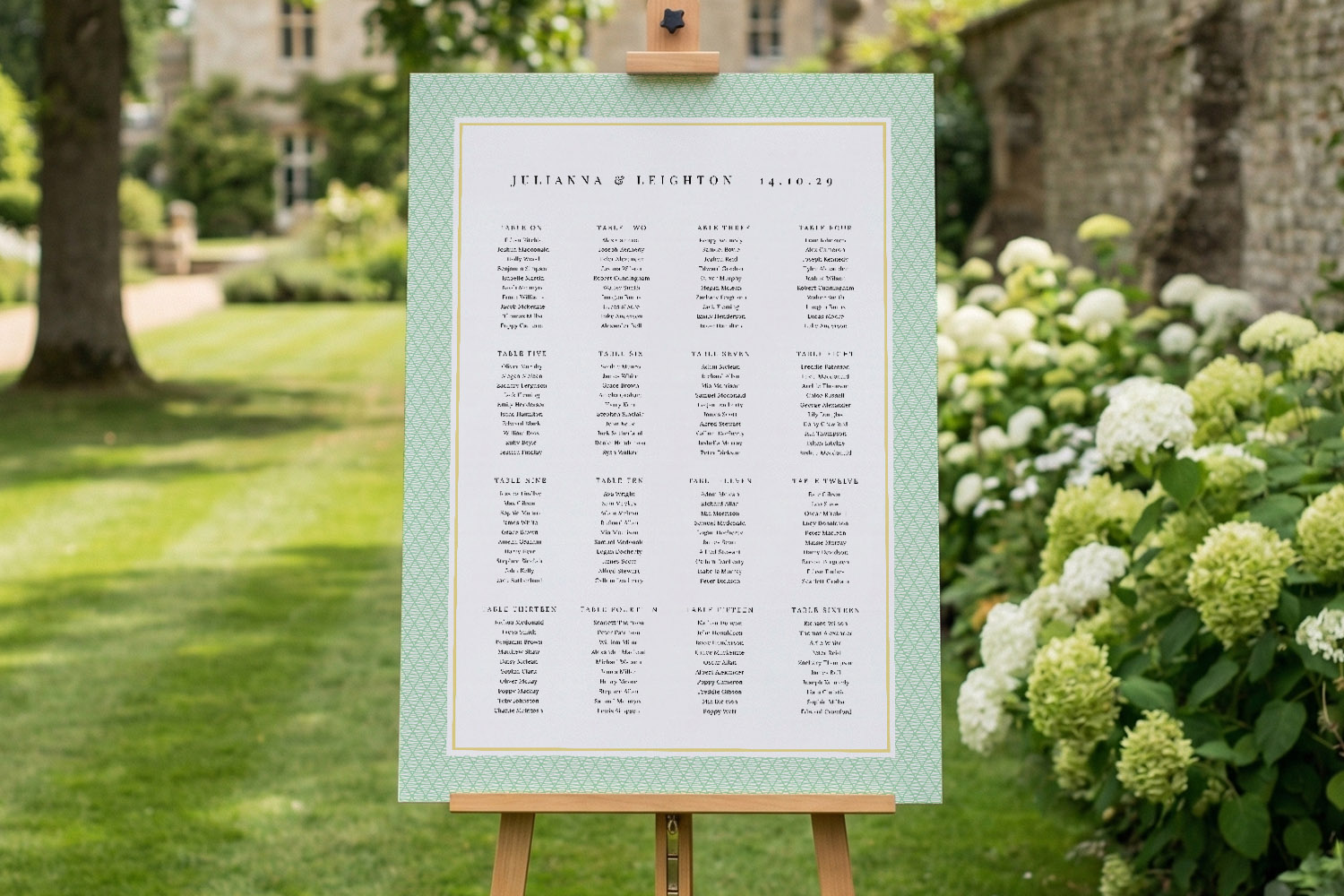
Elegant wedding table plan with a green border, perfect for guiding guests at an outdoor celebration or garden venue.
3) Practical print, material and display tips
These small decisions make a big difference to how smoothly guests find their seats.
Pick a material that suits real-world use
A wedding entrance sees traffic, humidity and the occasional splash. Our seating charts are printed in high-definition colour on rigid 5 mm foamex boards with a smooth satin finish. They’re lightweight, waterproof and scuff-resistant—ideal for leaning on a standard easel or freestanding against a sturdy surface, indoors or out.
Match the plan to the rest of your stationery
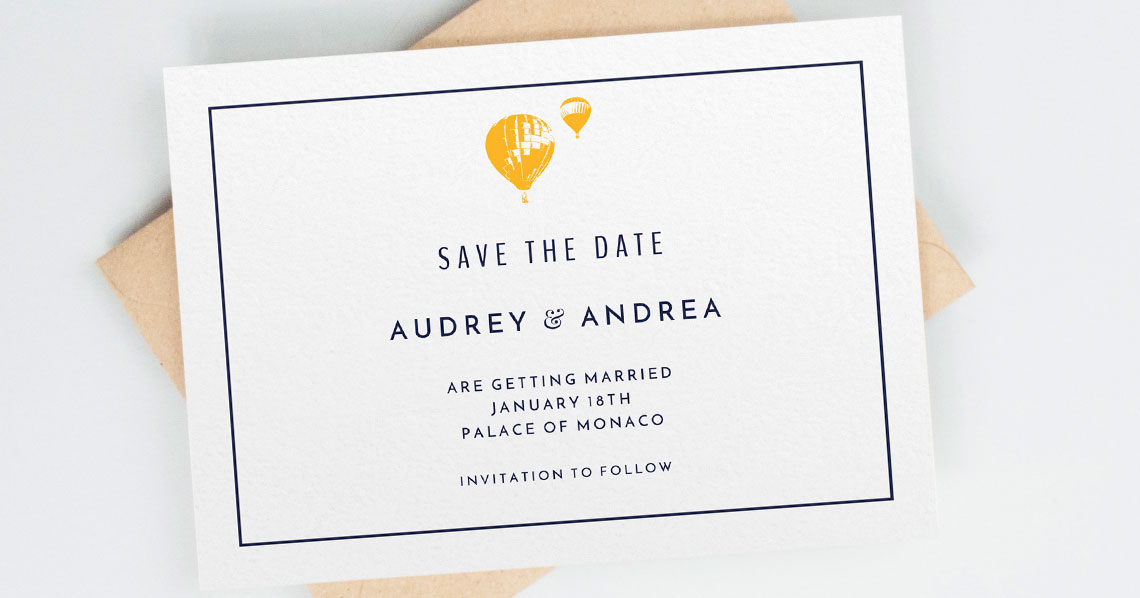
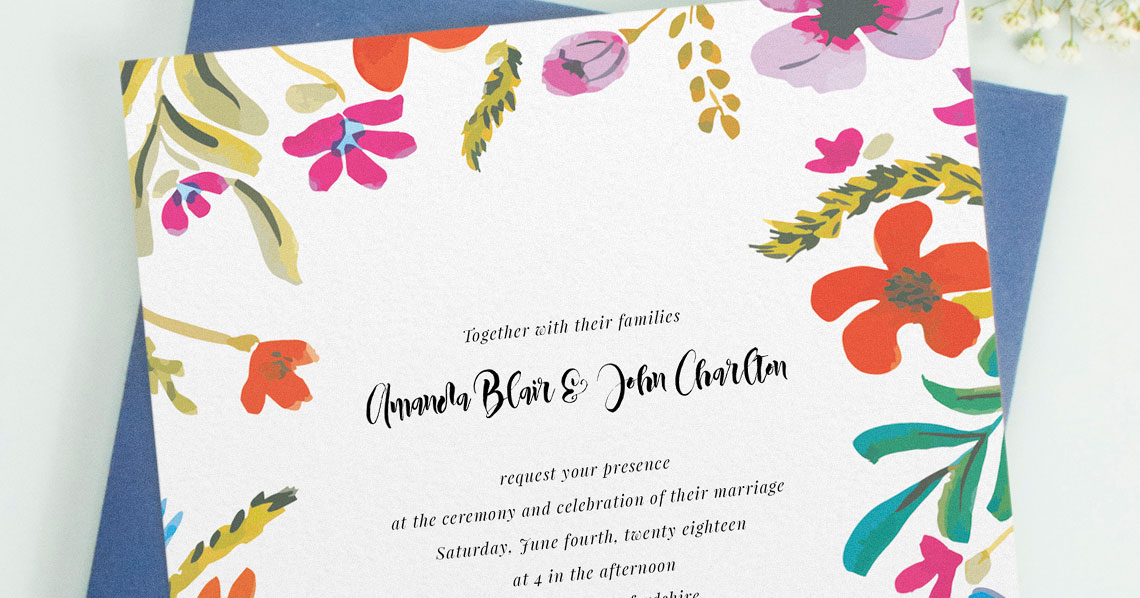
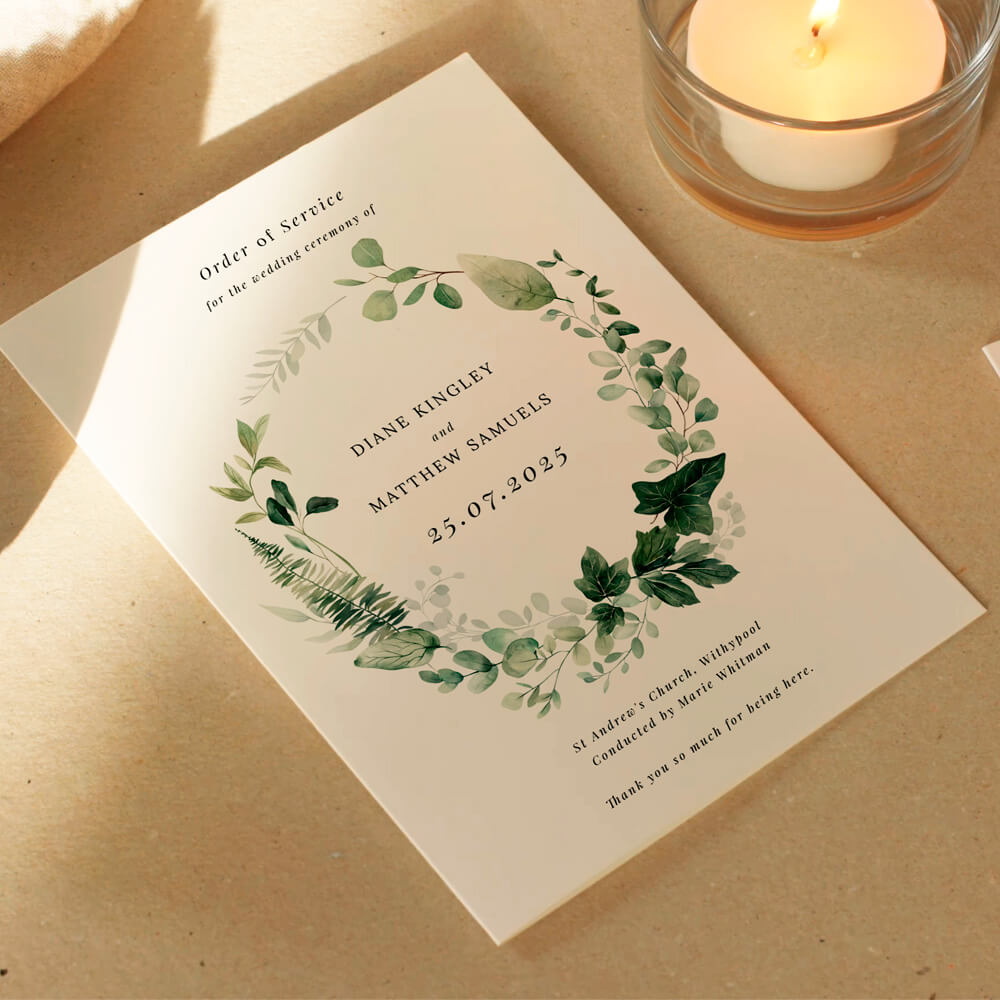
Consistency across your suite helps guests recognise the “look” of your wedding day signage. If you started with our wedding invitation templates, echo the same typography and palette here. It’s also easy to co-ordinate with save the date designs and order of service templates so everything feels cohesive.
Choose portrait or landscape for your content
Longer table names or larger fonts often breathe better in landscape; many small tables can sit neatly in portrait. Our 18 layout formats cover both orientations in A1 and A2, so you can pick the version that suits your names and venue.
Think about placement at the venue
Put the board where guests naturally pause—typically at the entrance to the dining space. Give it elbow room; a metre of clearance avoids congestion. If evening light hits the board, the satin surface helps reduce glare compared with glossy finishes.
Plan your timeline
For peace of mind, build in time for proofing before you order. Our production runs in three full working days, with tracked courier delivery across the UK; an optional high-resolution PDF is available if you prefer to print locally or need a digital backup.
Where to start
Browse our curated styles and personalise one of our wedding table plan designs directly in your browser. You can rename tables (numbers, places, cocktails—your call), adjust headings, add dates and venue details, and preview changes live before ordering.

Wedding seating plan FAQs
Quick answers to the most common questions couples ask us.
Alphabetical is fastest for large guest lists; listing by table works well if guests already know their table name or number. Pick one approach and keep it consistent across the board and place cards.
A2 suits smaller receptions; A1 is the safer choice for longer names, ornate scripts or anything over roughly 8–10 tables. If you’re unsure, A1 gives you more room to keep font sizes comfortable.
Yes. Our boards are printed on rigid 5 mm foamex with a satin finish that’s waterproof and scuff-resistant, so they’re well suited to garden ceremonies and marquees.
Keep a single master list, update it first, then refresh the board and proof from the top. Ask a second pair of eyes to check spellings. Once your order moves into production, we can’t make edits, so build in time for a careful review.
There’s no single number for every design, but err on the side of larger text—especially for names. Test-print a page at home and view it from a few steps back; if you squint, it’s too small.
Helpful next step: Start customising your wedding seating plan in our online editor, or revisit your suite with matching invitation templates, save the dates and order of service designs for a cohesive look from the moment guests open the envelope to the moment they find their seats.
A1 vs A2: choosing the right size for your wedding table plan
Deciding between A1 and A2 for your wedding table plan depends on your guest list, venue, and style. This guide explores each size’s advantages and drawbacks to help you design a practical, visually appealing seating chart.
Designing a Table Plan for Small vs Large Weddings (Layout Differences Explained)
Learn how to create the ideal wedding table plan for any guest list size. Explore layout options, board sizes, and practical tips to design a clear, stylish seating chart that ensures your celebration runs smoothly and looks beautiful.
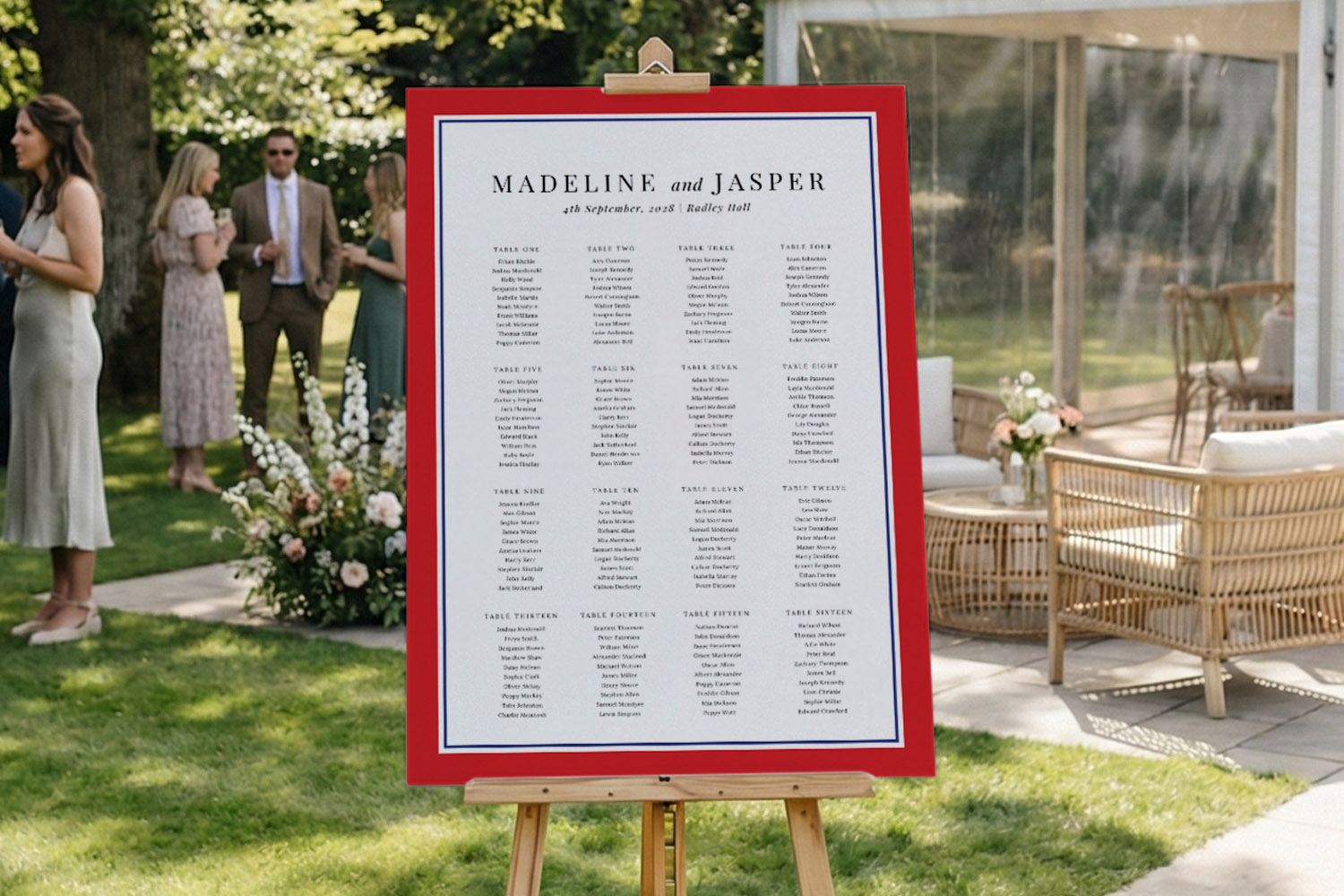
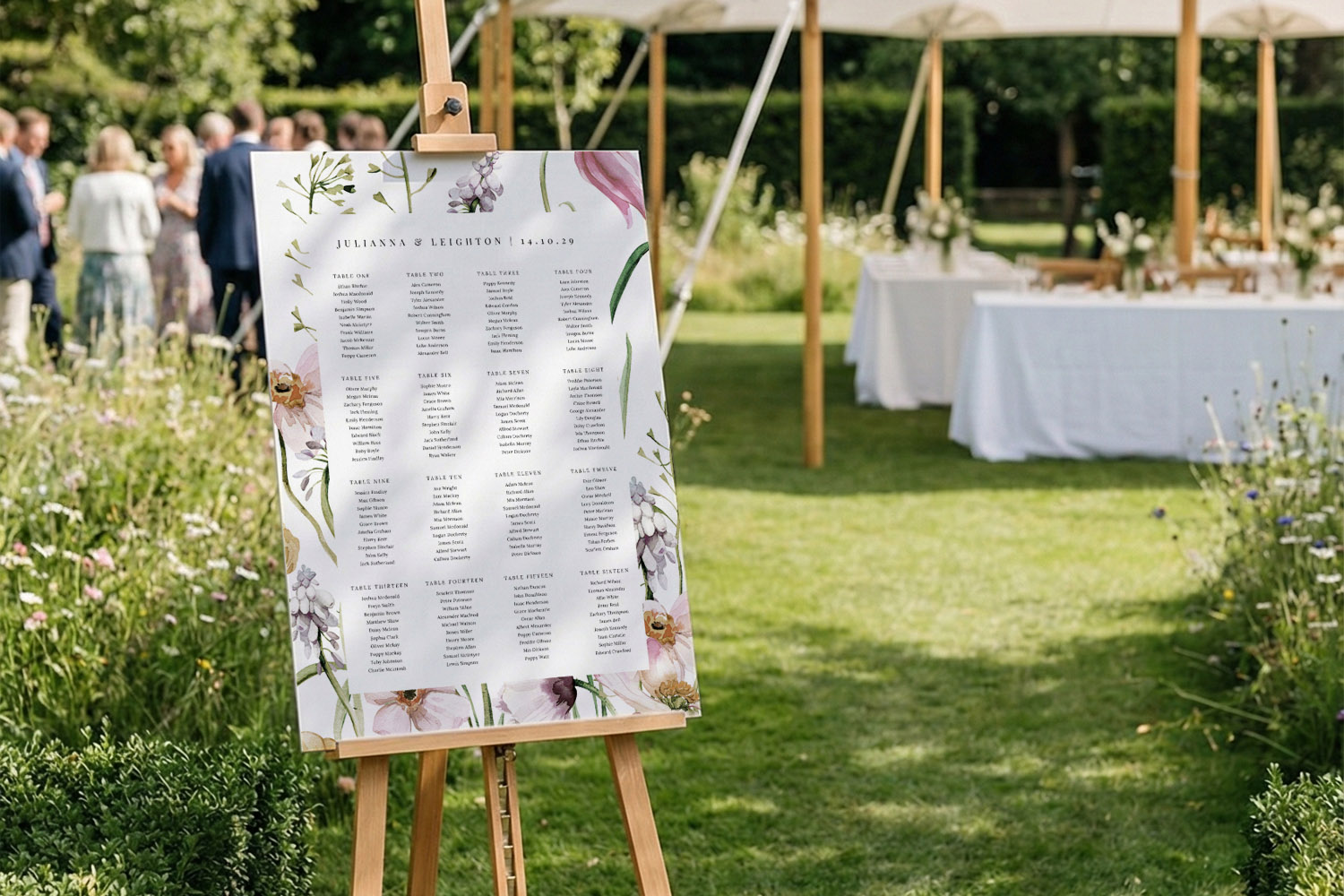
Displaying Your Wedding Table Plan at the Venue (Easels, Walls & Outdoor Setups)
Explore creative ways to display your wedding table plan, from easels to outdoor setups. Get helpful advice on using foamex boards, choosing the best placement, and styling your seating chart to make it clear and inviting for guests.
How to Design an Easy-to-Read Wedding Table Plan (Typography, Spacing & Colour)
Discover how to design an easy-to-read wedding table plan with practical tips on typography, spacing, colour, and layout. This guide helps you create a seating chart that’s both beautiful and legible for guests in any venue setting.
Waterproof Wedding Table Plans Explained for Outdoor & Barn Venues
Discover how waterproof wedding table plans made from foamex keep your seating chart looking smart and legible at outdoor, barn, garden, or marquee venues. Learn why these durable boards are ideal for unpredictable UK weather and easy guest navigation.
When to Print Your Wedding Table Plan (and handle last-minute RSVPs)
Discover the ideal timing for printing your wedding table plan and how to manage last-minute RSVPs. This guide covers when to order, how to finalize your guest list, and tips for handling changes to ensure a seamless celebration.
Products related to table arrangements

Dive Into Our Blog
Wedding table plans are essential for guiding your guests. Check out the blog for advice on layout designs, customisation options, and practical tips for seamless seating arrangements.