Wedding invitation wording: what information to include (UK)
If you’re wondering what to write on a wedding invitation (UK), this guide walks you through the essentials, shows where each detail belongs on the card, and offers wording examples for day and evening guests. We’ll also cover layout and readability on a printed design, thoughtful approaches for different family situations, and how QR-based RSVPs change what you need to print. Throughout, we link to helpful designs and matching stationery so everything stays consistent across your suite.
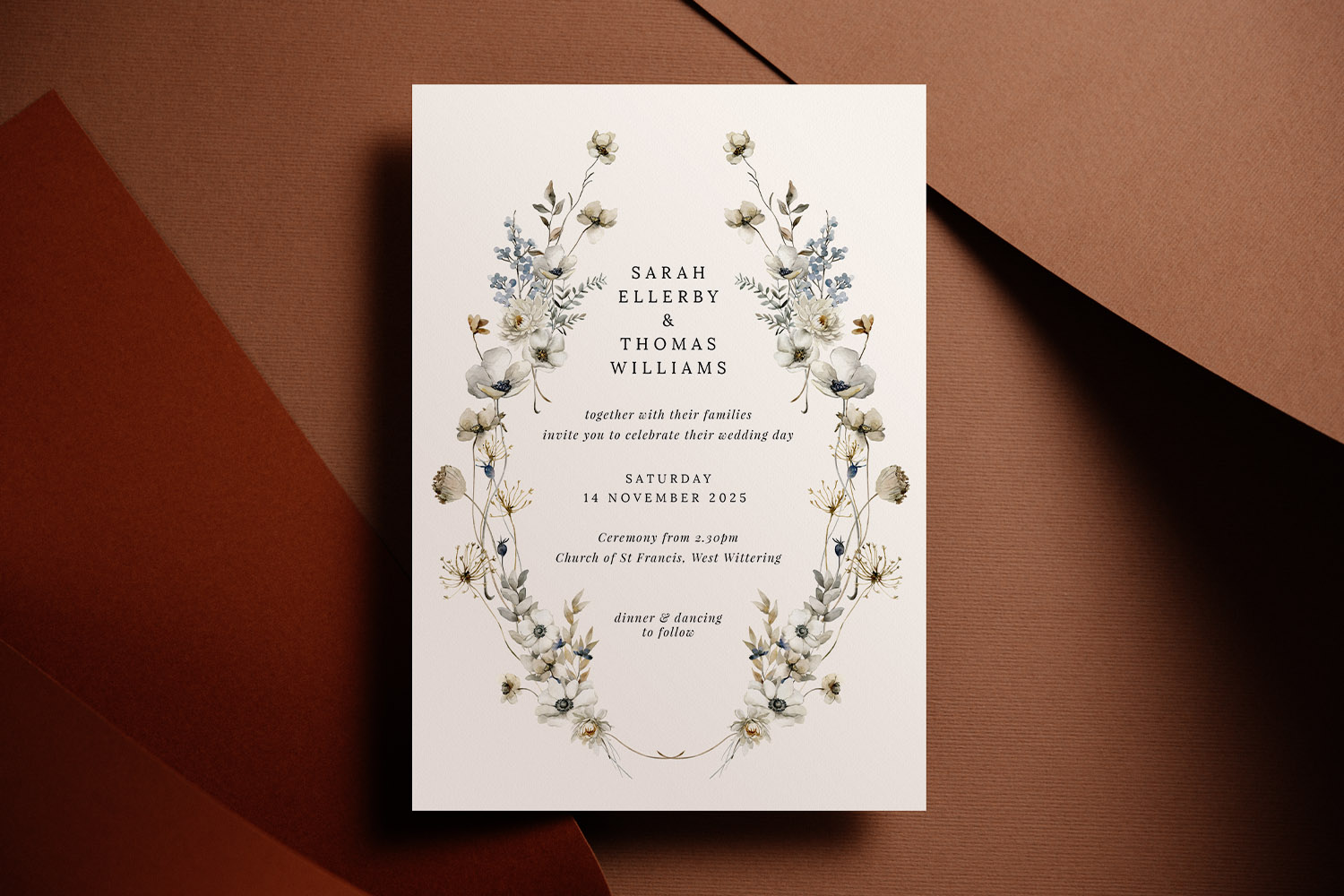
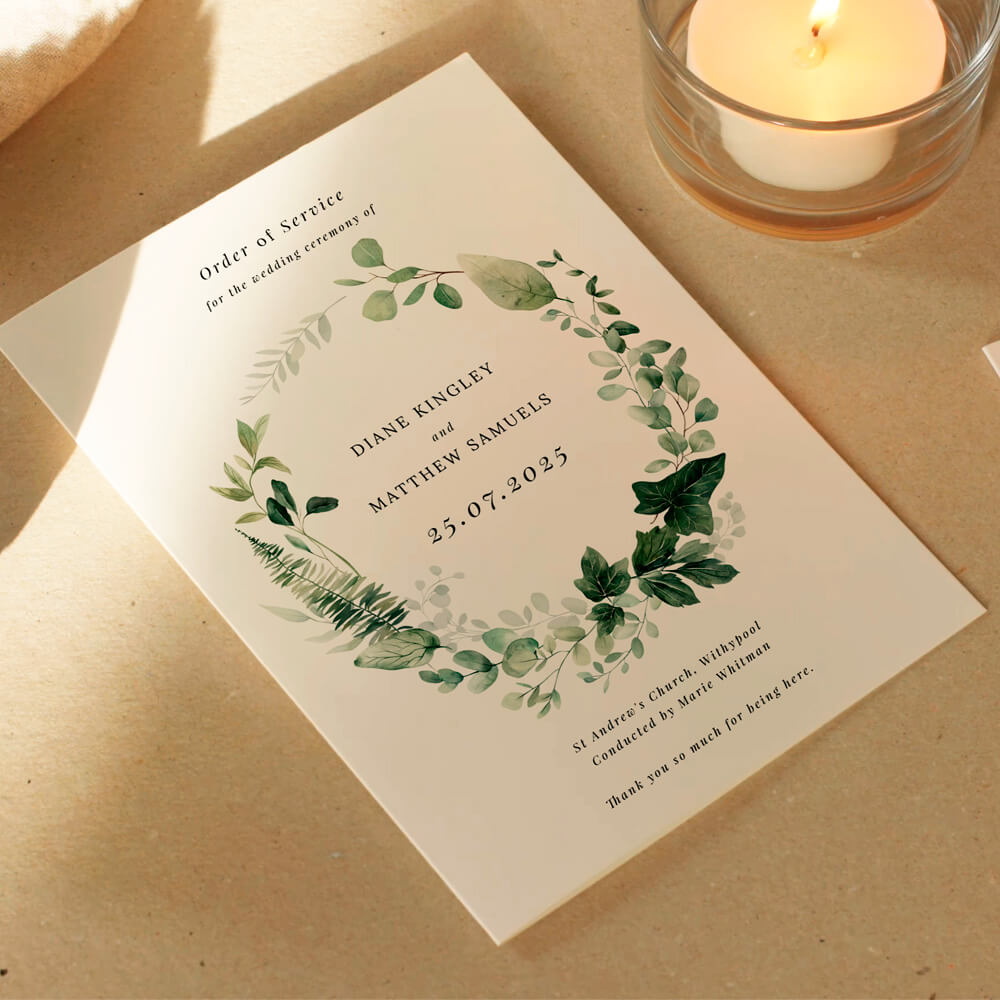
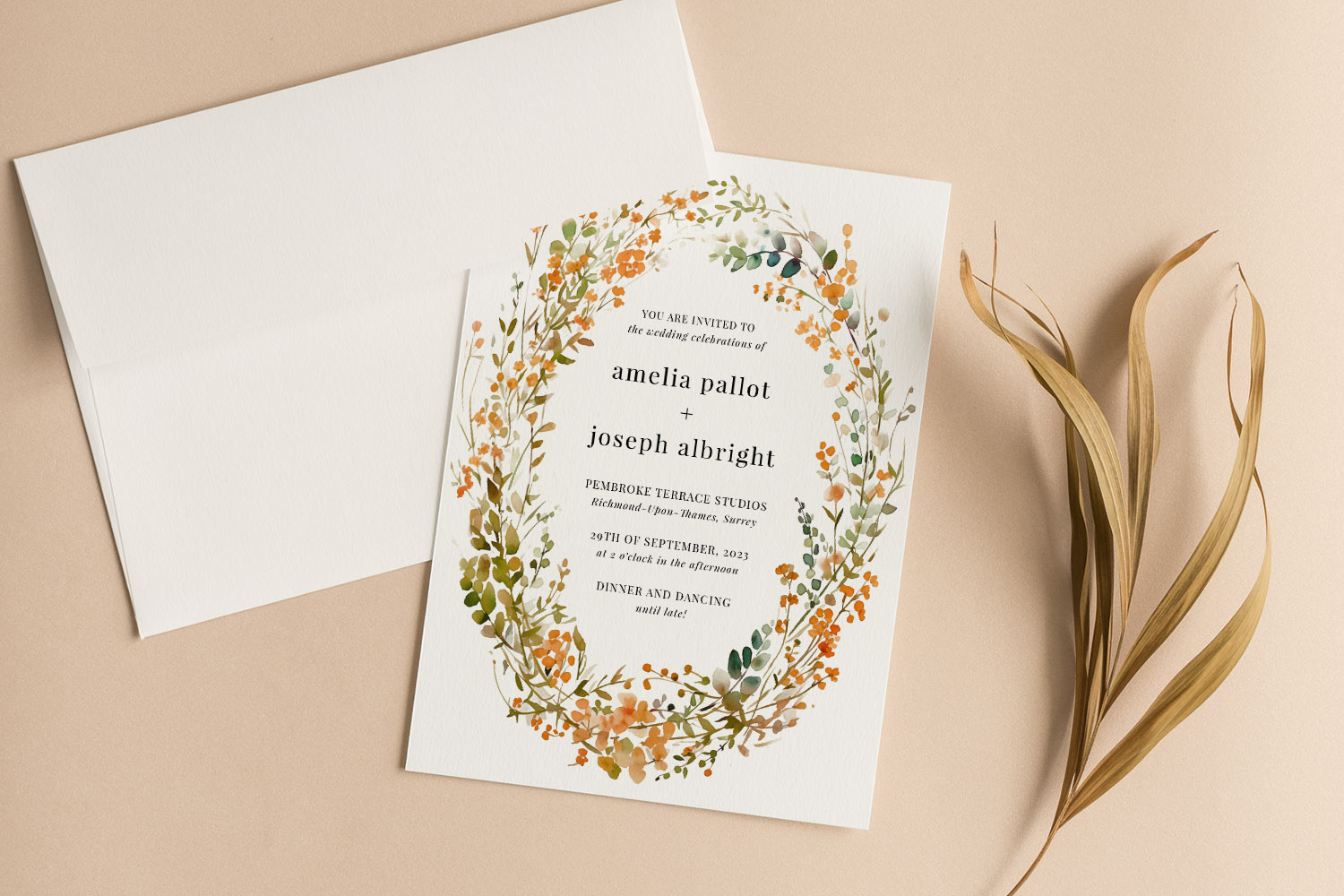
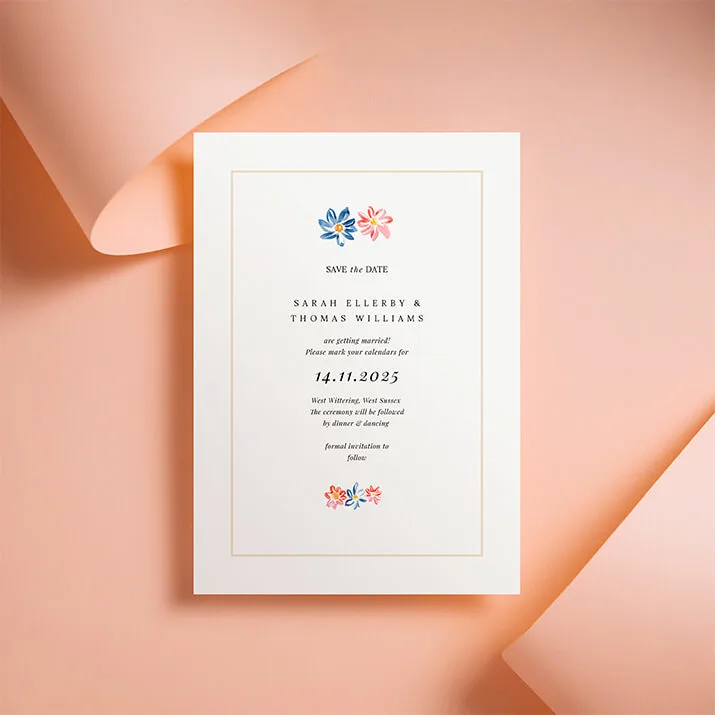
Elegant wedding invitations featuring a delicate floral design and contemporary fonts, perfect for a stylish and memorable celebration.
1) The essential details every UK wedding invitation needs
To make your card clear at a glance, include the following in roughly this order. This checklist is “featured-snippet” friendly—ideal if you’re skimming:
- Hosting line
Traditional (parents hosting): “Mr and Mrs James Carter request the pleasure of your company …”
Couple hosting: “Together with their families, Olivia Brown & Daniel Green invite you to celebrate their wedding…” - Couple’s names
The focal point. Use your preferred order; many couples list names alphabetically or by aesthetic balance. - Date and day of the week
Write the day and date to avoid confusion: “Saturday, 14 June 2025”. - Ceremony time
Use a clear UK format: “2.30 pm” or “Half past two in the afternoon”. - Venue name and full address
Include postcode for sat navs: “St John’s Church, High Street, Bath BA1 1AB”. - Reception information
“Reception to follow at… / Drinks and dancing at…” If it’s a different venue, print the second address in full. - RSVP instructions
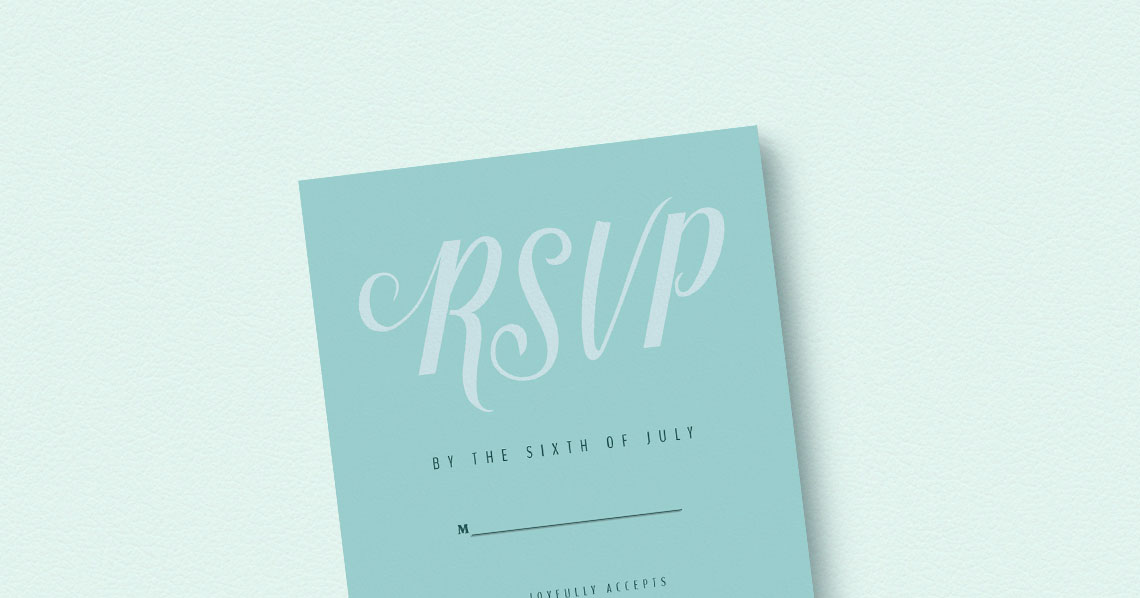
Give a deadline and method: “Please RSVP by 20 April 2025” + email, phone, website, or QR code to an online form. If you’re using a QR or website, you can omit some printed contact lines. - Dress code (optional but helpful)
Keep it short: “Black tie”, “Cocktail attire”, or “Smart summer garden party”. - Additional information (optional)
Dietary needs, parking, travel, accommodation, or a gentle gifts note (many couples keep this on an insert or wedding website). - Who’s invited (implicit or named)
If you’re printing guest names on each card, place them near the top or as a line before the RSVP.
Day vs evening invitations
- Day invitation: includes the ceremony. “Ceremony at 2.30 pm; reception to follow.”
- Evening invitation: no ceremony details; state arrival time for the party. “Please join us from 7.30 pm for the evening reception.”
When ordering, create two versions of the wording so each guest receives clear, relevant information.
You can browse and customise hundreds of designs here: explore our full range of wedding invitation templates, from floral and modern to minimalist and classic.
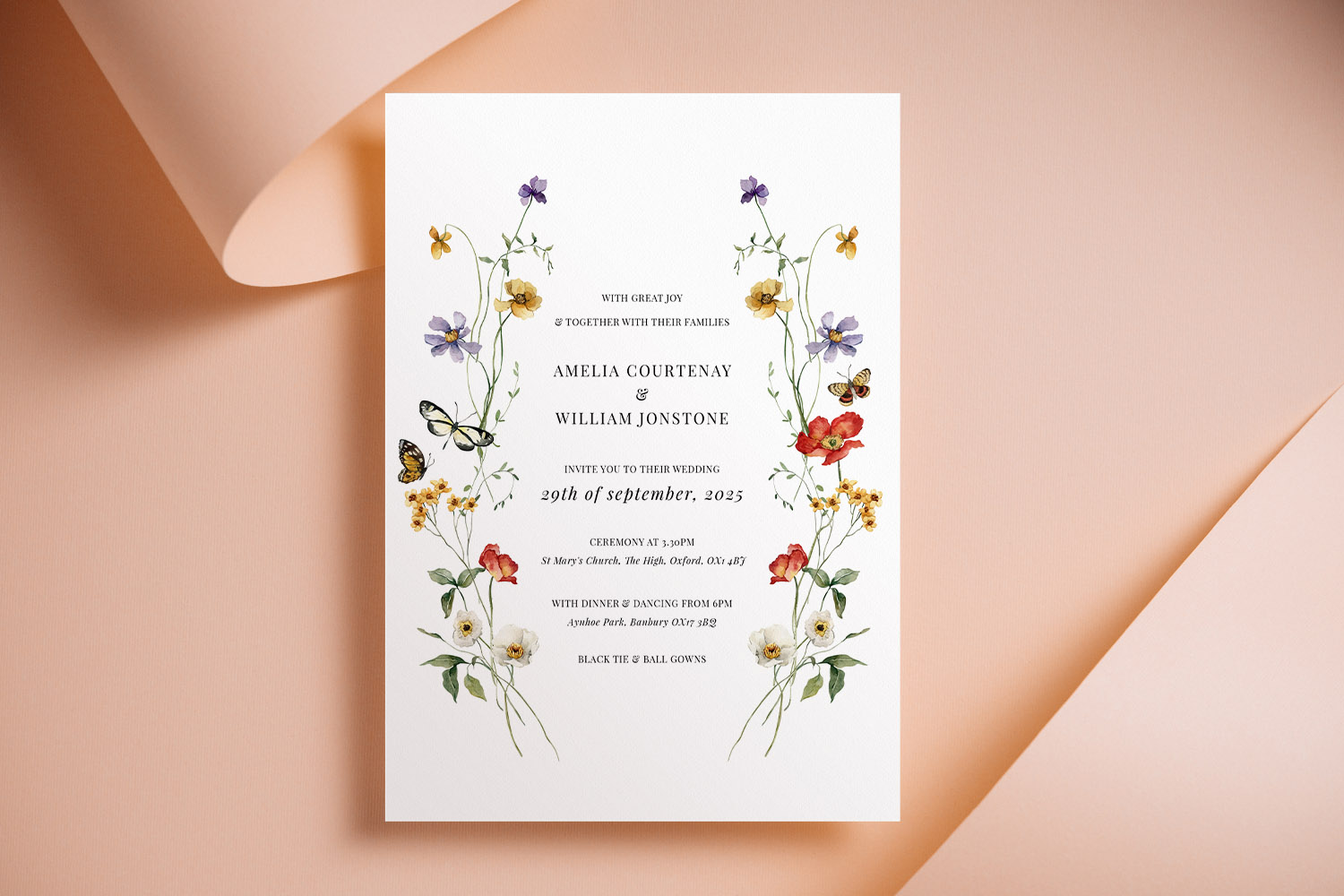
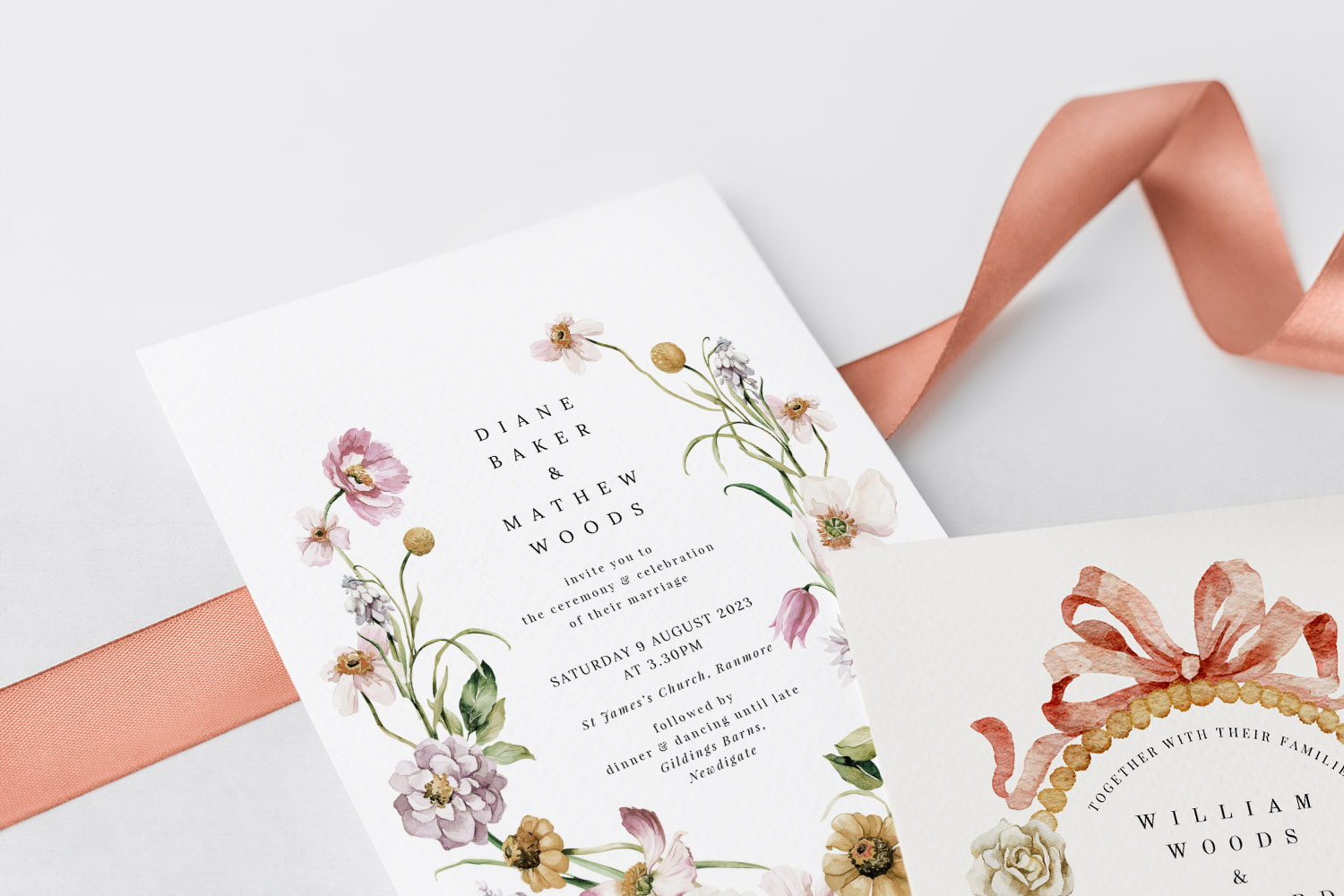
Elegant wedding invitations with a delicate wildflower border, perfect for couples seeking a romantic and timeless stationery style
2) Layout, hierarchy and readability on printed cards
A beautiful message needs a readable layout. Here’s how to keep your wording elegant and easy to scan on a printed invitation:
Prioritise hierarchy
- Names are your hero line—use a larger size or a display font.
- Keep functional details (date, time, venues) in a clean, easy body font.
- Use line breaks and spacing to create “breathing room” between text blocks.
Balance the text block
- Aim for a balanced rectangle of text in the centre (or a neat left alignment if the design calls for it).
- Avoid very long lines; 45–65 characters per line is a comfortable reading width.
- Watch orphan words (a single short word on a line by itself). Edit line breaks or wording to tidy them.
Typefaces and sizes
- Script fonts add romance, but pair them with a legible serif or sans-serif for the details.
- For older guests, avoid all-caps scripts and keep key details at a comfortable size; readable contrast beats faint pastels for small type.
Clarity for maps and multi-venue days
- If ceremony and reception are at different venues, set them as two distinct blocks with clear headings.
- Consider a small information card for travel and timings to avoid clutter on the main invitation.
Cohesion across the suite
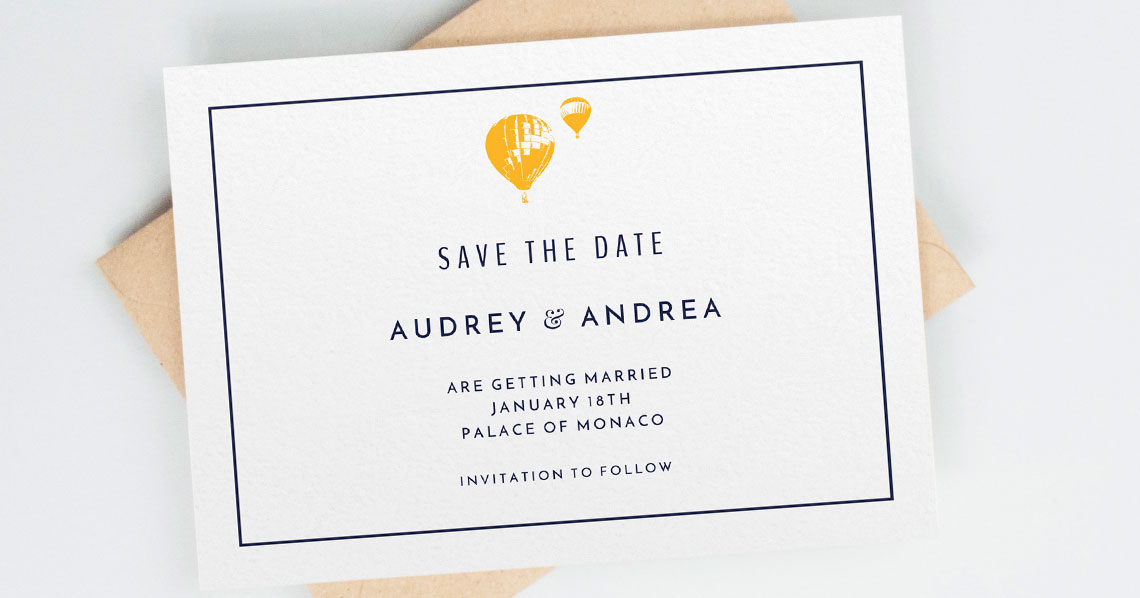
Carry the same tone, fonts and colour palette through your Save the Date, RSVP, and Thank You cards so the suite feels intentional. If you love botanical motifs, browse our floral wreath wedding invitation designs; for a timeless feel, try our classic wedding invitation templates.
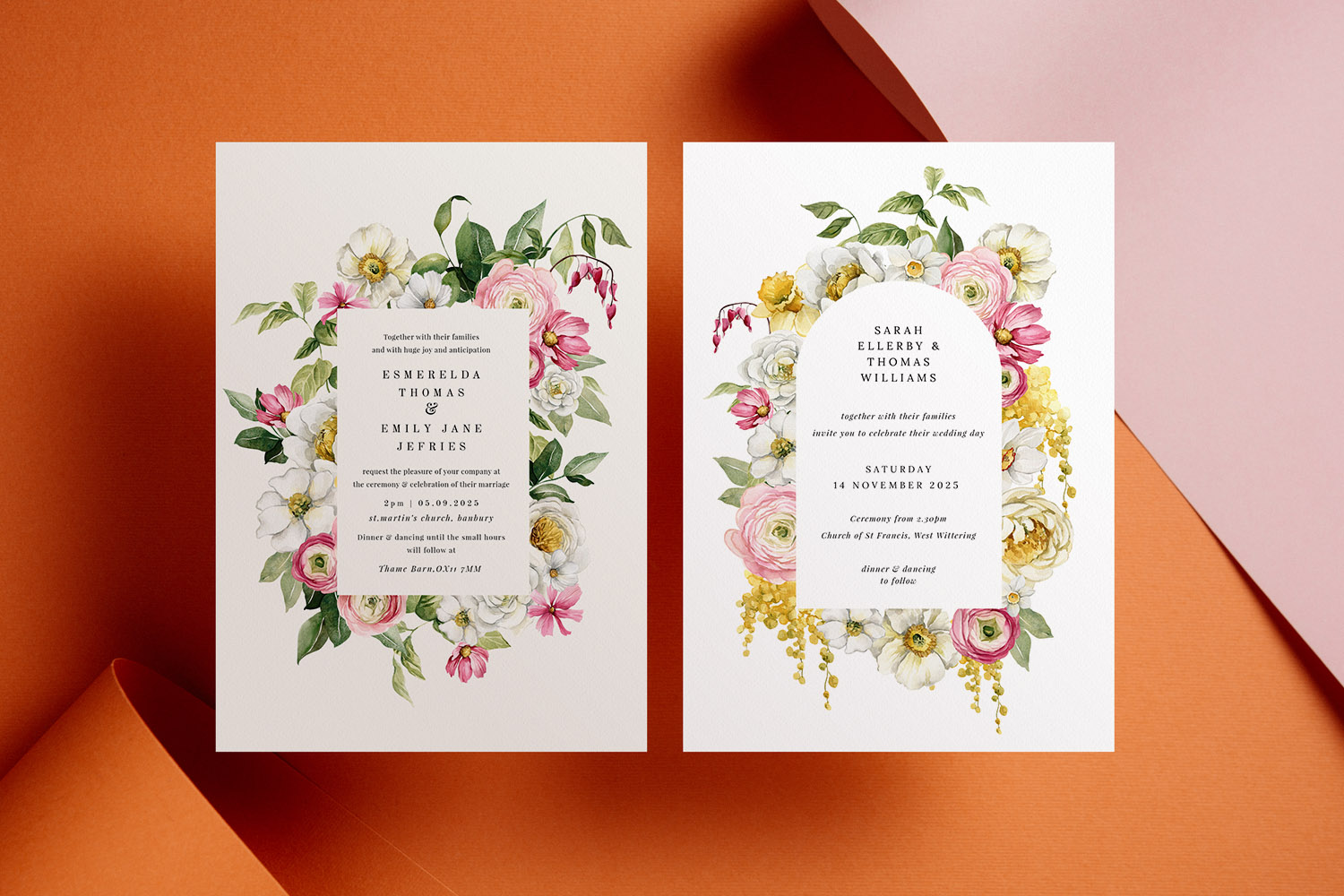
Beautiful wedding invitations featuring delicate floral designs, perfect for adding a romantic touch to your special day stationery.
3) Thoughtful wording for modern situations
Alternative family structures
Keep the tone warm and tidy without long lists of names. A few options:
- Couple-first with families: “Together with their families, Maya Shah & Emma Collins invite you…”
- Hosted by divorced/separated parents: “Jane Smith and Robert Jones request the pleasure of your company at the wedding of their daughter…” (If stepparents are close, include them by name, separated by line breaks.)
- No hosts named: Go host-neutral and lead with your names. This avoids clutter and suits many family dynamics.
RSVP by QR code or website
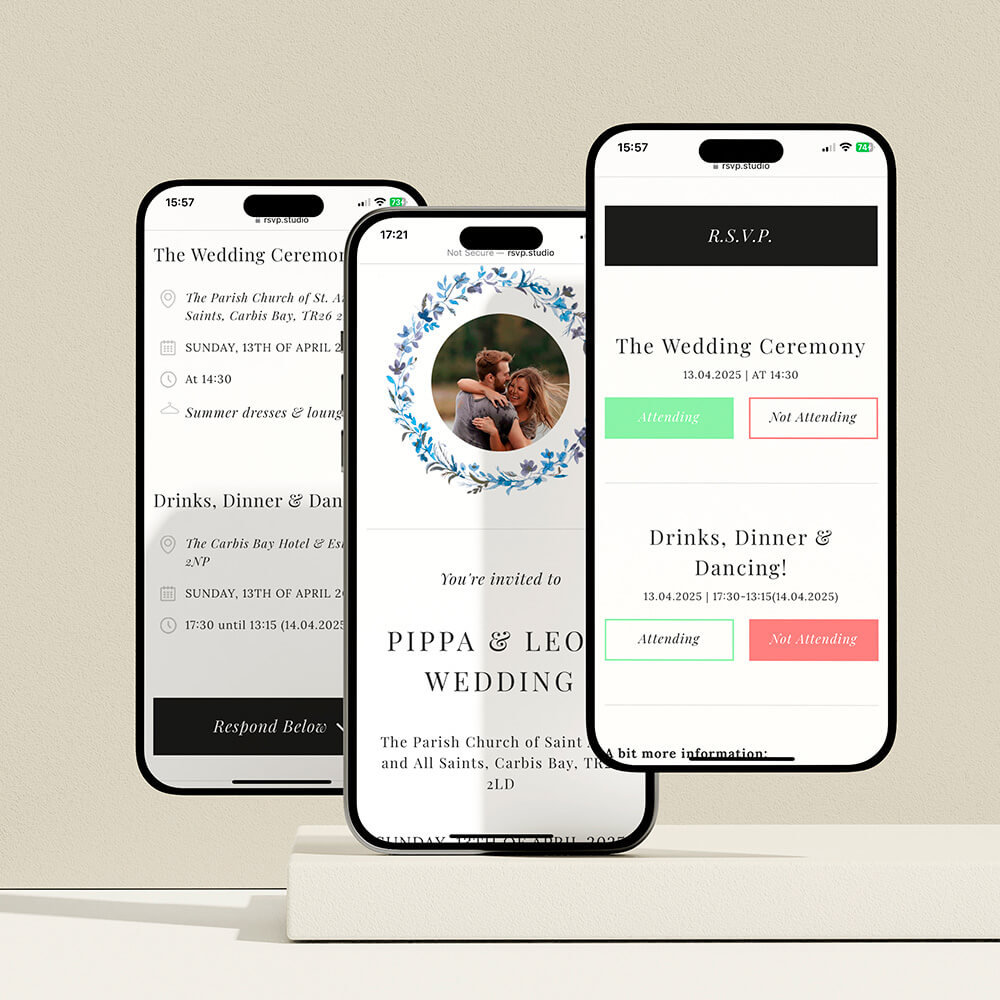
If you’re collecting replies online, print a short line such as: “RSVP by 20 April 2025 via the QR code” or “RSVP at our website by 20 April 2025.” Because the form captures dietary notes and song requests for you, your printed card can be cleaner—no phone number or email is required unless you prefer it.
Gifts & poems
Keep it gentle and brief. Many couples use a single line—“Your presence is the only gift we need”—or direct guests to the website for registry details, avoiding clutter on the main card.
Children & plus-ones
If you’re hosting an adults-only celebration, place a tactful line near the RSVP: “We kindly request no children.” For plus-ones, either print the guest’s name(s) on the envelope and invitation or clarify on your RSVP form.
Religious & civil ceremonies
Adjust your wording to fit the tone of your venue. For a church service, you might include “at the marriage of…”; for a civil ceremony, “to celebrate their wedding” or “at their wedding ceremony.”
Evening-only examples
- “Please join us from 7.30 pm to celebrate with drinks, music and dancing at The Old Brewery, EC1.”
- “Evening reception to celebrate the marriage of Priya & Ben, from 7.00 pm at… Dress: cocktail.”
A note on timing and dispatch
Send UK invitations around 8–12 weeks before the day (longer for peak summer or destination plans). If you’ve sent Save the Dates earlier, 8 weeks is often plenty. Keep an eye on proofing and spelling: a clean, balanced text block looks as premium as the paper.
To build a consistent stationery set, consider starting with wedding Save the Date templates and finishing with co-ordinated wedding thank you cards. You can then select a matching invitation style—perhaps a romantic floral wreath or a formal classic design—for a seamless look.

Wedding invitation wording FAQs
Below are quick answers to common UK wording questions. Use these as guardrails, then edit to suit your tone and traditions.
Host line couple’s names date and day ceremony time venue name & full address (with postcode) reception details RSVP method & deadline dress code (optional).
Either is fine; clarity comes first. “2.30 pm” is concise; “Half past two in the afternoon” adds formality. Stay consistent across your suite.
At the end, near the RSVP line. Keep it short: “Black tie”, “Cocktail”, or “Garden party”. If only the evening is black tie, state that clearly on evening cards.
Print both locations with their own headings and full addresses. If space is tight, put travel details on a separate information card or your wedding website.
Use line breaks to keep names neat, or choose a host-neutral opening such as “Together with their families…”. Clarity beats long compound phrases.
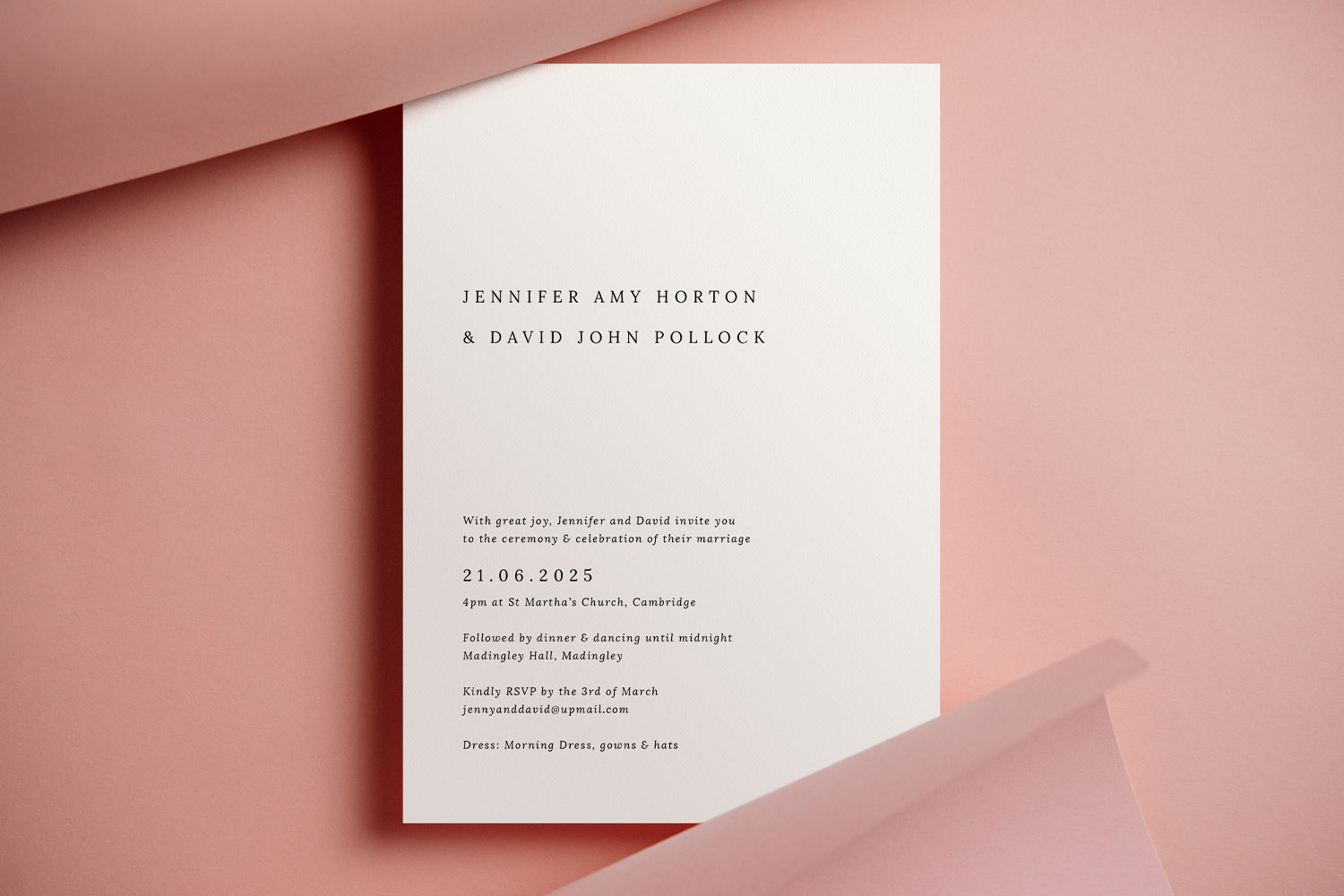
Common mistakes to avoid when designing wedding invitations online
Designing wedding invitations online is easy, but avoiding common mistakes ensures your invitations look perfect in print. Discover practical tips on text, layout, image quality, proofing, and ordering so your wedding invitations are beautifully clear and memorable from the start.
How and why to add a QR code to your wedding invitations
Enhance your wedding invitations by adding a QR code to easily share RSVP links, maps, and gift lists. Learn practical tips for QR code placement, sizing, and how to use Utterly Printable’s editor for a seamless experience.
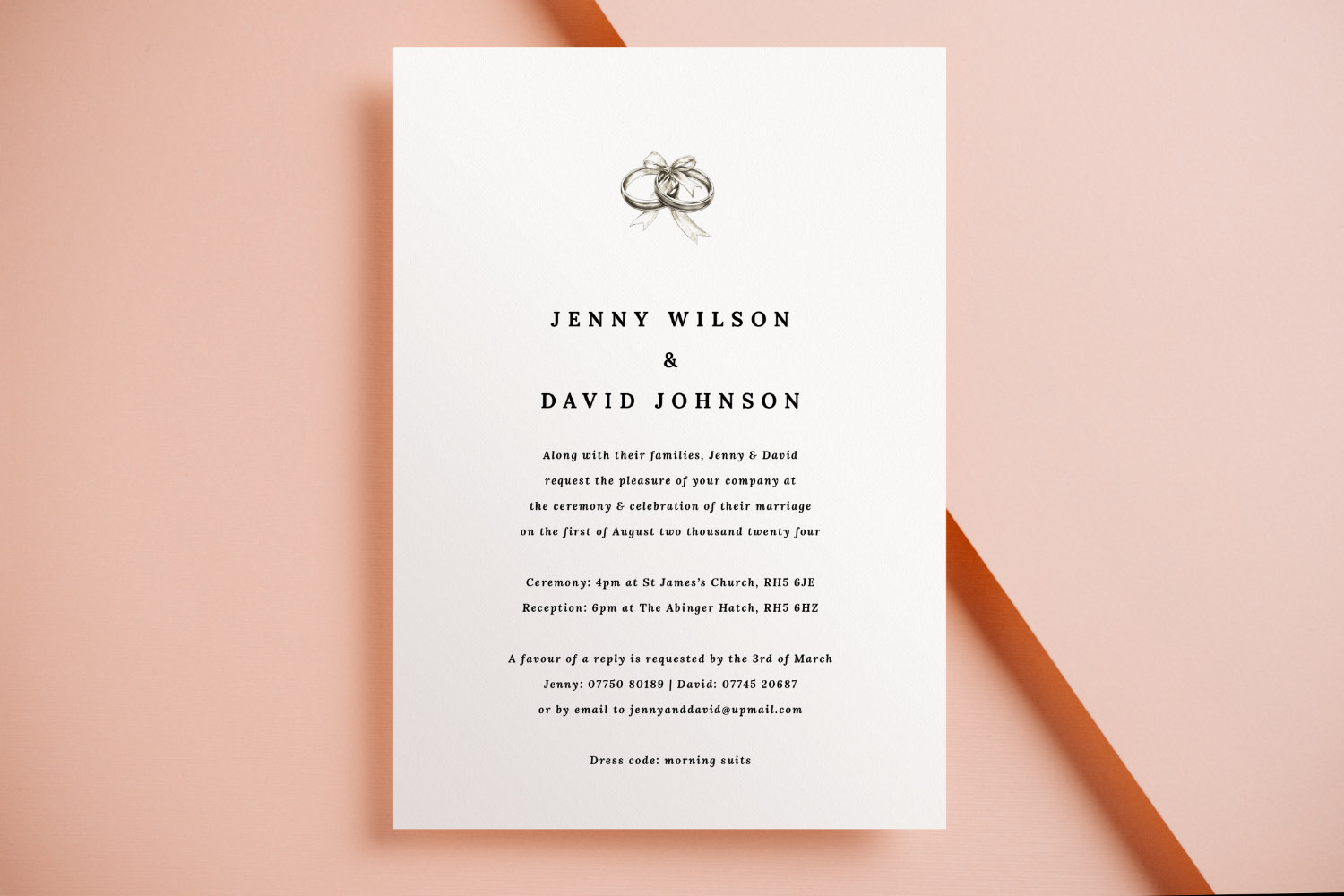
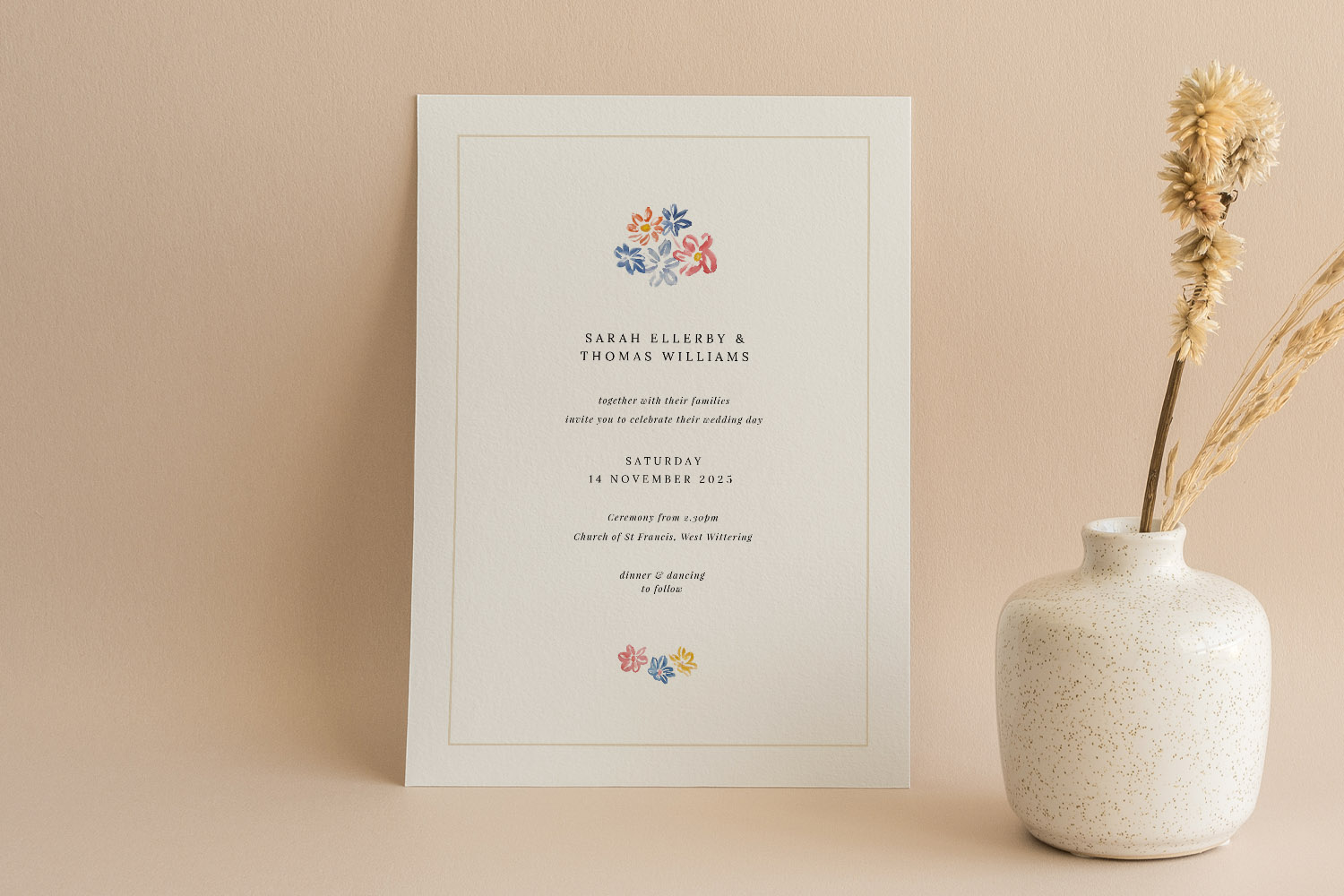
How to co-ordinate your wedding invitation with the rest of your stationery suite
Learn how to coordinate your wedding invitation with your entire stationery suite by selecting matching fonts, colors, motifs, and materials, ensuring every detail-from RSVP cards to menus-looks beautifully unified and thoughtfully designed for your special day.
Wedding Invitation Paper Explained: Silk, Uncoated & Textured Compared
Discover the differences between silk, uncoated, and textured wedding invitation paper with this helpful guide. Learn how each card stock-smooth, textured, silk, and super-thick-impacts print quality, design style, and the overall feel of your wedding invitations.
Wedding Invitations with RSVP Cards: Do You Need Both?
Choosing between RSVP cards and digital replies for wedding invitations can be challenging. This article explains when to use each RSVP method, how to combine them effectively, and offers tips for ensuring clear, stress-free guest responses.
Products related to wedding invitations:

Our Creative Journal
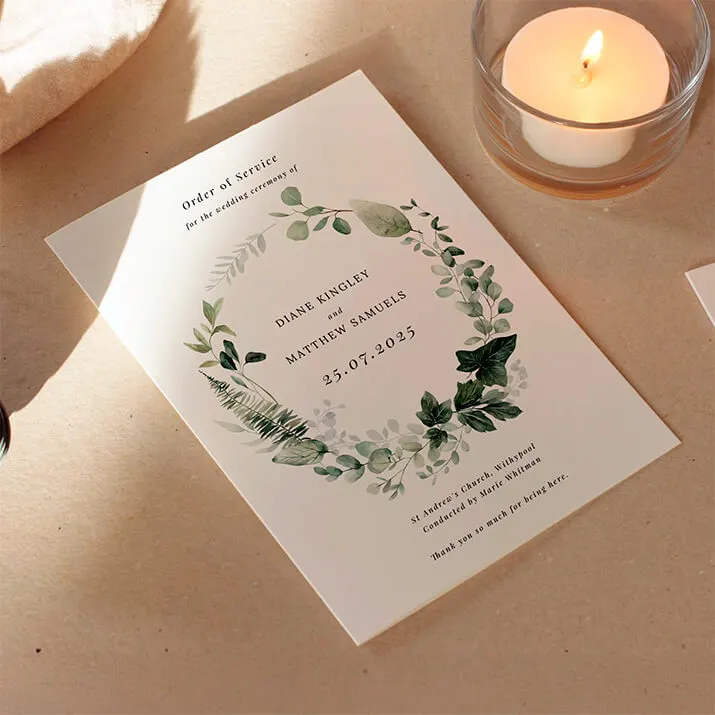
Classic wedding invitations set the tone for timeless celebrations. Get inspired with design tips, customisation ideas, and advice on choosing the perfect style for your big day.